

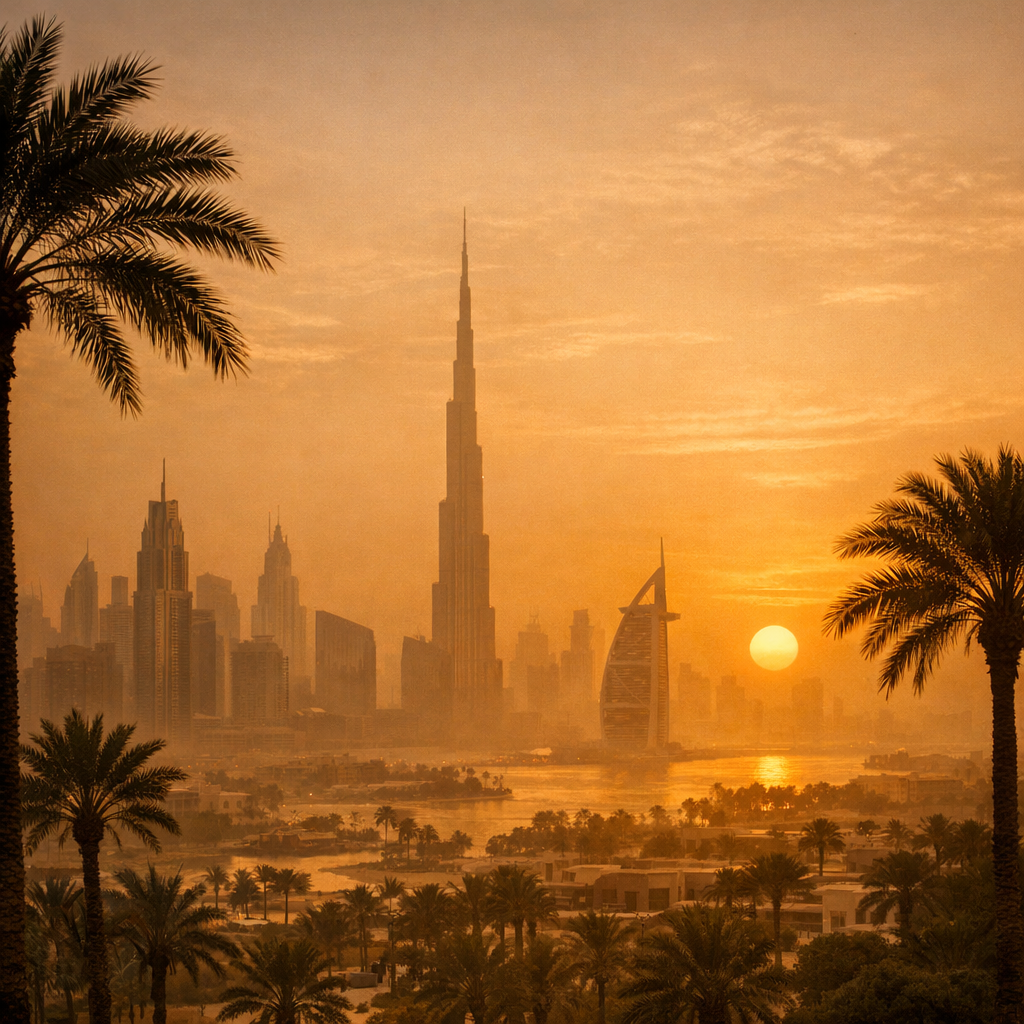
Living in Dubai means adapting daily to extremes: blazing sun, dry winds, rare downpours and the ever-present haze of desert dust. But behind what can feel like just atmospheric discomfort are deeper environmental realities shaping our weather, our water supply and the land we live on.
What drives our summer heat and humidity
The high temperatures, especially in summer, stem from several regional weather systems. Hot, dry air masses sweep in from the Arabian interior, while moisture-laden winds from the Arabian Sea arrive even more strongly during July and August. Together, they create intense daytime heat and sticky nights, especially along the coast. Dust storms and haze are common — often driven by strong winds that pluck particles from exposed soil or dried-out land. Humidity and heat combine to make outdoor activity especially challenging.
Water scarcity: a constant in our arid climate
Rainfall in Dubai averages under 100 mm per year. There are no rivers—and aquifers recharge very slowly. Groundwater is heavily pumped for farms, gardens and landscaping, often more than it naturally regenerates. Meanwhile, desalination provides most of the water we drink, but it carries energy costs and environmental trade-offs. We also treat and reuse wastewater and build systems to capture rare rains, aiming to stretch every drop.
Changing weather patterns and climate pressures
Recent studies show evolving weather behaviour: more intense, short-lived storm events when rain does come, rising average temperatures, earlier onset of heatwaves, and shifts in dust-storm timing. These changes affect not only comfort but health, infrastructure, ecosystems, and planning. So much of coastal Dubai and its many artificial islands are also facing risks from sea-level rise and rising seawater temperatures.
Hopeful steps & what residents can do
The UAE government has set ambitious goals: by 2036, water demand reduction, efficient water use, better recycling, and nearly complete reuse of treated wastewater. Urban planning is also evolving, with attention paid to heat islands in densely built areas—using lighter building materials, more greenery, and designs that allow airflow to cool neighborhoods.
Tips for everyday adjustment
- Stay informed about heat-alerts and dust-storms through local forecasts.
- Use shade and planning (early mornings, evenings) for outdoor tasks.
- Keep hydrated, wear breathable clothing and masks if dust levels rise.
- Limit water waste: use greywater where possible; choose plants that need less irrigation.
- Support green spaces: trees and gardens help reduce air and surface temperatures.
Understanding how Dubai’s climate and environment work—and taking action every day—gives us a chance not only to adapt, but to shape a more liveable city under desert skies.