

By Khalid Al-Qasimi
Understanding Dubai’s Climate Rhythms
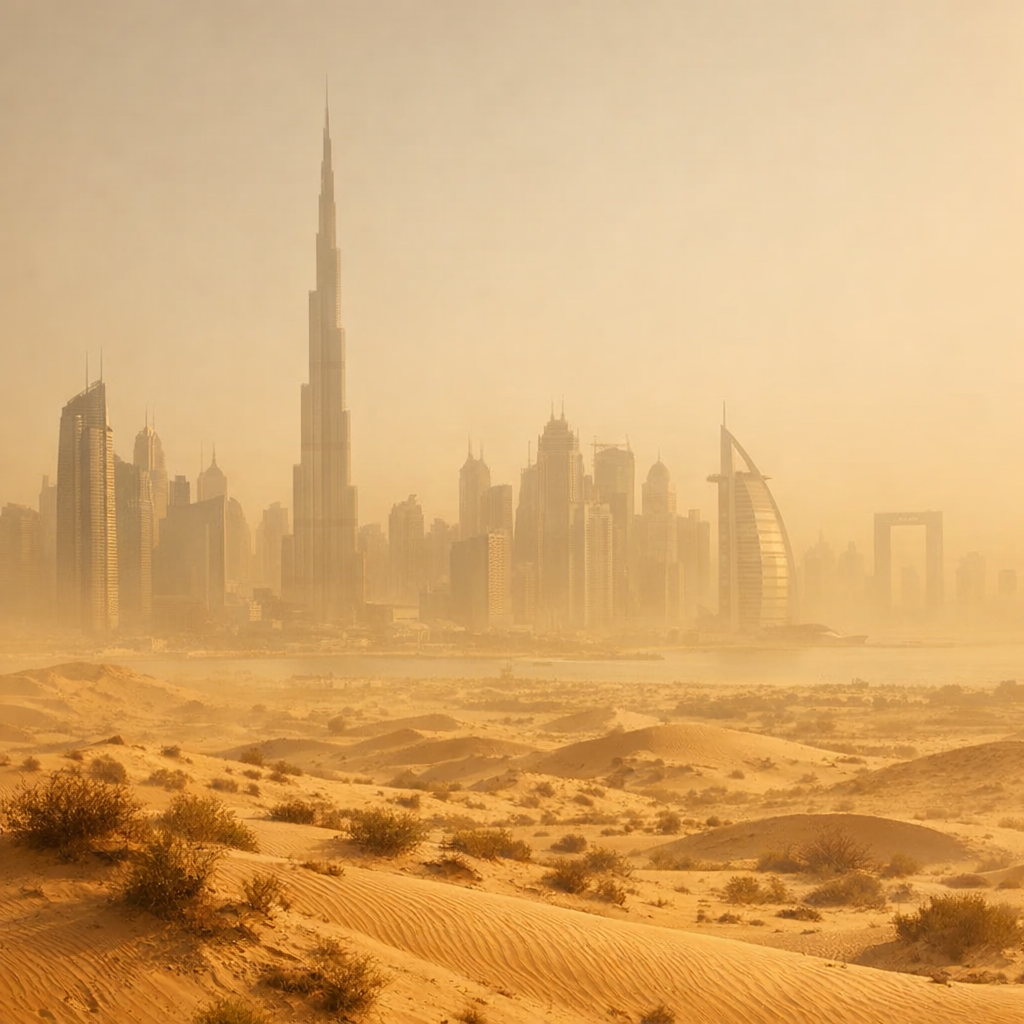
Dubai lies in an arid, hot desert zone. Our summers stretch from April through September, marked by intense heat, humidity, frequent dust winds and virtually no rain. Winter, from late October to early April, brings gentler temperatures, clearer skies and most of the year’s rainfall. Coastal zones enjoy milder swings due to sea influence, while desert interiors see more extreme daytime highs and cooler nights. These patterns are driven by regional air masses and occasional systems like the monsoon low, trade winds, or shamal winds that stir dust and shift conditions abruptly.
Temperature & Rainfall: Numbers That Matter
Average highs climb above 40 °C in summer, particularly July and August. At night, coastal locations can still hold onto warmth and humidity. In winter, daytime highs settle in the low twenties, with overnight lows falling to around 12-15 °C near the coast, colder inland. Rain is scarce, averaging about 70-80 mm per year, mostly falling between December and March. The Hajar Mountains in the east receive more, and storms can be intense though brief.
Environmental Challenges We Face
Dubai’s heat and lack of water have always posed limits, but climate change is amplifying them. Rising average temperatures have been recorded over recent decades, particularly in summer. Rainfall is catching greater variability—with dry winters and brief but heavy storm events. Wet-bulb temperature (heat plus humidity) during summer periods is creeping toward thresholds that stress health and infrastructure.
Water scarcity, loss of habitat, urban sprawl and frequent sandstorms remain persistent concerns. Our urban and industrial growth strain energy, water supplies and air quality—especially when hot dust and pollutants linger in stagnant layers of air. Whilst deserts are naturally sparse ecosystems, urban development further fragments wildlife and vegetation.
How Dubai Is Adapting
The UAE’s Environment Policy provides a framework of over 100 initiatives aimed at improving air quality, managing waste, protecting biodiversity and using natural resources sustainably. There’s active work on water reuse, renewable energy uptake, and developing climate resilience strategies—including flood management and heat mitigation approaches.
On an individual and community level, behaviors shift: planning outdoor activity for mornings or evenings, seeking shaded spaces, cooling buildings effectively, planting native trees like ghaf and palms to improve micro-climates, and reducing water use wherever possible. Green landscaping, careful urban design, and awareness of air quality alerts are part of everyday adaptation.
A Call for Balanced Awareness
Dubai’s climate shapes daily life in profound ways—from how we build, to when we work, to how we conserve. It remains essential to understand not just the exotic heat, but the crests and troughs—humidity, cooling night breezes, winter storms—that punctuate our desert reality. Enduring quality of life depends on infrastructure, policy and personal choices working together to protect our environment.
Tips for Living Well in Dubai’s Climate
- Stay hydrated and avoid physical exertion during peak heat.
- Check forecasts for humidity and dust, especially before outdoor plans.
- Use building shading, ventilation and reflective surfaces to reduce cooling needs.
- Support green spaces, native species and water-saving landscaping.
- Pay attention to air quality alerts; sensitive groups should limit outdoor exposure when needed.
These efforts won’t stop climate change—but they help us adapt and thrive regardless.