

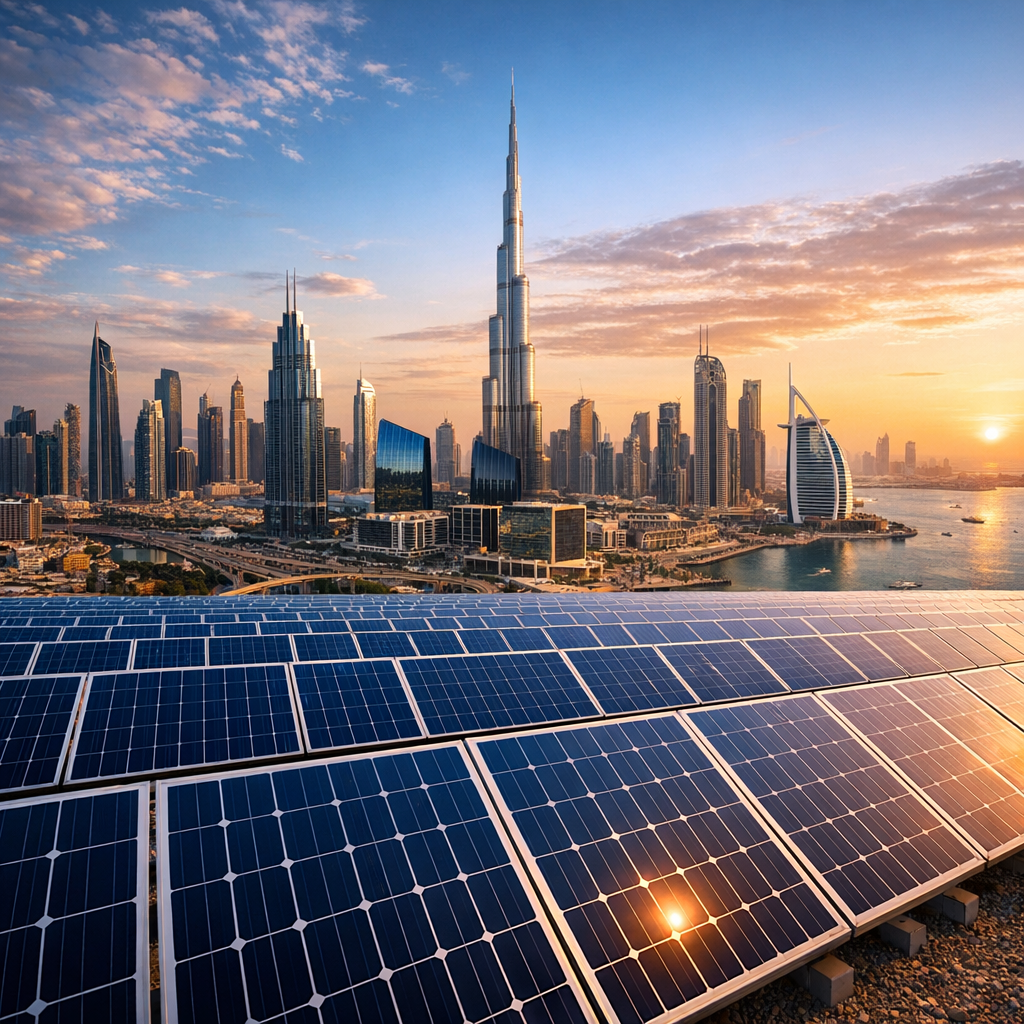
Dubai has long been recognized for its rapid development and architectural marvels. However, alongside its urban growth, the emirate has been steadfast in its commitment to environmental sustainability. This article delves into the various initiatives and strategies that Dubai has implemented to promote a greener future.
Strategic Frameworks and Policies
At the federal level, the Ministry of Climate Change and Environment (MOCCAE) spearheads the development and implementation of national policies related to environmental sustainability, climate change, and food security. In Dubai, the Dubai Environment and Climate Change Authority (DECCA) plays a pivotal role in protecting the environment through innovative policies that balance economic growth with conservation efforts. DECCA’s mission emphasizes collaboration and innovation to achieve a sustainable future for generations to come.
Renewable Energy Initiatives
Dubai has set ambitious targets to transition towards clean energy. The Mohammed bin Rashid Al Maktoum Solar Park stands as a testament to this commitment. As the largest single-site solar park globally, it aims to achieve a production capacity of 5,000 MW by 2030, significantly reducing carbon emissions. Additionally, the Dubai Demand Side Management Strategy 2050 seeks to double energy efficiency improvements, targeting savings of at least 30% by 2030 and 50% by 2050 compared to business-as-usual scenarios.
Waste Management and Circular Economy
Addressing waste management is crucial for environmental sustainability. Dubai’s Integrated Waste Management Strategy 2041 focuses on innovation in waste management, recycling, and energy conversion. A notable project under this strategy is the Waste to Energy Centre in Warsan, which is the largest and most efficient waste-to-energy conversion facility worldwide. It has the capacity to treat around 2 million tons of solid waste annually, generating power sufficient for over 135,000 homes.
Community Engagement and Awareness
Engaging the community is vital for the success of sustainability initiatives. The ‘Dubai Can’ movement, launched in 2022, encourages residents to reduce the use of single-use plastic bottles by promoting the use of refillable water bottles and providing access to free drinking water through public water stations. This initiative aligns with Dubai’s broader goals of reducing plastic waste and promoting sustainable living practices.
Conservation Efforts
Protecting and enhancing biodiversity is a cornerstone of Dubai’s environmental strategy. The DUBAI REEF project, one of the world’s largest marine reef developments, aims to deploy 20,000 reef modules by 2027. This initiative seeks to restore marine habitats, enhance biodiversity, and support conservation research, thereby delivering lasting benefits for marine life across Dubai’s waters.
Conclusion
Dubai’s multifaceted approach to environmental sustainability reflects its dedication to creating a harmonious balance between urban development and ecological preservation. Through strategic policies, renewable energy projects, waste management innovations, community engagement, and conservation efforts, Dubai is paving the way for a sustainable future that serves as a model for cities worldwide.