

Dubai has long been recognized for its rapid development and architectural marvels. However, alongside its urban growth, the emirate has demonstrated a steadfast commitment to environmental sustainability. This article delves into the various initiatives and strategies that Dubai has implemented to promote a greener future.
Environmental Authorities and Their Roles
At the federal level, the Ministry of Climate Change and Environment (MOCCAE) spearheads the development and implementation of national policies related to environmental sustainability, climate change, and food security. In Dubai, the Dubai Municipality plays a pivotal role in enforcing environmental regulations, monitoring air and water quality, and managing waste disposal and recycling initiatives. Additionally, the Dubai Environment and Climate Change Authority (DECCA) is dedicated to protecting the environment through innovative policies that balance economic growth with conservation efforts.
Key Sustainability Initiatives
Dubai Can
Launched in 2022, the ‘Dubai Can’ initiative aims to reduce the use of single-use plastic bottles by encouraging residents and visitors to adopt refillable water bottles and utilize public water stations. This movement aligns with Dubai’s broader goal of promoting sustainable practices among its communities.
Protected Areas
To preserve its unique ecosystems, Dubai has established eight protected areas covering approximately 31% of the emirate’s total area. These reserves encompass diverse environments, including mountains, deserts, and coastal regions, and are managed with the objective of conserving biodiversity and promoting sustainable recreational activities.
Green Community Development
Dubai Holding Real Estate has achieved LEED Gold Community Pre-certification for ‘The Acres’ master plan. This development emphasizes energy efficiency, water conservation, and community well-being, aiming for an 80% reduction in greenhouse gas emissions per capita compared to the national average.
Renewable Energy Projects
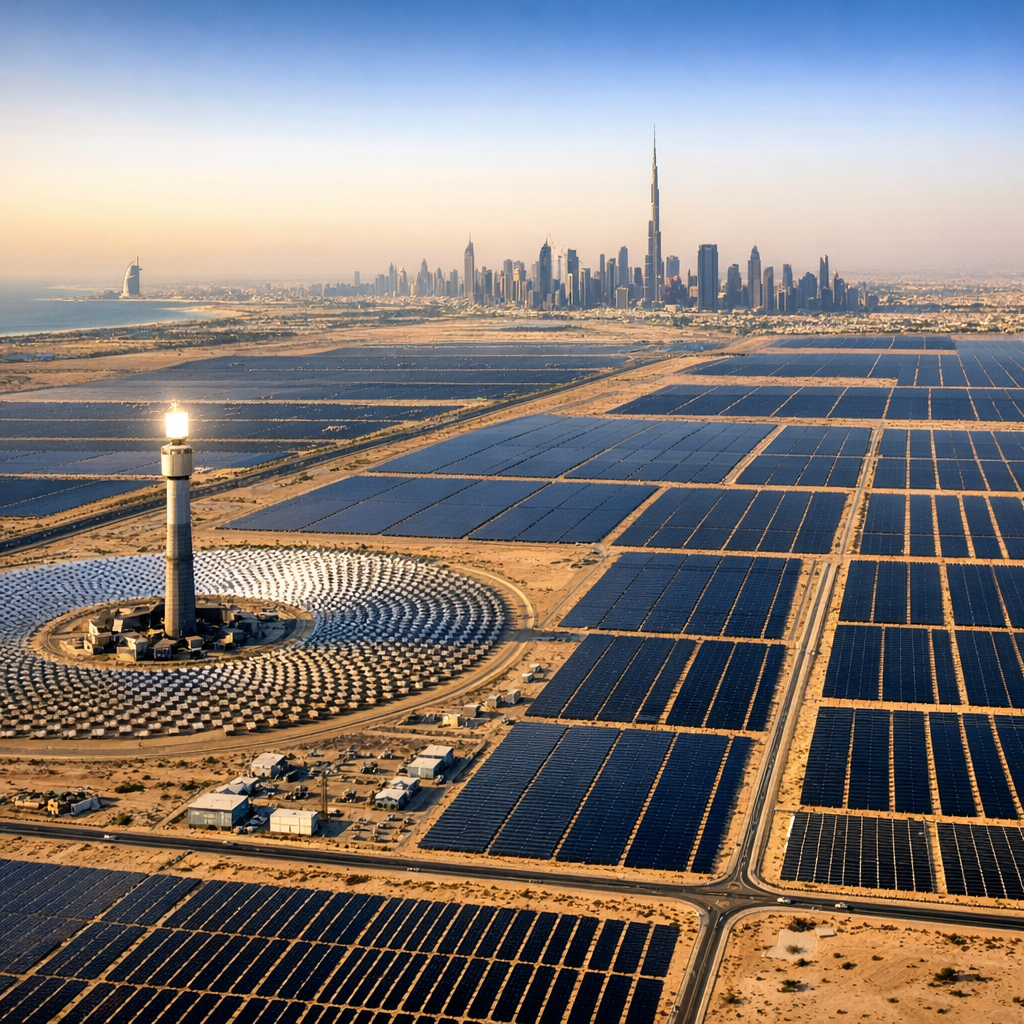
The Mohammed bin Rashid Al Maktoum Solar Park stands as a testament to Dubai’s commitment to clean energy. As the largest single-site solar park globally, it is projected to have a production capacity exceeding 5,000MW by 2030, significantly reducing carbon emissions and supporting the emirate’s transition to a low-carbon economy.
Community Engagement and Environmental Conservation
Community involvement is integral to Dubai’s environmental strategies. For instance, the Dubai Electricity and Water Authority (DEWA) has organized campaigns in collaboration with the Emirates Marine Environmental Group to plant mangrove trees and clean the Jebel Ali Marine Sanctuary. These initiatives have seen participation from hundreds of volunteers, resulting in the planting of thousands of mangrove trees and the removal of significant amounts of plastic waste from coastal areas.
Conclusion
Dubai’s multifaceted approach to environmental sustainability reflects its dedication to balancing rapid urban development with ecological preservation. Through the concerted efforts of governmental bodies, private sector partnerships, and community engagement, the emirate continues to pave the way toward a sustainable and resilient future.