

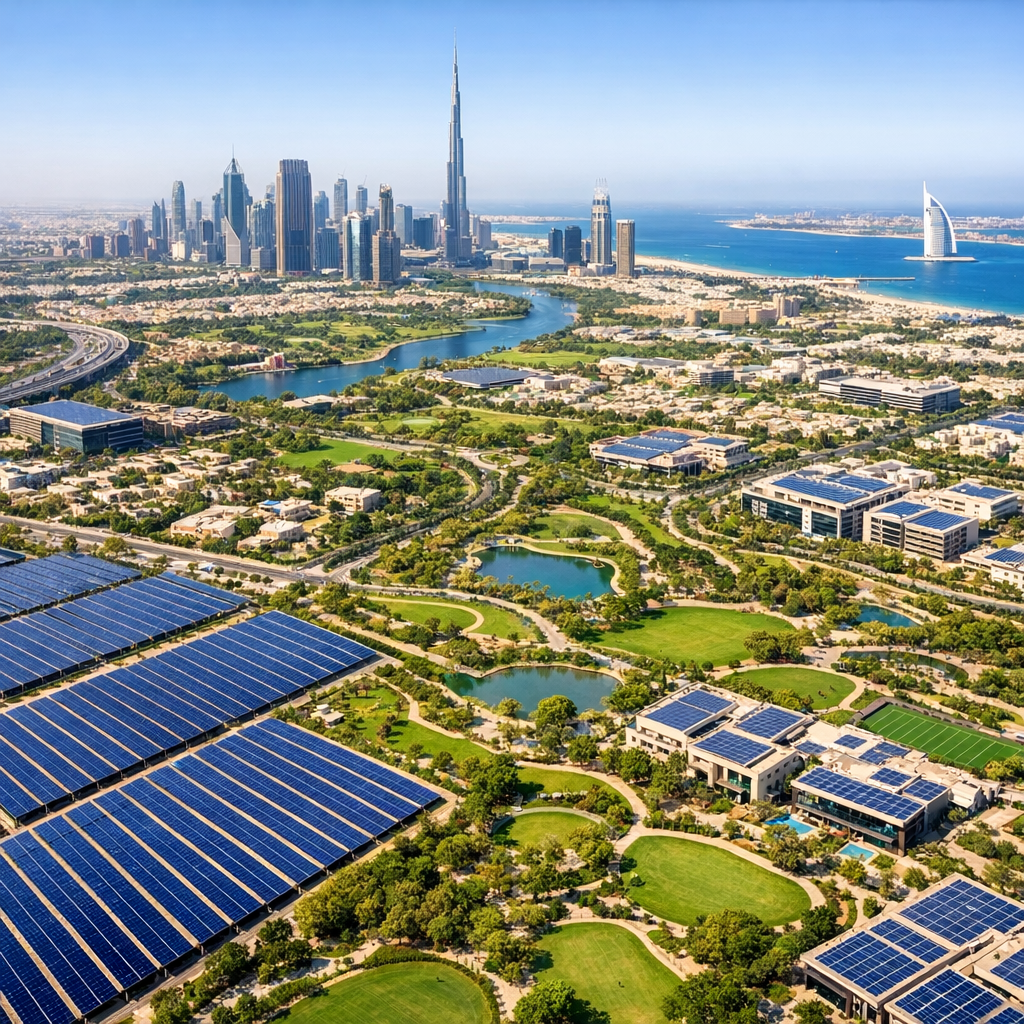
Dubai has long been recognized for its rapid development and architectural marvels. However, alongside its urban growth, the emirate has demonstrated a steadfast commitment to environmental sustainability. This article delves into the various initiatives and strategies that Dubai has implemented to promote a greener future.
Strategic Environmental Authorities
At the forefront of Dubai’s environmental efforts is the Dubai Environment and Climate Change Authority (DECCA). DECCA is dedicated to protecting the environment and ensuring sustainability through innovative policies that balance economic growth with environmental conservation. Their mission encompasses protecting ecosystems, leading climate action, enhancing food security, and enabling a circular economy.
Clean Energy Initiatives
Dubai has set ambitious targets to transition towards clean energy. The Mohammed bin Rashid Al Maktoum Solar Park stands as a testament to this commitment. As the largest single-site solar park globally, it aims to achieve a production capacity of 5,000 MW by 2030, significantly reducing carbon emissions.
Complementing this, the Dubai Clean Energy Strategy 2050 seeks to position the city as a global hub for clean energy and a green economy. The strategy outlines plans to provide 100% of Dubai’s energy production capacity from clean energy sources by 2050.
Waste Management and Recycling
In line with its sustainability goals, Dubai has implemented advanced waste management systems. The Warsan Waste Management Centre, for instance, is the largest and most efficient waste-to-energy conversion facility worldwide. It has the capacity to treat around 2 million tons of solid waste annually, generating power for over 135,000 homes.
Additionally, initiatives like the Dubai Can campaign encourage residents to reduce single-use plastic consumption by promoting the use of refillable water bottles and providing access to free drinking water stations across the city.
Urban Greening and Biodiversity Conservation
Dubai Municipality has been proactive in enhancing the city’s green spaces. In 2024, over 216,500 new trees were planted, marking a 17% increase from the previous year. This effort not only beautifies the city but also improves air quality and contributes to climate resilience.
Furthermore, the Dubai Turtle Rehabilitation Project has been instrumental in marine conservation. Since 2004, more than 2,300 turtles have been rehabilitated and released, underscoring Dubai’s commitment to preserving its marine biodiversity.
Climate Action and Resilience
Recognizing the challenges posed by climate change, Dubai has hosted significant events like COP28 to unite global efforts in addressing environmental issues. The conference emphasized the importance of tripling renewable energy capacity and doubling energy efficiency improvements by 2030.
Moreover, the Dubai Demand Side Management Strategy 2050 aims to establish the city as a global benchmark for energy efficiency, targeting savings of at least 30% by 2030 and 50% by 2050 compared to business-as-usual scenarios.
In conclusion, Dubai’s multifaceted approach to environmental sustainability reflects its dedication to creating a harmonious balance between urban development and ecological preservation. Through strategic planning, innovative projects, and community engagement, the emirate continues to pave the way for a sustainable future.