

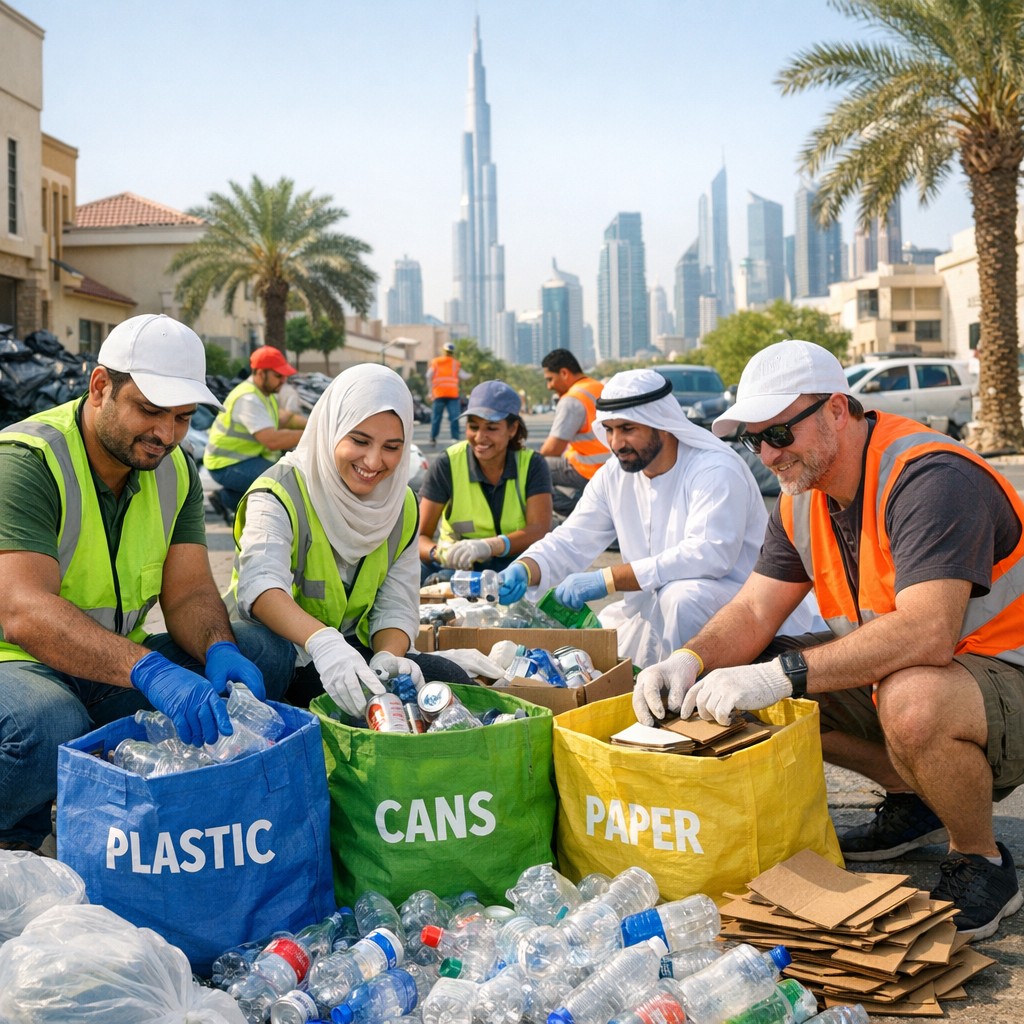
Dubai’s skyline isn’t the only thing growing fast — so is the volume of waste. As the city pushes hard towards its sustainability goals, neighbourhoods are starting to see an important shift: from waste as a problem to waste as opportunity. Several ongoing community programmes are empowering residents to take part in what’s being called the zero-waste future.
Driving Change at the Citywide Level
One of the most ambitious efforts is Dubai Integrated Waste Management Strategy 2041, which aims to redirect all types of waste away from landfills. Under that plan, private sector investment and innovative recycling methods play a key role, backed by legislation such as Law No. (18) of 2024 on Regulation of Waste Management. At a practical level, the Circle Dubai project encourages every resident to sort waste at its source and think seriously about what can be reduced, reused or recycled. Local bodies like Dubai Municipality offer tools and education platforms to support that shift.
Examples from Neighbourhoods
Master communities are seeing visible results. Take the Sea to Soil initiative on Palm Jumeirah: algae and organic matter once considered nuisances are turned into nutrient-rich soil for landscaping. In Jumeirah Lakes Towers and other DMCC-managed areas, the Dubai Can project has helped the community avoid nearly one million single-use plastic water bottles by installing drinking water dispensers in public zones.
How Residents Can Join In
- Sort it at home: Even simple separation of recyclables, organics and general waste makes a big difference downstream.
- Use refill-points: Projects like Dubai Can offer access to safe drinking water and reduce reliance on plastic bottles.
- Take part in clean-ups: Programmes like ‘An Hour with the Cleaner’ invite residents to join weekend events, whether gathering volunteers in Al Barsha, Al Warqa, or Al Khawaneej.
- Support community composting: Turning green waste into soil enhancers (as seen in Sea to Soil) closes the loop and gives back to public gardens and parks.
Why This Matters Long-Term
Dubai’s goal of diverting all waste from landfills isn’t just about reducing piles of rubbish—it’s about public health, resource conservation, and creating resilient communities. For instance, waste-to-energy plants like the one in Warsan convert up to two million tons of solid waste annually, enough power for more than 135,000 homes. And when recycling and composting increase, the environmental burden of new development eases.
What Still Needs Work
Despite strong frameworks and momentum, challenges remain. Consistency in waste collection and sorting across private vs public spaces sometimes lags. Behaviours — like using single-use plastics or throwing waste where convenient — need reinforcement through education. Also, scaling composting and soil regeneration initiatives from pilot projects to mainstream practice will require ongoing investment and infrastructure.
Change isn’t instant. But with neighbourhoods and individuals embracing these tools, Dubai’s sustainability goals become shared community promises—not distant ideals. Every can recycled or biodegradable bag composted brings us one step closer to that zero-waste horizon.