

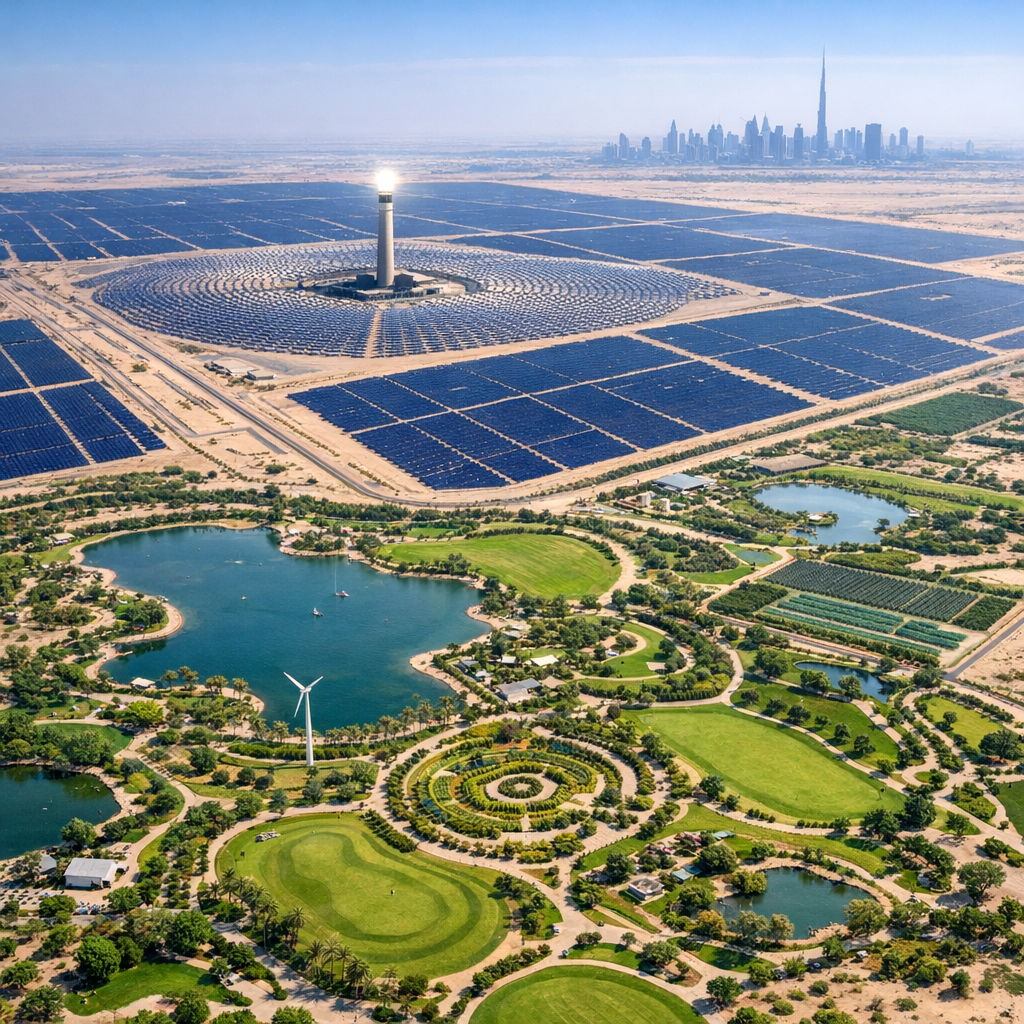
Dubai has undertaken a series of initiatives aimed at promoting environmental sustainability and preserving its natural resources. These efforts encompass clean energy projects, waste management strategies, and biodiversity conservation programs.
Clean Energy Initiatives
The Mohammed bin Rashid Al Maktoum Solar Park stands as a testament to Dubai’s commitment to renewable energy. As the largest single-site solar park globally, it aims to achieve a production capacity of 5,000 MW by 2030, significantly reducing carbon emissions and supporting the emirate’s transition to a low-carbon economy.
Waste Management Strategies
Dubai’s Integrated Waste Management Strategy 2041 focuses on innovation in waste management, recycling, and energy conversion. The strategy aims to encourage sustainable practices and reduce landfill dependency, aligning with the city’s goal of zero waste to landfill by 2030.
Biodiversity Conservation
In collaboration with the Dubai Environment and Climate Change Authority, the Dubai Electricity and Water Authority (DEWA) has planted 700 mangrove trees at the Jebel Ali Marine Sanctuary. This initiative supports marine biodiversity and contributes to the UAE’s goal of planting 100 million mangrove trees by 2030.
Additionally, Dubai Municipality has expanded the emirate’s green spaces by planting 216,500 new trees in 2024, marking a 17% increase from the previous year. This effort enhances the urban landscape, improves air quality, and contributes to Dubai’s resilience against climate change.
Through these comprehensive initiatives, Dubai continues to demonstrate its dedication to environmental sustainability, balancing economic growth with the preservation of its natural resources for future generations.