

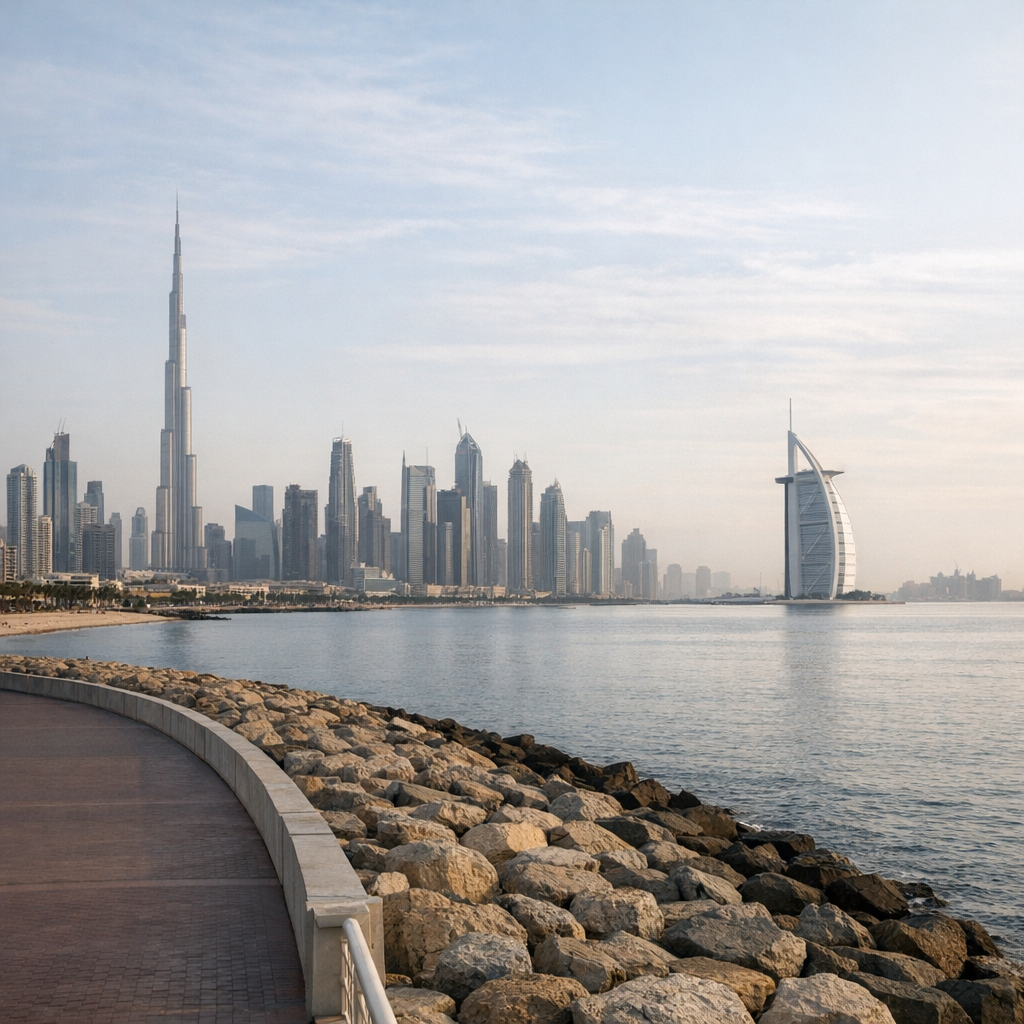
Dubai has long been recognized as a beacon of stability and prosperity in the Middle East, attracting millions of tourists and serving as a global financial hub. However, recent regional conflicts have posed significant challenges to the emirate’s economy, particularly affecting its tourism and finance sectors.
Impact on Tourism
The tourism industry, a cornerstone of Dubai’s economy, has experienced a notable decline. Security concerns have led to a decrease in tourist arrivals, resulting in reduced foot traffic in major shopping centers and lower hotel occupancy rates. This downturn has had a cascading effect on related sectors, including retail and hospitality.
Financial Sector Challenges
Dubai’s status as a safe haven for global investors is being tested. The regional instability has prompted some wealthy residents and investors to reconsider their presence in the city. While Dubai has successfully attracted high-net-worth individuals with its tax-free environment and robust infrastructure, the current geopolitical climate has introduced uncertainties that could impact future investments.
Resilience and Adaptation
Despite these challenges, Dubai’s leadership remains committed to maintaining the city’s economic resilience. Efforts are underway to bolster security measures, reassure investors, and diversify the economy to reduce dependency on vulnerable sectors. The emirate’s strategic location and world-class infrastructure continue to position it as a key player in global trade and finance.
In conclusion, while Dubai faces immediate economic challenges due to regional conflicts, its proactive approach and inherent strengths suggest a capacity to navigate these difficulties and emerge resilient in the face of adversity.