

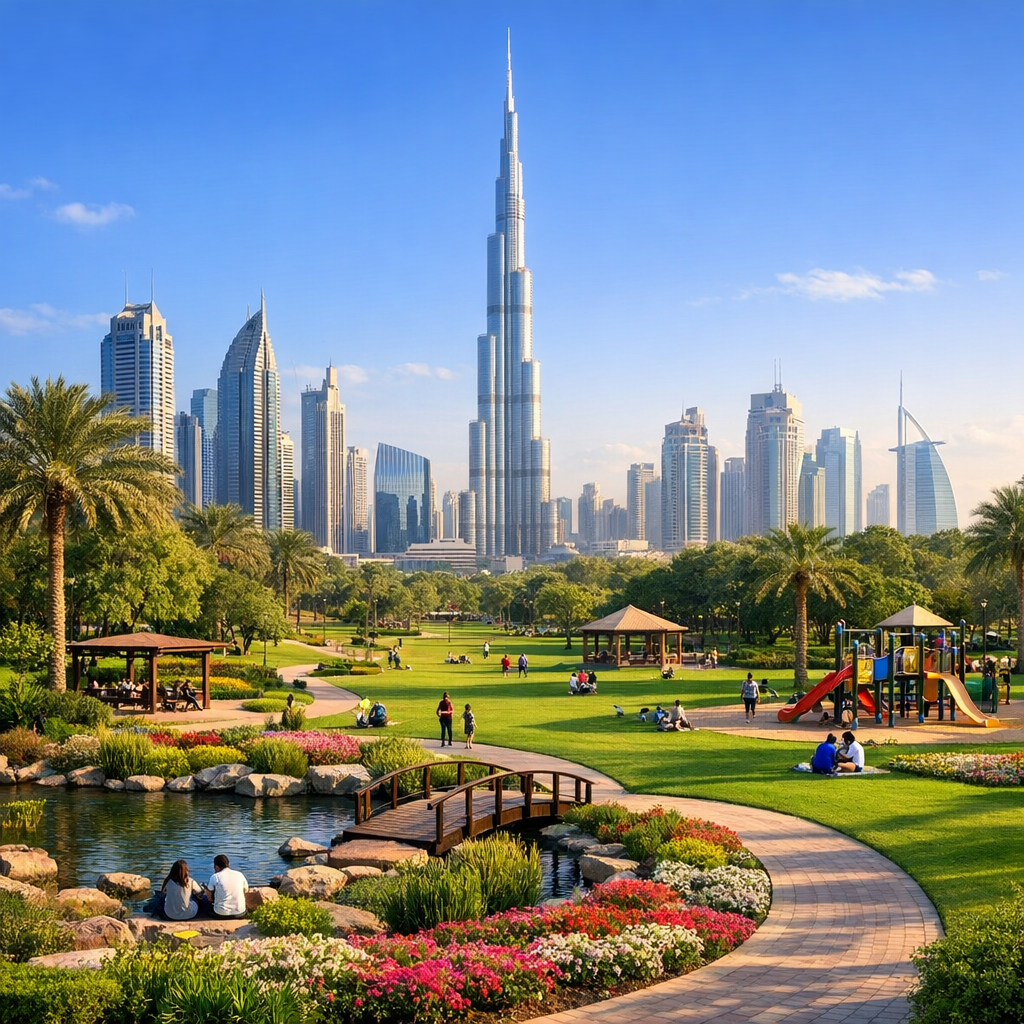
In a groundbreaking move towards environmental sustainability, Dubai Holding Community Management has partnered with ReFarm Global to launch the ‘Sea to Soil’ initiative. This innovative program aims to transform marine and organic waste into regenerative landscaping solutions, marking a significant step in Dubai’s commitment to sustainable community development.
Transforming Waste into Resources
The ‘Sea to Soil’ initiative introduces a waste-to-resource model that converts naturally occurring marine waste, such as algae, into nutrient-rich soil products. These bio-engineered soils will be utilized across Dubai Holding Community Management’s portfolio, enhancing soil quality and supporting plant health in community landscapes.
Strategic Partnership for Sustainability
Francis Giani, CEO of Dubai Holding Community Management, emphasized the importance of integrating environmental sustainability into community planning and management. He stated, “Together with ReFarm, we are turning a natural environmental occurrence into a practical, regenerative solution that creates value within the communities we manage.”
Oliver Christof, CEO of ReFarm, highlighted the initiative’s role in establishing a scalable circular model that benefits both the environment and the community. He noted, “Sea to Soil demonstrates how regenerative infrastructure can transform environmental challenges into measurable environmental and community value.”
Alignment with National Goals
This initiative aligns with the UAE’s Net Zero 2050 ambition and supports the United Nations Sustainable Development Goal 17, which underscores the importance of partnerships in advancing sustainable development. By diverting over 20 tonnes of algae waste by the end of 2026, the program aims to reduce waste streams and promote regenerative environmental solutions within Dubai’s communities.
Future Prospects
The first phase of the ‘Sea to Soil’ initiative focuses on Palm Jumeirah during peak algae season, establishing a practical circular model that transforms marine waste into valuable resources for community use. This approach not only addresses environmental challenges but also sets a precedent for future sustainable practices in community management.