

By Fatima Abdullah
In Dubai, artificial intelligence has moved far beyond conference halls and pilot projects. Thanks to a sweeping new push toward Agentic AI—systems that can understand goals, plan actions, and execute tasks with minimal human input—many everyday routines are becoming smarter, faster, and more seamless.
What Is Agentic AI?
Unlike traditional AI tools that wait for prompts or commands, Agentic AI can take on a life of its own—at least when given a clear outcome. Renewing a visa, scheduling appointments, or processing documents can soon require nothing more than a request. The system figures out what needs to be done, interacts with other systems, and delivers the result. This isn’t sci-fi—it’s a core part of Dubai’s new two-year initiative to bring private businesses, services, and government operations into this future state. The government is also setting up incubators, training programs, and funding to support startups and companies in this shift.
AI Behind the Scenes of Your Day
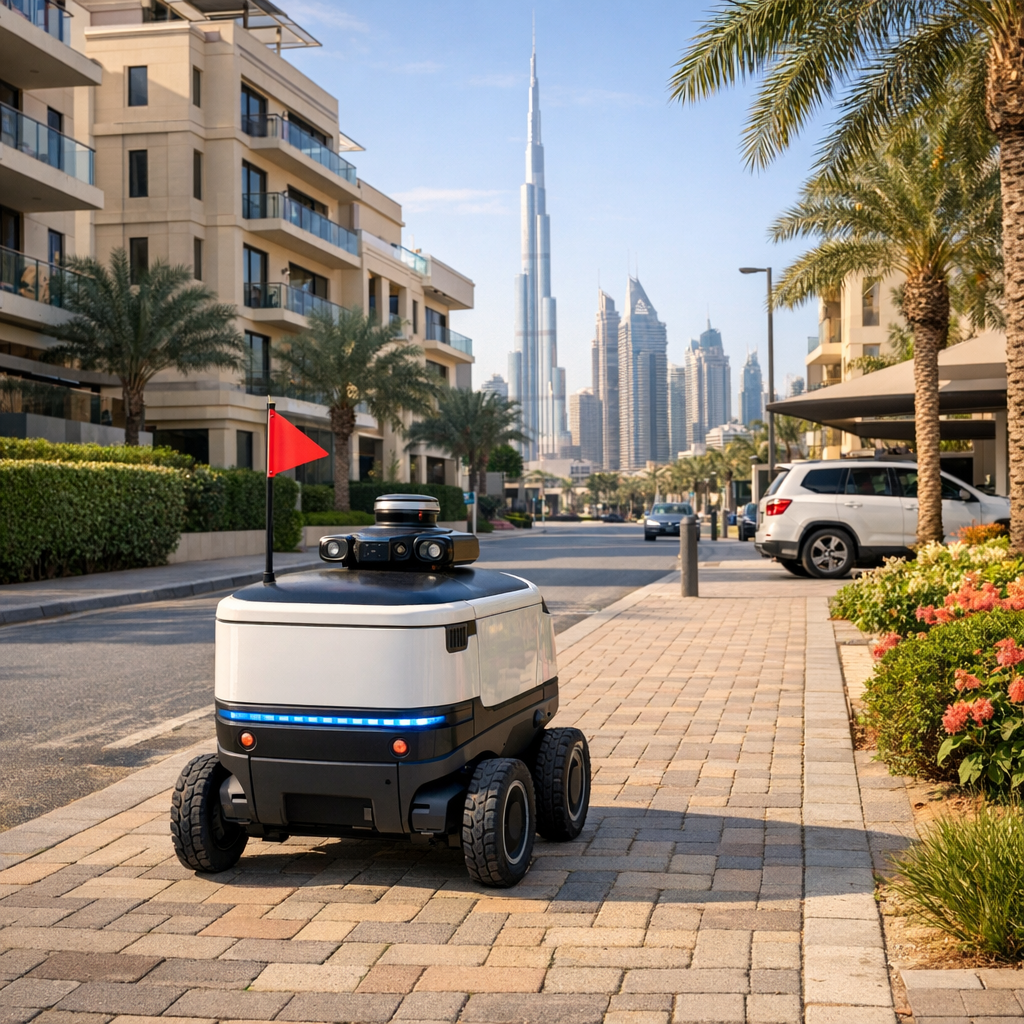
Robot Delivery in Your Neighborhood
If you order groceries via popular delivery apps in residential communities like Sobha Hartland, you may soon spot small autonomous robots navigating footpaths, carrying your food or essentials. Some of these robots are already operating in live service, allowing residents to track their robot’s journey and unlock its contents via a smartphone. The goal is to make short-distance delivery faster and reduce traffic congestion.
Residency, Travel & Public Services
Dubai’s immigration and travel systems are being transformed. Platforms like Salama now route renewal applications through decision-support algorithms. Biometric corridors at airports aim to cut down clearance time to just a few seconds. What used to take hours of paperwork can often be done online—or even via an agentic workflow that handles most of the steps for you.
AI Assistants Supporting Daily Life
Smart assistants are becoming more aware of local languages, dialects, and customs. They help users with everything from recommending recipes for family meals to managing appointments or translating documents. These assistants are designed to feel less like tools and more like friendly guides adapting to life in Dubai.
Impacts—Good, Complex, and Everything in Between
On the plus side, these developments promise more convenience, fewer bureaucratic delays, and better service from businesses and government. For startups, the Agentic AI initiative opens doors to innovation, investment, and faster product-market fit.
Yet it’s not without trade-offs. Questions of privacy become more urgent when agents interact across systems. There’s also concern about over-reliance: when too much is automated, people may feel cut off from human connection. Skills gaps remain, especially among workers already stretched by administrative or routine roles who may see parts of their job replaced by technology.
Looking Ahead
Dubai aims to have half of all federal services running on agentic workflows by 2028, plus thousands of people trained in these technologies. If you live here, your next bank transaction, residency renewal, or delivery could be managed by an autonomous chain of systems with minimal friction. That’s not far off.
The tech is still growing, imperfect, and unevenly adopted—but its rise looks far more like steady evolution than sudden revolution.