

By Ali Al-Ameri
In many parts of Dubai, life is fast. We rush between work, school, errands. Yet, sometimes, a quiet corner, a courtyard shaded by a palm tree or a small open area, offers something we all crave: connection. The Hewi Dubai initiative is breathing life into those spaces—spaces where heritage meets community, and where strangers become neighbours.
What is Hewi?
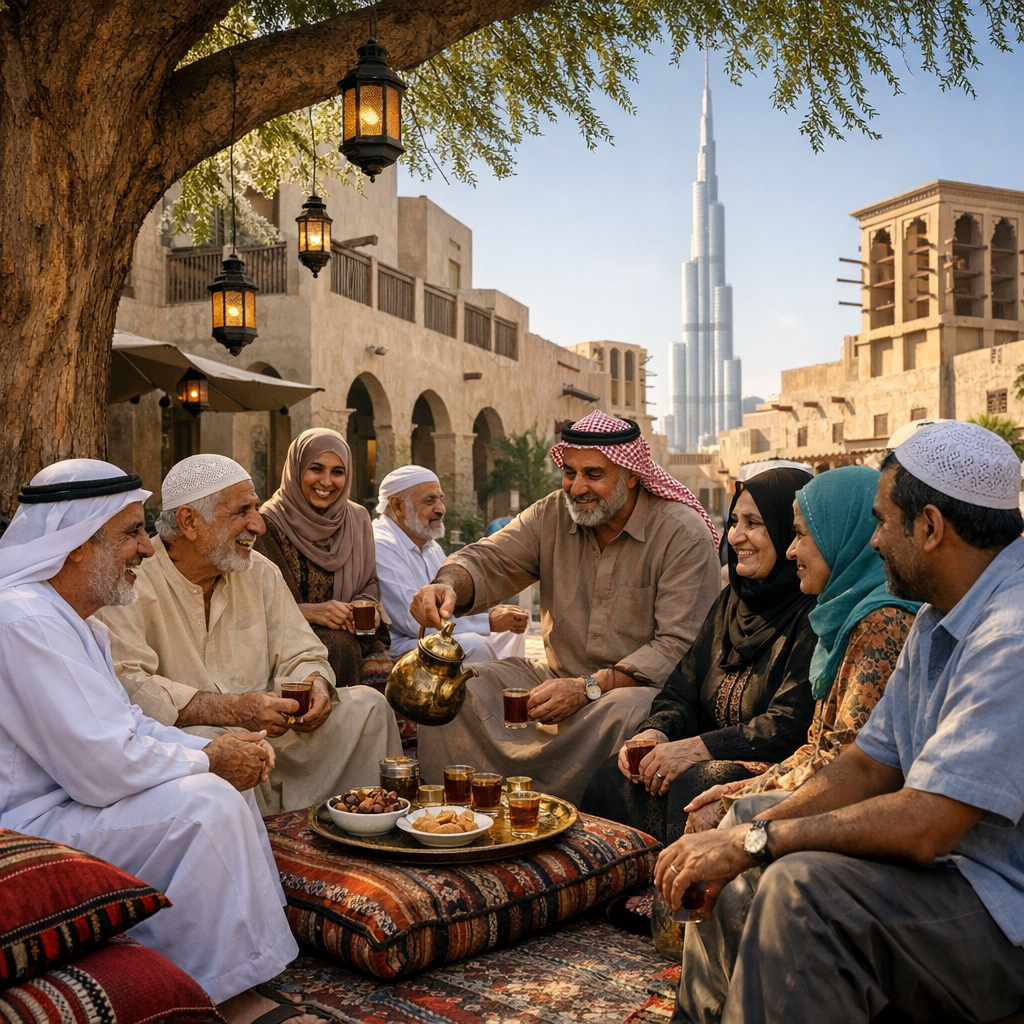
Hewi refers to the traditional outdoor areas—courtyards and shared open spaces—in Emirati fareej (neighbourhoods), where families, neighbours and friends gather. Some are extensions of home, others communal yards adjacent to homes or mosques. These are more than design features; they are cultural anchors.
Why they matter
Growing up, my grandparents’ house had a courtyard where children played past sundown, where elders drank qahwa and told stories, where I’d watch neighbourhood events. Over time, as houses became fenced and private, those spaces disappeared. New developments often value modern architecture and amenities—but not always places to gather informally, where conversation happens by accident.
Hewi Dubai: A revival in action
The recent expansion of Hewi spaces in Dubai—into areas like Al Barsha and Muhaisnah—is restoring those meeting points. They include shaded seating, flexible indoor-outdoor areas, play zones for kids, and calm corners for the elderly. Designed to be inclusive, they allow us to share life more naturally: conversations, celebrations, silence.
How community is changing
I’ve visited one of the new Hewi courtyards near Nad Al Sheba. On a Friday afternoon, something simple happened: I saw a group of elderly residents chatting about old Dubai, children chasing pigeons, teenagers studying under trees. Someone brought mint tea, another shared dates. It felt alive.
These aren’t grand events. But in a place as diverse as ours, every conversation across background, language or generation builds bridges. When someone asks directions. When a mother watches her toddler play and offers water to an elderly visitor. That shared human moment creates belonging.
Challenges and hopes
Building Hewi spaces has its difficulties. Ensuring they’re safe, well-maintained, accessible for everyone—senior citizens, families, people with mobility needs—is key. Also, as yet, some communities are more engaged than others. In neighbourhoods dominated by gated villas, where front yards are shielded, it takes extra effort to activate these shared areas.
But the potential is vast. If developers, planners and residents keep working together, Hewi can become part of Dubai’s identity—rooted in tradition, yet shaped for today. It could redefine community life—not just in Nad Al Sheba or Muhaisnah, but across everything still to come.
A reflection
For me, the simplest joy came when I overheard an old fisherman’s story about fishing off the creek decades ago—told to children who had never been near water except on holiday. In that moment, beneath a date palm in a Hewi, history, belonging and promise met.
If you live in Dubai, I hope you take a walk to one of these new shared spaces. Sit and listen. You might discover that community isn’t missing—it was waiting, quietly, in the courtyard hidden behind your street.