

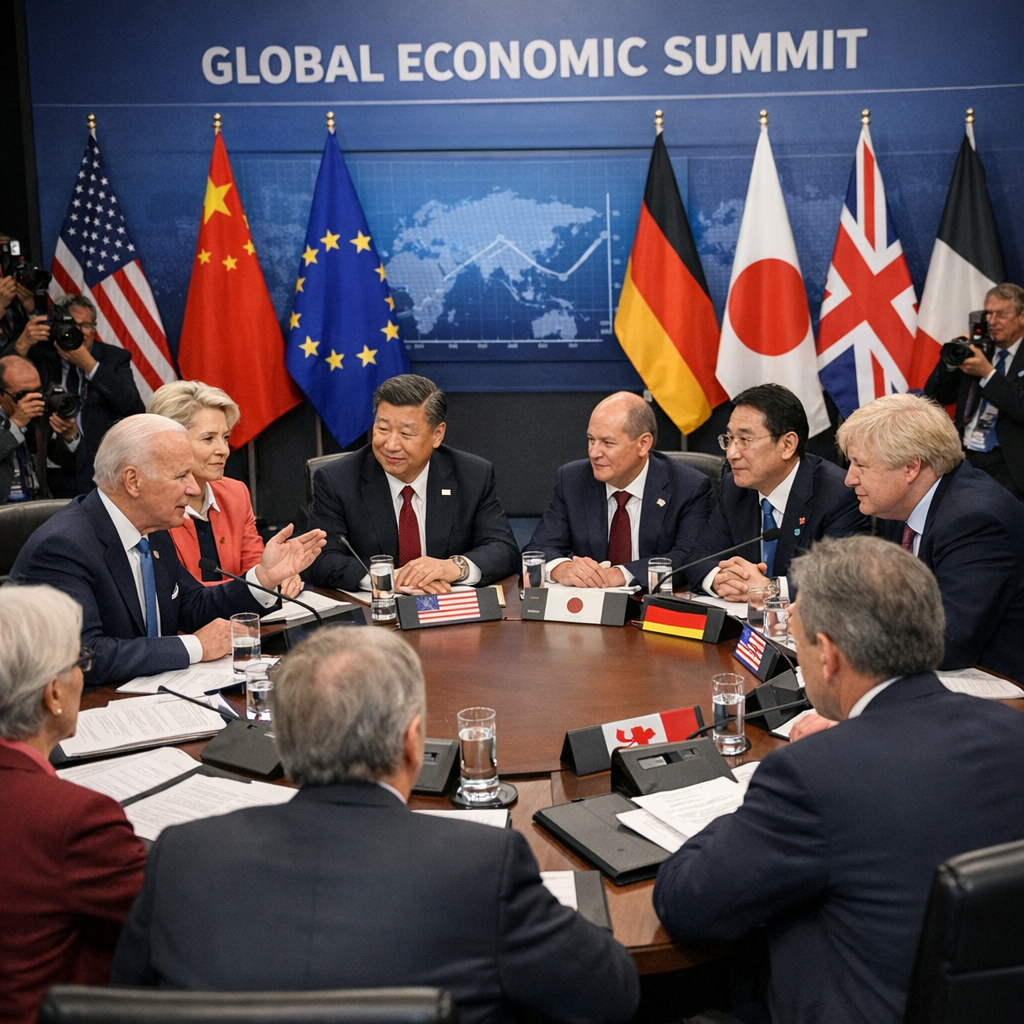
The global economy is navigating a complex landscape marked by geopolitical tensions and rapid technological advancements. As we progress through 2026, these factors are shaping economic trajectories worldwide.
Growth Projections Amidst Geopolitical Tensions
According to the International Monetary Fund (IMF), global growth is projected at 3.0% for 2026 and 3.4% for 2027. This outlook reflects the dual impact of ongoing conflicts and the momentum from technological innovations. The IMF notes that while AI-driven demand is boosting economies integrated into the global technology value chain, energy importers and vulnerable economies are feeling the strain of geopolitical disruptions.
Technological Innovations Driving Resilience
Artificial intelligence (AI) continues to be a significant driver of economic resilience. Morgan Stanley highlights that in the United States, AI capital investment and resilient consumer spending are key factors supporting growth. This trend underscores the importance of technological adoption in sustaining economic momentum amidst external shocks.
Regional Variations and Policy Responses
Regional disparities are evident in the current economic landscape. Europe faces challenges with slow growth, while countries like India are experiencing robust expansion driven by strong domestic demand. The United Nations Conference on Trade and Development (UNCTAD) emphasizes that without stronger policy coordination, current pressures risk locking the world into a lower-growth path. This calls for concerted efforts to address fiscal strains and trade tensions.
Implications for the United Arab Emirates
For the United Arab Emirates (UAE), these global developments present both challenges and opportunities. As a nation deeply integrated into the global economy, the UAE must navigate the impacts of fluctuating oil prices and leverage technological advancements to sustain growth. Strategic investments in AI and infrastructure, coupled with proactive policy measures, can position the UAE to capitalize on emerging opportunities in this evolving economic landscape.
In conclusion, while the global economic outlook for 2026 presents a mix of challenges and opportunities, strategic adaptation and international cooperation remain crucial. By embracing technological innovations and fostering resilient economic policies, nations can navigate these uncertain waters toward sustainable growth.