

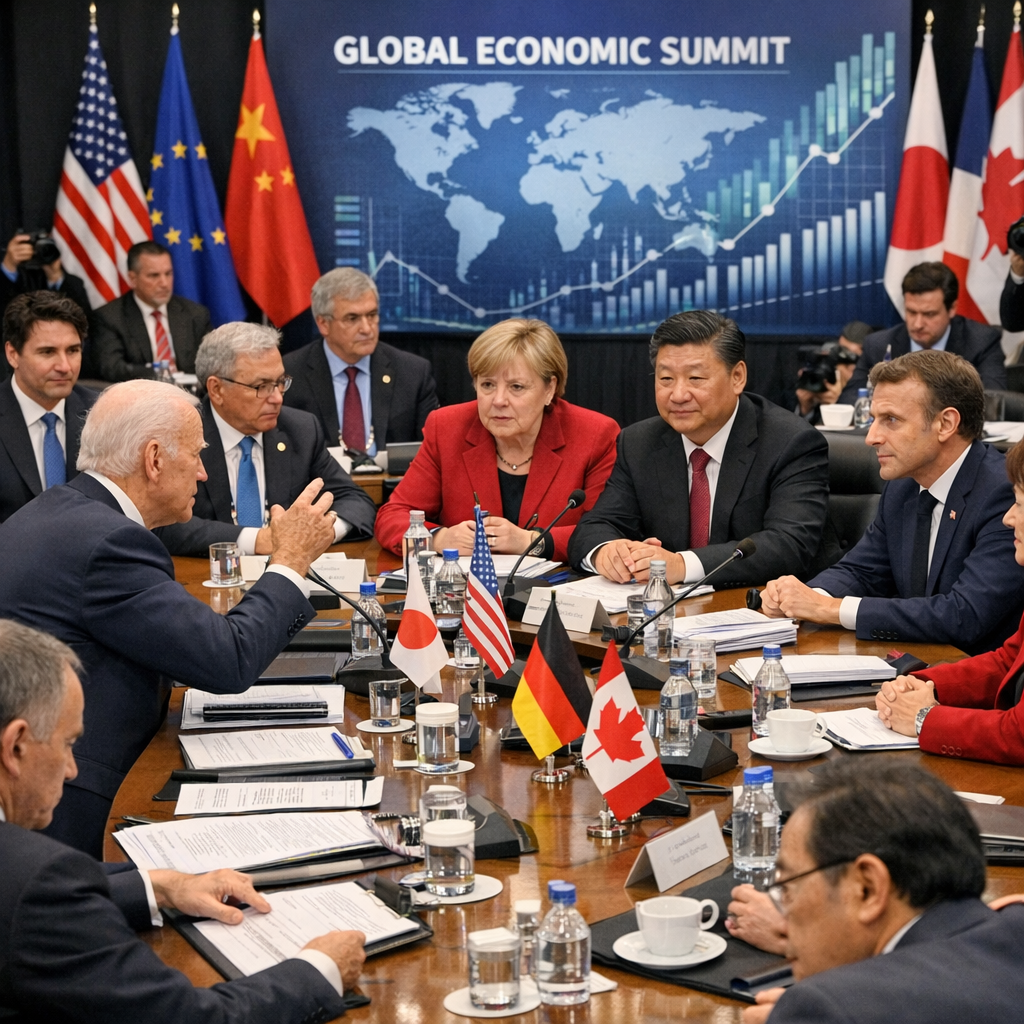
The global economy in 2026 presents a multifaceted scenario, influenced by geopolitical conflicts, technological innovations, and varying regional performances. Understanding these dynamics is crucial for policymakers, businesses, and individuals alike.
Global Growth Amidst Geopolitical Tensions
Global growth is projected at 3.0% for 2026 and 3.4% for 2027. However, this outlook is uneven: the war shock is weighing on energy importers and vulnerable economies, while AI-driven demand is lifting countries integrated into the global technology value chain.
Technological Innovations Driving Growth
Investments in artificial intelligence (AI) are significantly contributing to economic resilience. In the United States, AI capital investment and resilient spending by wealthier consumers are driving growth.
Regional Economic Performances
Regional disparities are evident in the global economic landscape. The United States shows resilience due to strong domestic energy production and investments in AI, defense, and energy, supporting a projected GDP growth of 2.1%. Europe, however, faces stagflation, with eurozone growth predicted at just 0.8%, as energy costs severely impact industrial output.
Implications for the Middle East
For the Middle East, including the United Arab Emirates, these global trends have significant implications. The region’s economies are closely tied to global energy markets and technological advancements. Diversifying economies and investing in technology and innovation are essential strategies to navigate the uncertainties of the global economic environment.
In conclusion, while the global economic outlook for 2026 is fraught with challenges, opportunities exist for regions and industries that can adapt to technological changes and geopolitical shifts. Strategic planning and investment in innovation will be key to achieving sustainable growth in this complex landscape.