

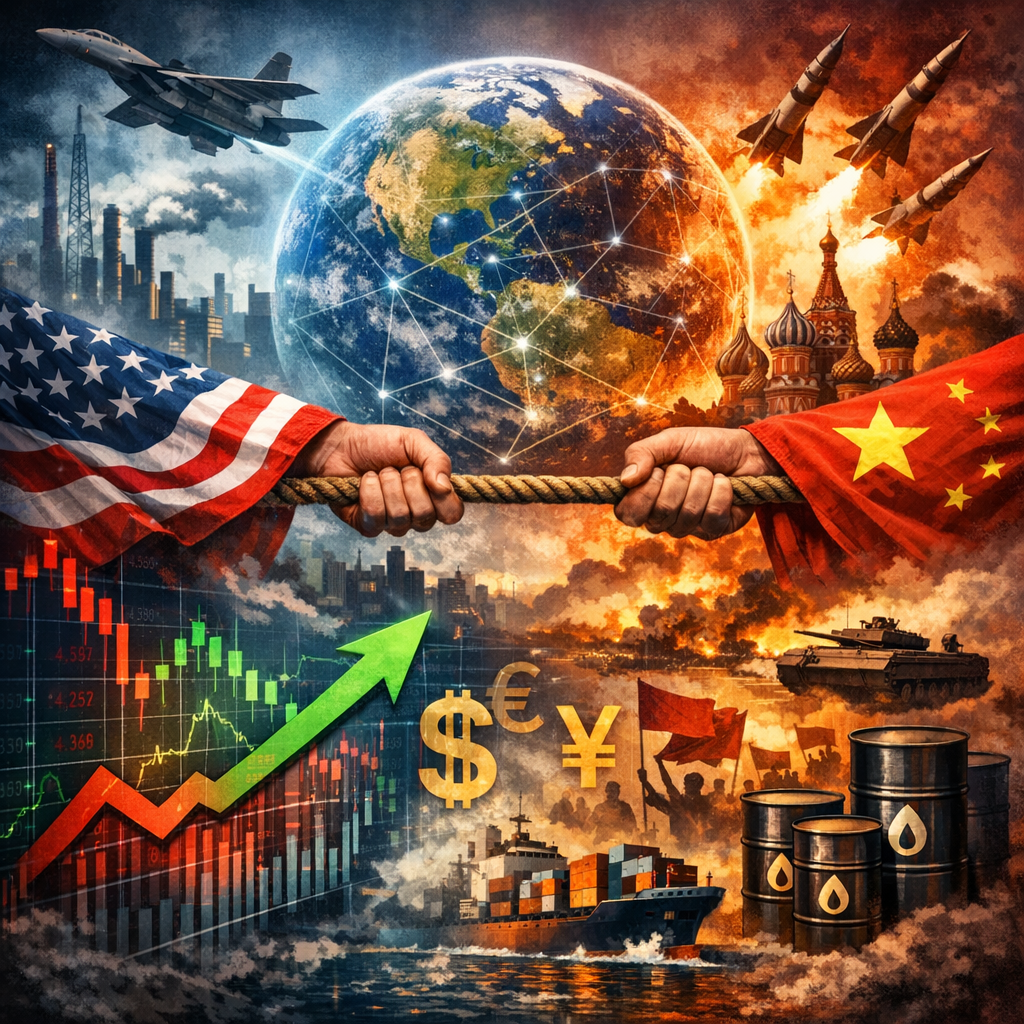
The global economic landscape is currently characterized by a complex interplay of geopolitical tensions, technological advancements, and shifting market dynamics. These factors collectively influence growth trajectories, inflation rates, and policy decisions across nations.
Geopolitical Tensions and Economic Impacts
Recent conflicts in the Middle East have introduced volatility into global markets. The Organization for Economic Cooperation and Development (OECD) highlighted that the global economy, which had shown robustness, is now facing a test of its resilience due to these conflicts. The OECD projected global growth at 2.9% in 2026, with the intensifying Middle East conflict offsetting potential upward revisions. This situation underscores the interconnectedness of geopolitical events and economic performance.
Technological Advancements and Market Dynamics
Artificial intelligence (AI) continues to reshape industries and economies. The World Economic Forum’s Chief Economists’ Outlook noted that surging AI investment is a defining trend for 2026, presenting both opportunities and risks. While AI drives innovation and efficiency, it also raises concerns about asset valuations and potential market disruptions.
Regional Economic Perspectives
In the United States, resilient consumer spending and capital expenditures on AI are expected to drive moderate growth. Morgan Stanley Research anticipates that U.S. economic conditions will remain robust, supported by healthy balance sheets and rising wealth. Conversely, the eurozone faces challenges, with growth projected to slow due to external factors such as stronger currencies and tariffs on exports to the U.S.
Developing economies are forecasted to outperform larger emerging economies, aided by less exposure to U.S. tariffs. However, high debt levels and climate shocks continue to constrain many developing and climate-vulnerable economies, as noted by the United Nations Conference on Trade and Development (UNCTAD).
Inflation and Monetary Policies
Inflation rates are experiencing upward pressure due to rising energy prices and supply chain disruptions. The OECD projected inflation rates for G20 countries at 4.0% in 2026, reflecting these challenges. Central banks are navigating a delicate balance between controlling inflation and supporting growth, with policy decisions varying across regions.
Conclusion
The global economic outlook for 2026 is marked by uncertainty, influenced by geopolitical developments, technological shifts, and regional disparities. Policymakers and businesses must remain agile, adapting to evolving conditions to foster resilience and sustainable growth in an increasingly interconnected world.