

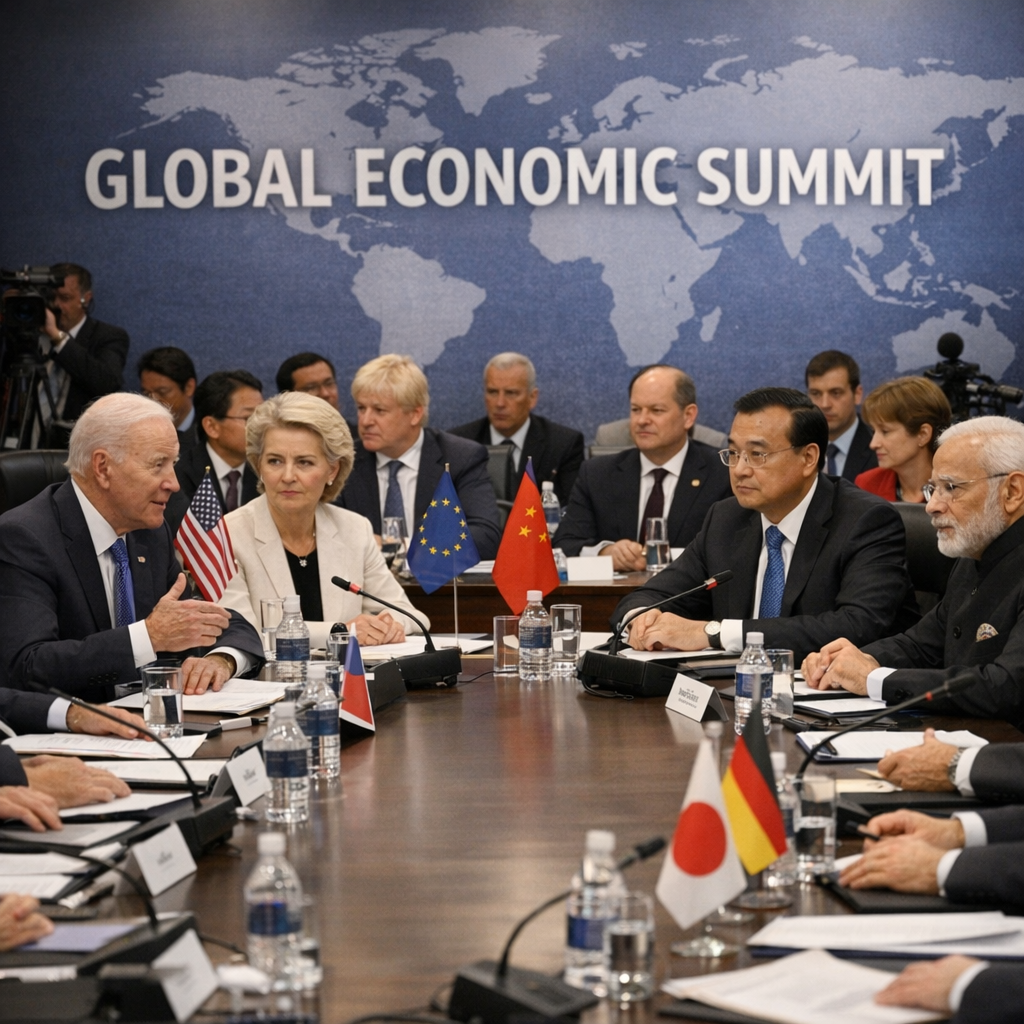
The global economy is currently navigating a complex landscape marked by geopolitical tensions, technological advancements, and varying regional growth patterns. Understanding these dynamics is crucial for policymakers, businesses, and individuals alike.
Global Growth Projections
Recent analyses indicate a moderation in global economic growth. The International Monetary Fund (IMF) projects a global growth rate of 3.0% for 2026 and 3.4% for 2027. This outlook reflects a balance between the positive momentum from technological innovations and the negative impacts of ongoing geopolitical conflicts.
Regional Economic Trends
In the United States, consumer spending and investments in artificial intelligence are expected to drive moderate growth. Morgan Stanley forecasts that U.S. economic conditions will remain resilient, supported by healthy balance sheets and rising wealth.
Europe faces a more challenging environment. The eurozone’s growth is projected to slow to 0.8% in 2026, influenced by rising energy prices and geopolitical uncertainties. Countries like Germany and the United Kingdom are particularly affected due to their industrial dependencies and energy import structures.
Asia presents a mixed picture. India is anticipated to lead with robust growth, driven by strong domestic demand. In contrast, China’s growth is expected to decelerate to 4.5%, hindered by challenges in the property sector and other structural issues.
Impact of Geopolitical Tensions
Geopolitical conflicts, notably in the Middle East, have introduced significant volatility into global markets. The OECD highlights that recent hostilities have tested the resilience of the global economy, affecting energy prices and trade flows. Such tensions underscore the need for diversified energy sources and strengthened international cooperation.
Technological Advancements and Economic Implications
The rapid deployment of artificial intelligence (AI) is reshaping economic landscapes. While AI investments are boosting productivity and creating new market opportunities, they also pose challenges related to labor market disruptions and ethical considerations. Policymakers are urged to balance innovation with inclusive growth strategies.
Conclusion
The global economic outlook remains uncertain, influenced by a confluence of geopolitical events and technological transformations. Stakeholders must remain vigilant, adaptable, and collaborative to navigate these complexities and foster sustainable economic growth.