

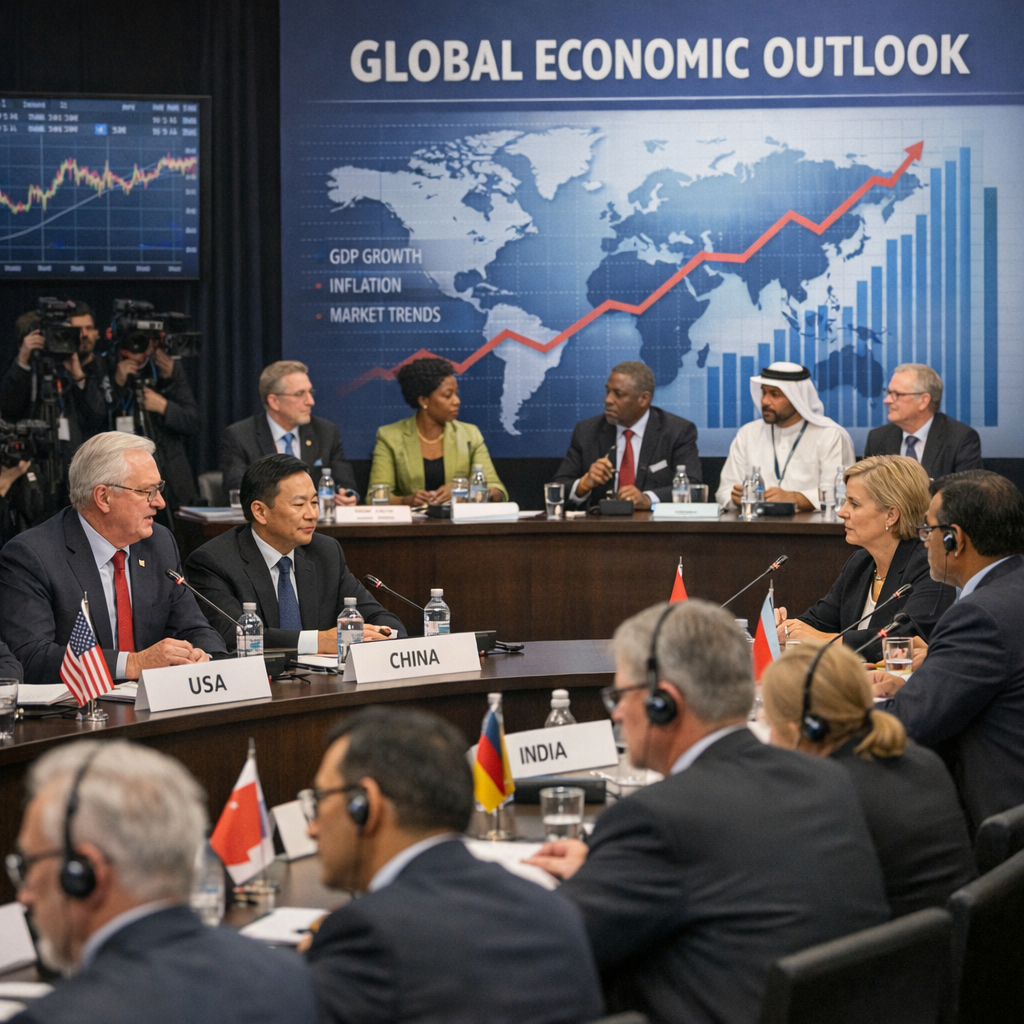
The global economy is currently experiencing a period of moderate growth, influenced by a complex interplay of technological advancements, geopolitical tensions, and regional disparities. Understanding these dynamics is crucial for policymakers, businesses, and individuals alike.
Global Growth Trends
Recent analyses indicate that global gross domestic product (GDP) is projected to moderate to an estimated 3% in 2025 and 3.2% in 2026, before stabilizing in 2027. This trajectory is supported by resilient consumption patterns and capital spending, particularly in the United States, where investments related to artificial intelligence (AI) and spending by wealthier consumers are bolstering growth.
Regional Economic Performance
Economic performance varies significantly across regions. The United States continues to demonstrate resilience, with consumer spending and AI-driven investments playing pivotal roles. In contrast, Western Europe faces weaker growth prospects, while countries like India are experiencing robust expansion driven by strong consumer demand. China’s growth is expected to slow, influenced by challenges in the property sector and a shift towards domestic consumption.
Impact of Technological Advancements
The rapid deployment of AI technologies is reshaping economic landscapes. While AI investments are driving growth in certain sectors, they also present challenges, including potential disruptions in labor markets and the need for regulatory frameworks to manage ethical considerations and data privacy concerns.
Geopolitical Tensions and Economic Implications
Geopolitical developments, such as conflicts in the Middle East, have introduced volatility in energy markets, leading to fluctuating oil prices. These fluctuations have a cascading effect on global inflation rates and economic stability, particularly for energy-importing nations.
Policy Responses and Future Outlook
In response to these challenges, central banks in major economies are adjusting monetary policies, with some considering interest rate cuts to stimulate growth. However, the effectiveness of these measures depends on various factors, including the resolution of geopolitical conflicts and the stabilization of energy markets.
In conclusion, while the global economy exhibits signs of resilience, it remains susceptible to a range of uncertainties. Continuous monitoring and adaptive policy measures are essential to navigate these uncertain waters and foster sustainable economic growth.