

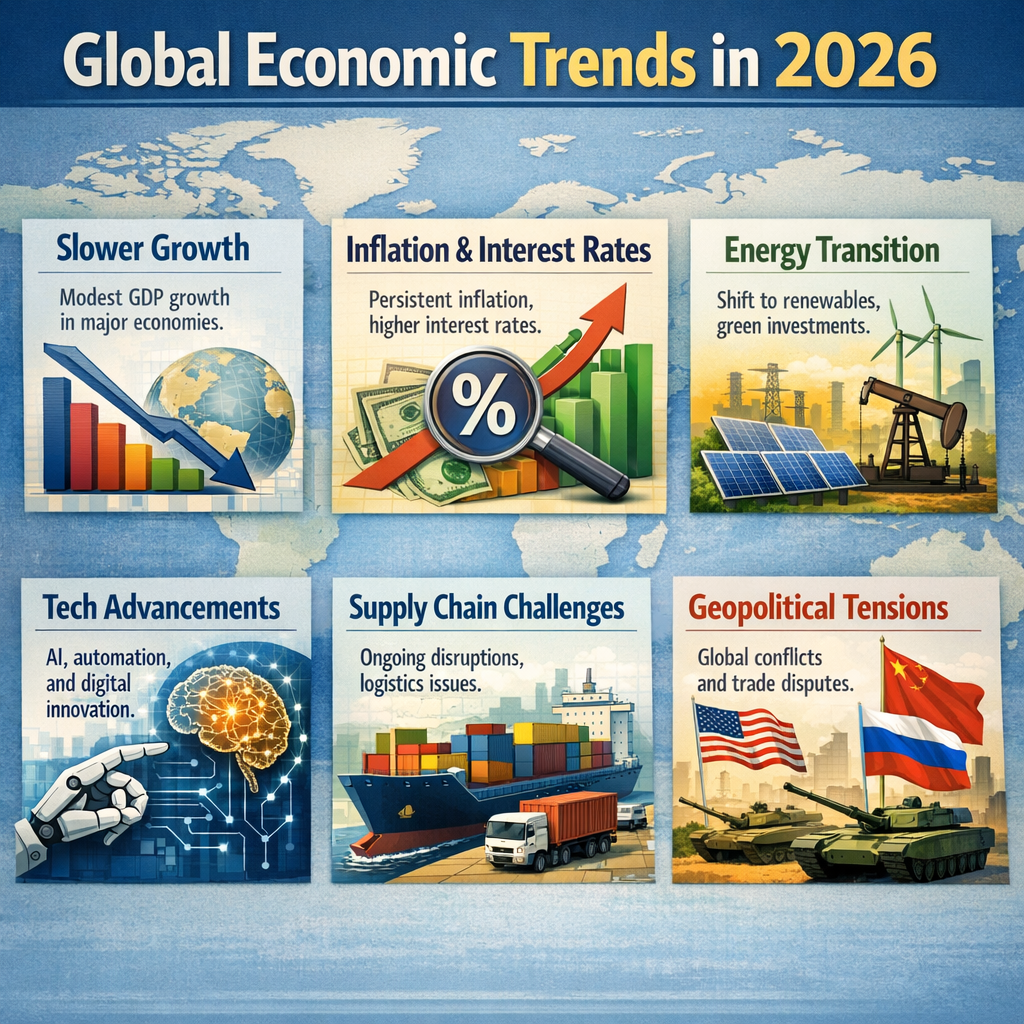
The global economic landscape in 2026 is marked by a complex interplay of geopolitical tensions and rapid technological advancements. According to the International Monetary Fund (IMF), global growth is projected at 3.0% for 2026, with a slight increase to 3.4% in 2027. This outlook reflects the dual forces of conflict-induced disruptions and the momentum from artificial intelligence (AI) integration across industries.
Geopolitical Tensions and Energy Markets
Recent conflicts in the Middle East have significantly impacted global energy markets. The Organization for Economic Cooperation and Development (OECD) notes that these tensions have tested the resilience of the global economy, leading to volatile oil prices and heightened inflationary pressures. The OECD projects global growth at 2.9% in 2026, unchanged from previous forecasts, but highlights the potential for downward revisions if conflicts persist.
Technological Advancements and Economic Resilience
On a more positive note, the rapid adoption of AI technologies is providing a counterbalance to geopolitical challenges. Morgan Stanley’s midyear economic outlook emphasizes that AI-driven investments and resilient consumer spending, particularly in the United States, are key drivers of economic growth. The report projects global growth to slow modestly to 3.2% for the full year, with a recovery to 3.4% in 2027 as energy prices stabilize.
Regional Perspectives
Different regions are experiencing varied economic trajectories. The United States remains relatively resilient, with strong domestic energy production and AI investments supporting a projected GDP growth of 2.1%. In contrast, Europe faces stagflation, with eurozone growth predicted at just 0.8%, as rising energy costs impact industrial output. India stands out with robust 6.5% growth, driven by strong domestic momentum, while China’s growth is expected to slow to 4.5% amid ongoing real estate issues but gains in green-tech and AI exports.
Policy Implications
Central banks are navigating a delicate balance between controlling inflation and supporting growth. The IMF advises policymakers to preserve price stability, rebuild fiscal space, and strengthen adaptability to manage the crosscurrents of war and technology. The OECD recommends timely government policies that target households and businesses most in need, provide incentives to lower energy use, and promote eco-friendly energy solutions.
In conclusion, while the global economy faces significant challenges from geopolitical tensions and energy market disruptions, the rapid integration of AI and other technological advancements offers a pathway to resilience and growth. Policymakers and businesses must navigate these uncertain waters with strategic investments and adaptive policies to ensure sustained economic progress.