

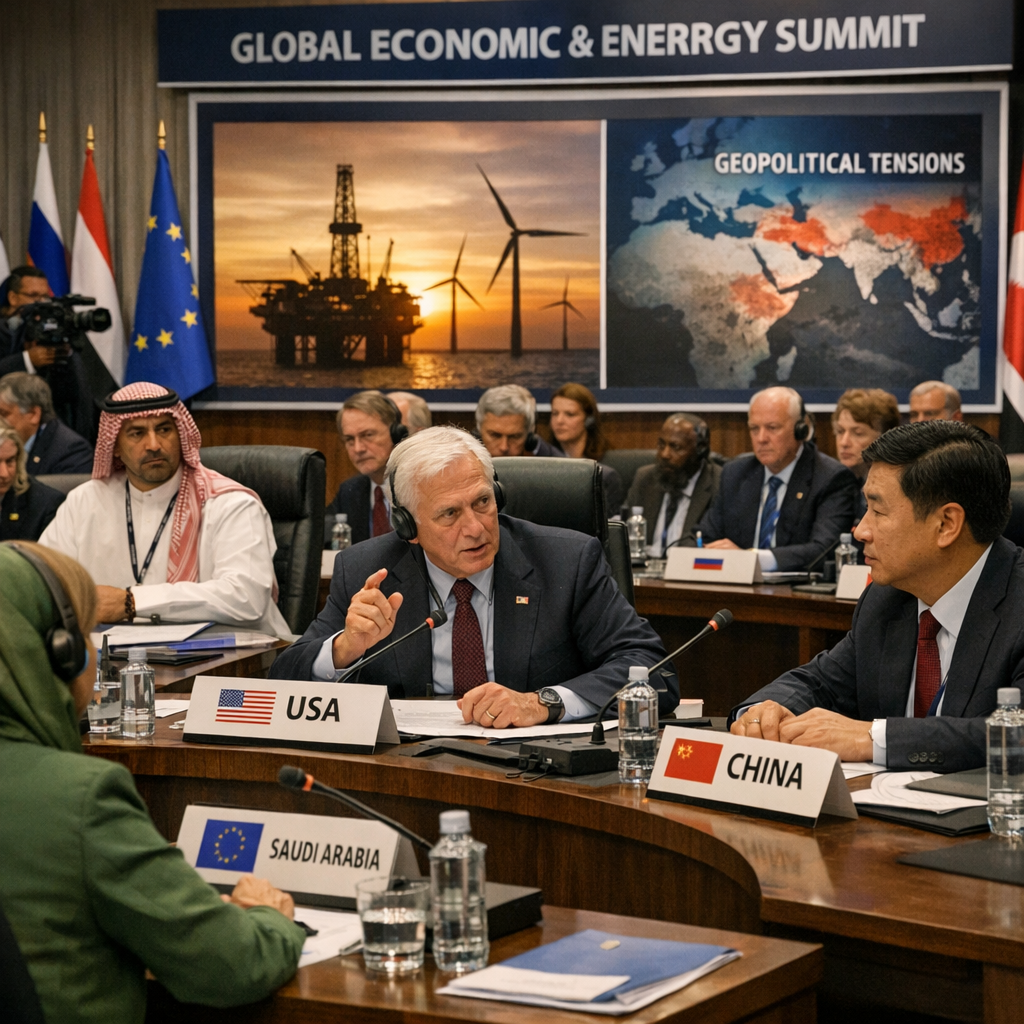
The global economy is currently navigating a complex landscape marked by energy shocks and geopolitical tensions, leading to a cautious outlook for growth and inflation.
Energy Shocks and Inflationary Pressures
Recent conflicts in the Middle East have disrupted energy supplies, causing a surge in global energy prices. This disruption has introduced new inflationary pressures, affecting economies worldwide. The Organization for Economic Cooperation and Development (OECD) projects that these energy shocks will weigh on global growth while pushing inflation higher.
Growth Projections Amid Uncertainty
Despite these challenges, the global economy has shown resilience. The OECD forecasts global growth of 2.9% in 2026 and 3.0% in 2027. However, these projections are subject to significant uncertainty, particularly concerning the duration and resolution of the Middle East conflict. A prolonged disruption could further dampen growth prospects and exacerbate inflationary trends.
Regional Impacts and Policy Responses
Different regions are experiencing varied impacts. The United States is projected to see GDP growth of 2.0% in 2026, while the euro area is expected to grow by 0.8%. China’s growth is anticipated to slow to 4.4% in 2026. In response to these challenges, central banks are adopting cautious monetary policies, balancing the need to control inflation with supporting economic growth. For instance, the Federal Reserve has maintained interest rates, emphasizing a data-dependent approach to future policy decisions.
Implications for the United Arab Emirates
For the United Arab Emirates (UAE), these global developments have direct implications. As a major energy producer, the UAE may benefit from higher energy prices in the short term. However, the broader economic uncertainty and potential for prolonged geopolitical tensions could impact trade, investment, and overall economic stability in the region.
Conclusion
In this environment of heightened uncertainty, it is crucial for policymakers and businesses to remain vigilant, adaptable, and proactive in addressing the evolving economic challenges. Strategic planning and international cooperation will be key to navigating the complexities of the current global economic landscape.