

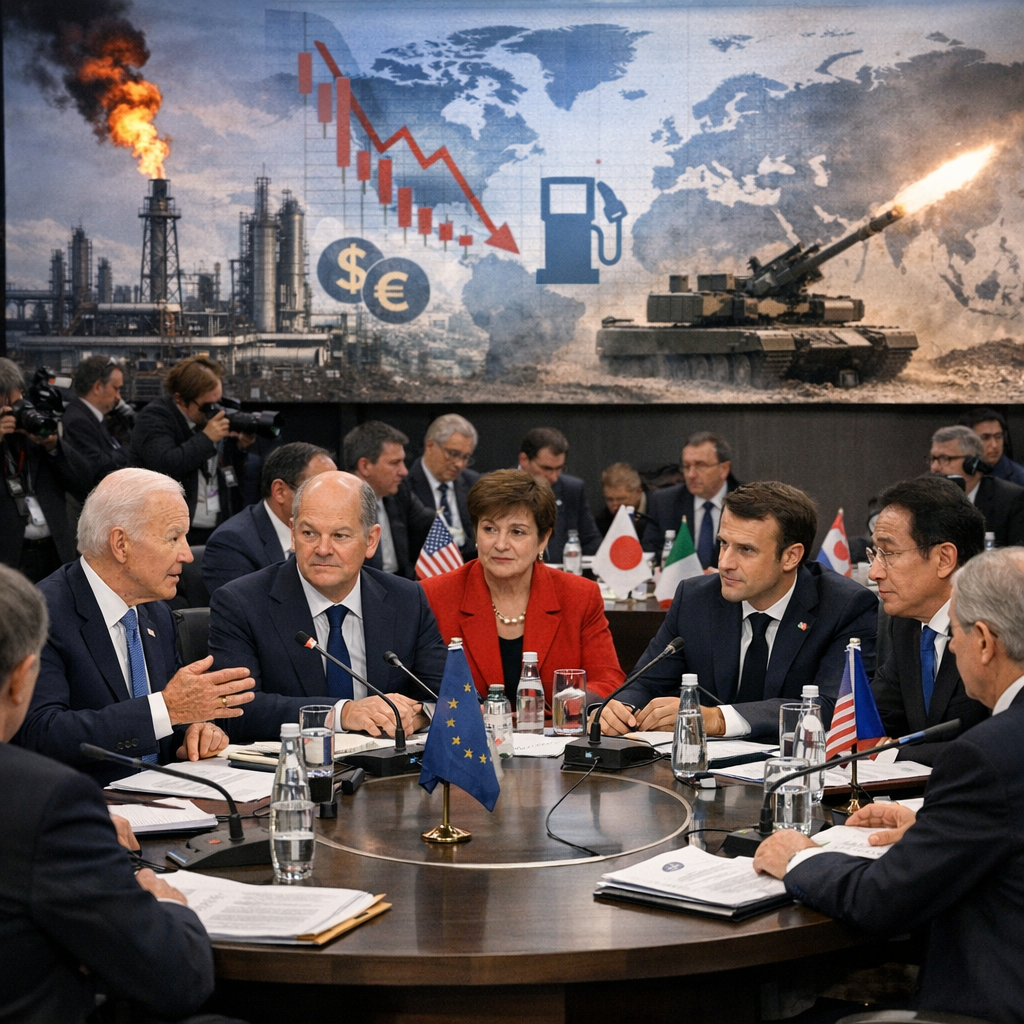
The global economy is currently navigating a complex landscape marked by energy shocks and geopolitical tensions, leading to a cautious outlook for growth and inflation.
Energy Shocks and Inflationary Pressures
Recent conflicts in the Middle East have disrupted energy supplies, causing a surge in global energy prices. This disruption has introduced new inflationary pressures, affecting economies worldwide. The Organization for Economic Cooperation and Development (OECD) projects that global growth will slow to 2.8% in 2026, down from 3.4% in 2025, with inflation in G20 countries expected to rise to 4.0% in 2026.
Geopolitical Tensions and Trade Policies
In addition to energy concerns, geopolitical tensions are influencing global trade policies. The European Union, for instance, is increasingly wary of a potential surge in inexpensive Chinese exports, which could adversely affect key industries. This apprehension is shaping current EU trade policies, especially as China’s trade surplus reached a record $1.2 trillion last year.
Monetary Policy Responses
Central banks are responding to these challenges with cautious monetary policies. The U.S. Federal Reserve, under new Chair Kevin Warsh, recently decided to maintain the federal funds rate at 3.5% to 3.75%. Despite elevated inflation and energy price spikes, the Fed emphasizes a data-dependent approach, indicating potential future rate hikes based on inflation and labor trends.
Implications for the UAE
For the United Arab Emirates, these global developments have significant implications. As a major energy producer, the UAE may benefit from higher energy prices in the short term. However, prolonged geopolitical tensions and potential shifts in global trade policies could impact the nation’s economic stability and growth prospects. Diversifying the economy and strengthening non-oil sectors remain crucial strategies for mitigating these external risks.
In conclusion, while the global economic outlook presents challenges, proactive policy measures and strategic planning can help navigate this period of uncertainty. Staying informed and adaptable will be key for economies worldwide, including the UAE, to maintain resilience in the face of evolving global dynamics.