

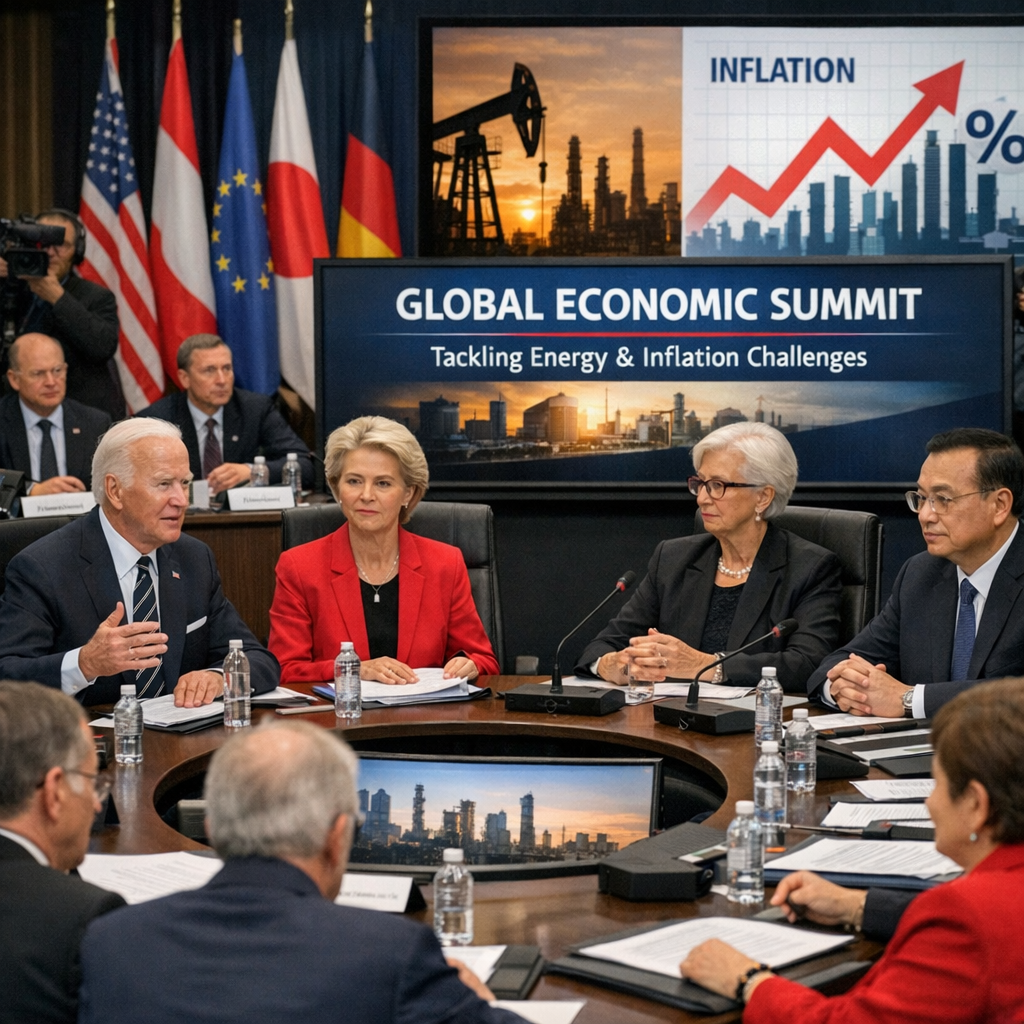
The global economic landscape is currently navigating a complex array of challenges, primarily driven by energy market disruptions and rising inflationary pressures. These factors are influencing growth trajectories across different regions, prompting policymakers and investors to adopt cautious strategies.
Energy Market Disruptions and Inflation
Recent geopolitical tensions have led to significant disruptions in energy production, particularly in the Middle East. This has resulted in an energy shock that is driving inflationary pressures worldwide. The Organisation for Economic Co-operation and Development (OECD) projects global growth to slow from 3.4% in 2025 to 2.8% in 2026, with inflation expected to reach around 4.5% globally. The OECD emphasizes the need for targeted and temporary fiscal support to mitigate these effects, while also advocating for efforts to diversify energy supply and improve energy efficiency to reduce vulnerabilities to future shocks.
Regional Economic Impacts
The impact of these disruptions varies across regions. The United States economy remains relatively resilient, supported by strong domestic energy production and investments in artificial intelligence, defense, and energy sectors. However, consumers are tightening spending due to rising inflation and unemployment. In contrast, Europe is experiencing stagflation, with eurozone growth predicted at just 0.8%, as energy costs severely impact industrial output, especially in Germany and the United Kingdom.
Emerging markets present a mixed picture. India stands out with a projected growth of 6.5%, driven by strong domestic momentum. China, however, is expected to slow to 4.5% growth amid ongoing real estate issues, despite gains in green technology and AI exports. Latin America faces pressure from weaker Chinese demand, tighter U.S. monetary conditions, and rising fuel costs.
Investor Sentiment and Market Outlook
Investor sentiment remains cautious amid these uncertainties. Analysts expect the S&P 500 to reach about 7,600 by year-end, translating to a total return of nearly 12% for 2026. However, potential short-term turbulence is anticipated due to factors such as leadership transitions at the Federal Reserve, midterm elections, and seasonally weak summer months. Investors are advised to embrace volatility, maintain a balanced portfolio, and capitalize on key sectors like technology and energy, which are displaying strong earnings growth.
In summary, the global economy is at a critical juncture, facing challenges from energy market disruptions and inflationary pressures. While some regions demonstrate resilience, others are grappling with stagnation and economic pressures. Policymakers and investors alike must navigate this uncertain landscape with strategic planning and adaptability to foster sustainable growth and stability.