

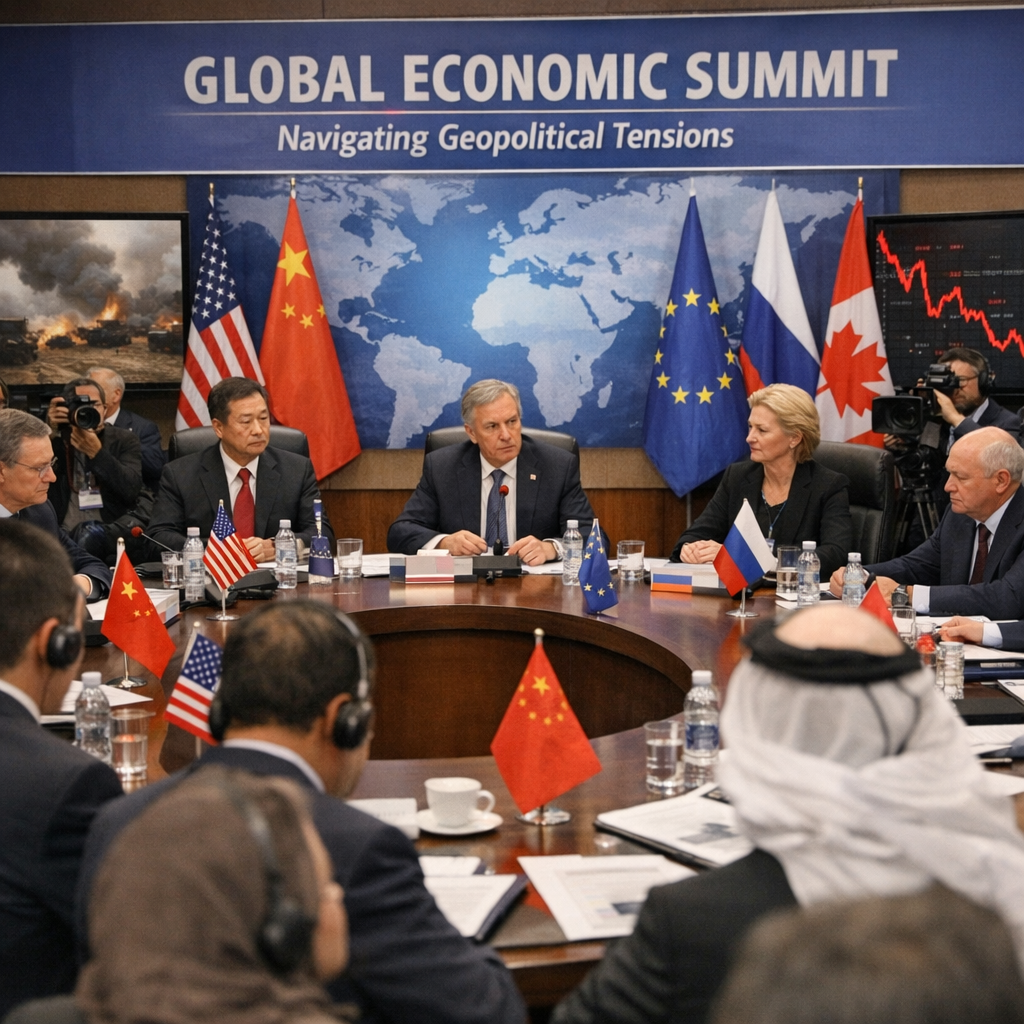
The global economic landscape is currently navigating a complex array of challenges, with geopolitical tensions, particularly in the Middle East, exerting significant influence on growth trajectories and inflationary pressures.
Impact of Middle East Conflicts
Recent conflicts in the Middle East have led to disruptions in energy supplies, causing a surge in global energy prices. This energy shock has introduced new inflationary pressures and heightened uncertainty in global markets. The Organization for Economic Cooperation and Development (OECD) projects global growth to slow to 2.8% in 2026, down from 3.4% in 2025, largely due to these developments.
Inflationary Pressures and Monetary Policies
The energy supply shock has led to higher commodity prices, with indirect effects boosting prices across various sectors, notably in agriculture and food. In response, central banks in major economies are adopting cautious monetary policies. The U.S. Federal Reserve, for instance, is in a “wait-and-see” posture, carefully monitoring the evolving situation before making further policy adjustments.
Regional Economic Outlooks
In the United States, GDP growth is projected at 2.0% in 2026, before moderating to 1.7% in 2027. The euro area is expected to see growth of 0.8% in 2026 and 1.2% in 2027. China’s growth is projected to slow to 4.4% in 2026 and 4.3% in 2027. These projections reflect the broader impact of geopolitical tensions and energy market disruptions on major economies.
Implications for the United Arab Emirates
For the United Arab Emirates (UAE), the current global economic environment presents both challenges and opportunities. As a major energy producer, the UAE may benefit from higher energy prices in the short term. However, the broader economic slowdown and potential disruptions in global trade could impact non-oil sectors. Diversifying the economy and enhancing resilience through strategic investments in technology and infrastructure will be crucial for sustaining growth amid global uncertainties.
Conclusion
The global economy is at a crossroads, facing significant challenges from geopolitical conflicts and energy market disruptions. While growth projections have been adjusted downward, the resilience of economies like the UAE will depend on adaptive strategies and proactive policy measures to navigate these uncertain times.