

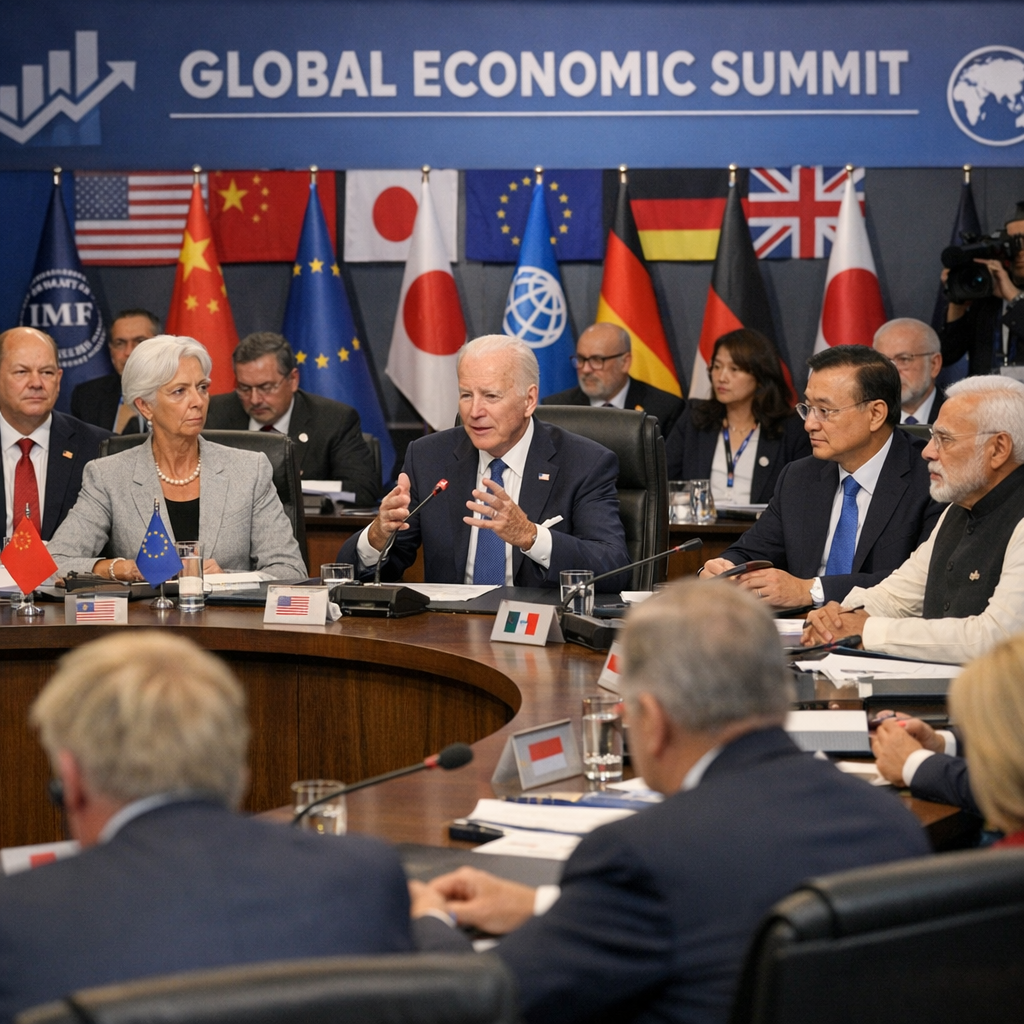
The global economy is currently navigating a complex landscape marked by geopolitical tensions and rapid technological advancements. According to the United Nations Conference on Trade and Development (UNCTAD), global growth is projected to slow to 2.7% in 2026, below the pre-pandemic average of 3.2%. This deceleration is attributed to subdued investment and structural challenges, despite easing inflation and monetary policy adjustments.
Geopolitical Tensions and Economic Impact
Recent conflicts in the Middle East have introduced significant uncertainties. The Organization for Economic Cooperation and Development (OECD) notes that the energy supply shock from these conflicts is testing the resilience of the global economy. The OECD projects global growth of 2.9% in 2026, with inflation pressures persisting due to rising energy prices.
Technological Advancements and Economic Resilience
Despite these challenges, technological investments, particularly in artificial intelligence (AI), are providing some economic resilience. The International Monetary Fund (IMF) highlights that robust investments in AI and technology are supporting economic stability in certain regions. For instance, the United States is expected to grow by 2.3% in 2026, driven by strong consumer spending and capital expenditures on AI.
Regional Economic Projections
Economic performance varies across regions. The eurozone faces slower growth at 0.9% in 2026, influenced by high energy costs. In contrast, China is forecasted to grow by 4.6%, aided by public works and tech exports, despite challenges in the real estate sector. India remains a bright spot, with a projected growth rate of 6.4%, driven by strong consumer demand.
Policy Recommendations
To navigate these uncertainties, the OECD recommends timely government policies targeting households and businesses most in need, providing incentives to lower energy use, and promoting eco-friendly energy solutions. Additionally, structural reforms and targeted AI applications could catalyze growth, especially in emerging economies.
In conclusion, while the global economic outlook for 2026 presents challenges, strategic investments in technology and coordinated policy responses can help mitigate risks and foster resilience.