

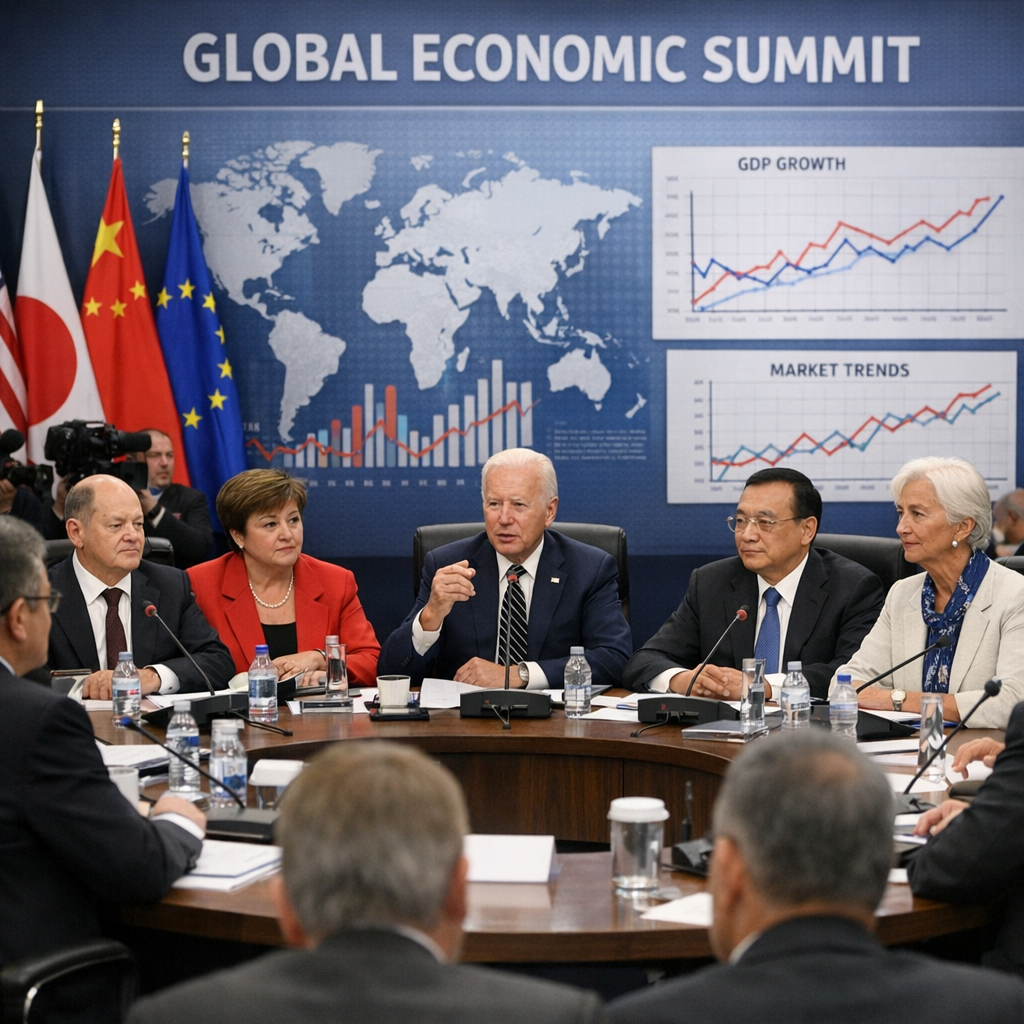
The global economy is currently navigating a complex landscape marked by geopolitical tensions, technological advancements, and varying regional growth patterns. Recent analyses provide insights into these dynamics and their implications for the future.
Global Growth Projections
According to the International Monetary Fund (IMF), global growth is projected at 3.0% for 2026 and 3.4% for 2027. This outlook reflects a balance between the negative impacts of ongoing conflicts and the positive momentum from technological innovations. The IMF notes that while the war shock is weighing on energy importers and vulnerable economies, AI-driven demand is lifting countries integrated into the global technology value chain.
Regional Economic Performance
In the United States, consumer spending and capital expenditures on artificial intelligence are expected to drive moderate growth. Morgan Stanley forecasts that U.S. GDP will rise by 2.1% in 2026, supported by resilient consumption and capital spending. However, the range of possible economic outcomes remains wide, influenced by factors such as inflation trends and monetary policy decisions.
Europe faces a more challenging environment. The Organization for Economic Cooperation and Development (OECD) projects eurozone growth at 0.8% in 2026, with energy costs severely impacting industrial output, especially in Germany and the U.K. The OECD emphasizes that the energy supply shock from the evolving conflict in the Middle East is testing the resilience of the global economy.
In Asia, India stands out with robust growth projections. Kiplinger forecasts India’s GDP to grow by 6.4% in 2026, propelled by strong consumer demand. Conversely, China’s growth is expected to slow to 4.5%, hindered by property sector challenges, while Japan anticipates minimal growth at 0.4%.
Inflation and Monetary Policy
Global inflation remains a concern, with the OECD projecting headline inflation in G20 countries at 4.0% in 2026. This reflects the surge in global energy prices due to geopolitical conflicts. Central banks are expected to navigate these inflationary pressures cautiously, with potential rate adjustments varying by region.
Implications for the UAE
For the United Arab Emirates, these global economic trends have significant implications. As a major energy exporter, the UAE may benefit from higher energy prices. However, the nation must also contend with potential inflationary pressures and the broader impact of global economic slowdowns on trade and investment.
In conclusion, while the global economic outlook presents challenges, particularly due to geopolitical tensions and inflationary pressures, opportunities exist, especially in sectors driven by technological advancements. Policymakers and businesses must remain vigilant and adaptable to navigate this evolving landscape effectively.