

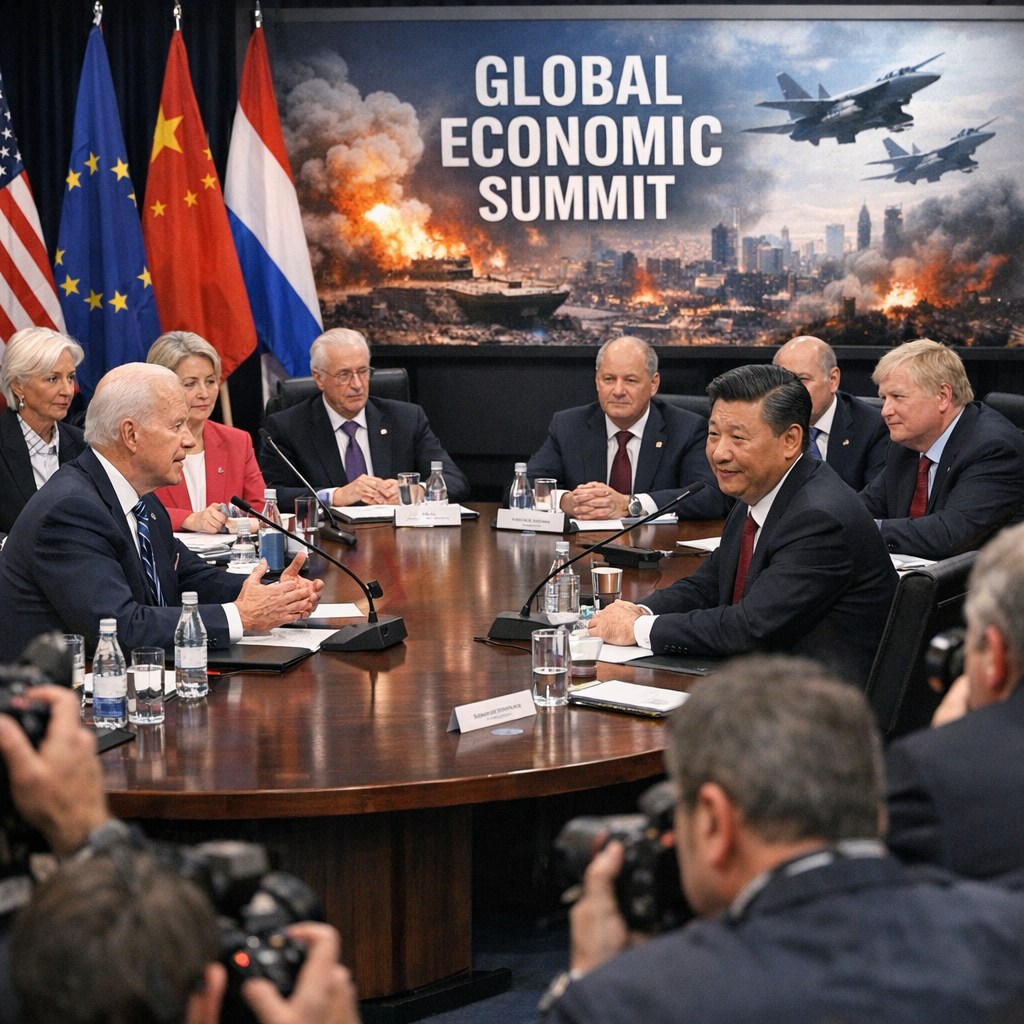
The global economy is currently navigating a complex landscape marked by geopolitical tensions and energy crises, leading to a slowdown in growth and rising inflation across various regions.
Global Growth Projections
According to the International Monetary Fund (IMF), global growth is projected to slow to 3.1% in 2026 and 3.2% in 2027. This deceleration is attributed to the ongoing conflict in the Middle East, which has disrupted trade and heightened uncertainty. The IMF notes that the slowdown and increase in inflation are expected to be particularly pronounced in emerging market and developing economies.
Regional Impacts
In the United States, the economy remains relatively resilient due to strong domestic energy production and investments in artificial intelligence (AI), defense, and energy sectors, supporting a projected GDP growth of 2.1%. However, consumers are tightening spending due to rising inflation and unemployment.
Europe is experiencing stagflation, with eurozone growth predicted at just 0.8%. Energy costs are severely impacting industrial output, especially in Germany and the United Kingdom.
India stands out with a robust 6.5% growth, driven by strong domestic momentum. In contrast, China’s growth is expected to slow to 4.5%, hindered by property sector issues, despite gains in green-tech and AI exports.
Inflation and Energy Prices
The energy crisis, sparked by the conflict in the Middle East, has led to rising commodity prices and inflation, expected to reach around 4.5% globally. This situation poses significant challenges for economies heavily reliant on energy imports.
Policy Responses
Central banks are adopting varied approaches in response to these challenges. The U.S. Federal Reserve is expected to cut rates modestly, while the European Central Bank is likely to hold rates stable. The Bank of Japan may consider increasing rates. These policy decisions aim to balance the need for economic stability with the pressures of rising inflation.
Conclusion
As the global economy faces these multifaceted challenges, it is crucial for policymakers to implement strategies that address both immediate concerns and long-term growth. For regions like Dubai, understanding these global dynamics is essential for navigating the uncertainties ahead.