

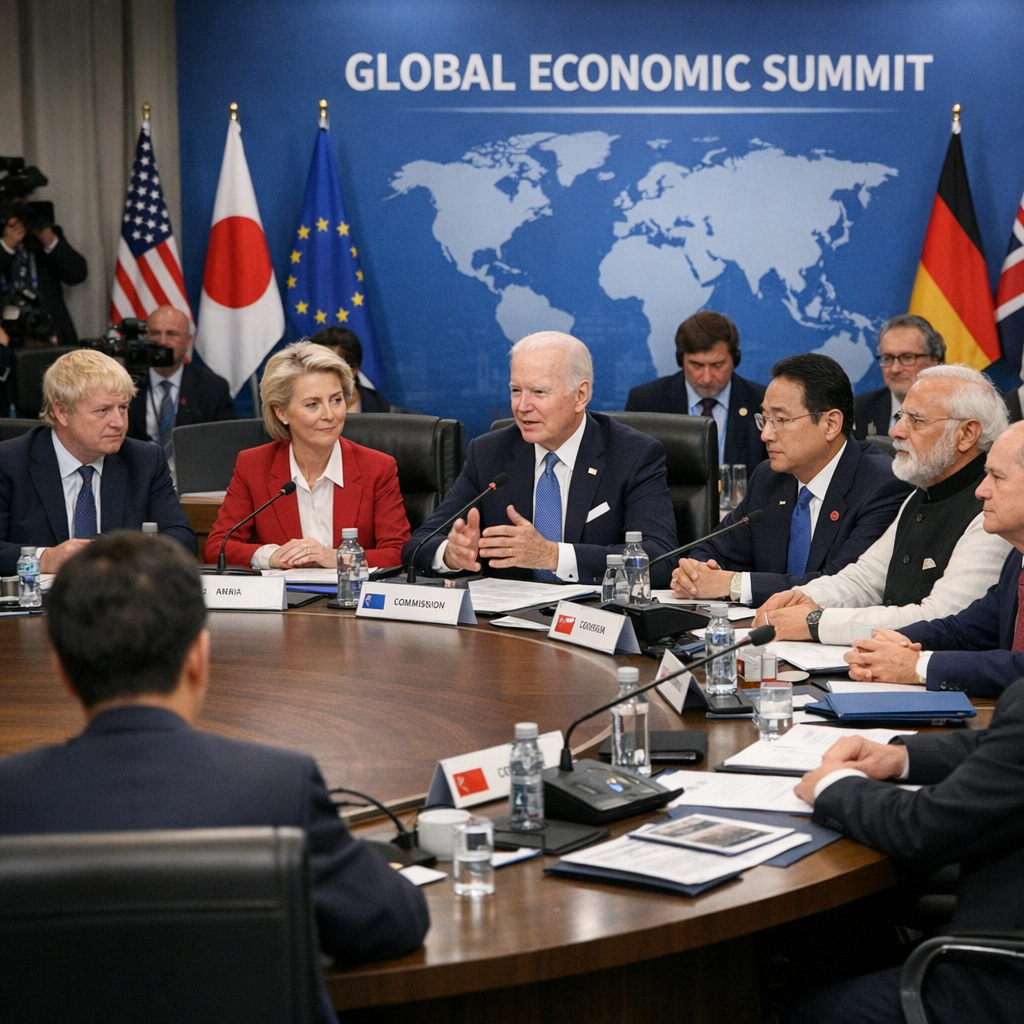
The global economy in 2026 presents a nuanced picture, characterized by moderate growth tempered by geopolitical tensions and rapid technological advancements. According to the International Monetary Fund (IMF), global economic growth is projected at 3% for the year, a slight decrease from the previous year’s 3.5%. This slowdown is attributed to factors such as the ongoing conflict in Iran, which has disrupted energy markets and contributed to inflationary pressures.
Regional Perspectives
United States
The United States demonstrates relative resilience, with an anticipated growth rate of 2.3%. This stability is largely driven by robust consumer spending and significant investments in artificial intelligence (AI) and technological infrastructure. However, the nation faces challenges, including a cooling labor market and rising inflation, which may impact middle- and lower-income households.
Europe
Europe’s economic outlook is more subdued, with the eurozone expected to grow by just 0.9%. Countries like Germany are experiencing slow growth due to energy challenges, while France and the United Kingdom grapple with domestic economic issues. The region’s heavy reliance on energy imports from the Middle East makes it particularly vulnerable to disruptions stemming from geopolitical conflicts.
Asia
In Asia, India stands out with a robust growth projection of 6.4%, driven by strong domestic demand and a burgeoning middle class. Conversely, China’s growth is expected to slow to 4.6%, influenced by challenges in the property market and a shift towards infrastructure investment and technological exports.
Impact on the United Arab Emirates
For the United Arab Emirates (UAE), the global economic landscape presents both opportunities and challenges. As a major energy exporter, the UAE benefits from higher oil prices resulting from supply disruptions. However, the nation must also navigate the complexities of global trade realignments and the imperative to diversify its economy. Investments in AI and technological sectors offer promising avenues for growth, aligning with the UAE’s strategic vision for economic diversification.
Conclusion
In summary, while the global economy exhibits resilience, it is not without its challenges. Geopolitical tensions, particularly in the Middle East, and rapid technological changes are shaping economic trajectories worldwide. For the UAE, staying attuned to these global developments and strategically investing in emerging sectors will be crucial in navigating the uncertainties of 2026 and beyond.