

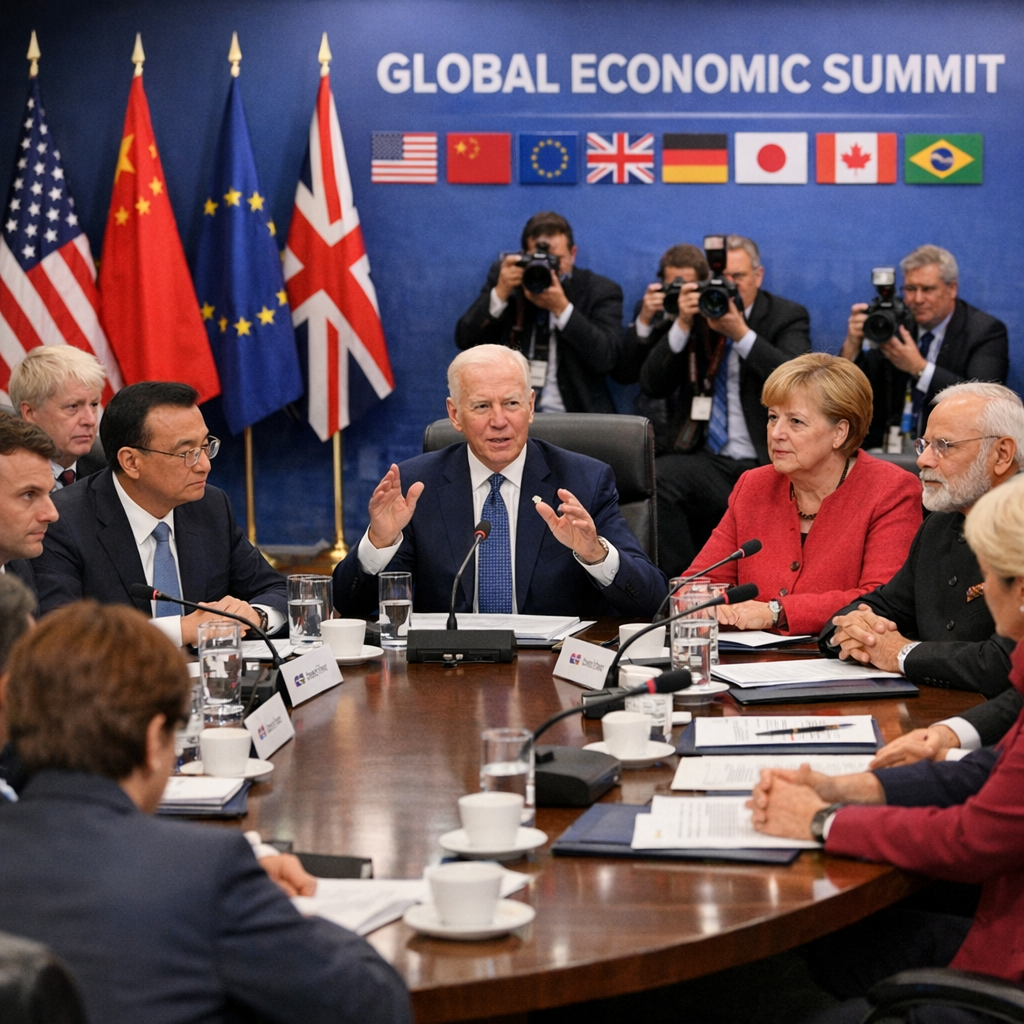
The global economy is demonstrating remarkable resilience in the face of ongoing challenges, including geopolitical tensions, energy crises, and technological transformations. As we navigate through 2026, understanding these dynamics is crucial for policymakers, businesses, and individuals alike.
Global Growth Amidst Challenges
Despite persistent trade tensions and policy uncertainties, the global economy is projected to maintain steady growth. The World Bank forecasts a global GDP growth of 2.6% in 2026, with a slight increase to 2.7% in 2027. This resilience is particularly evident in the United States, where consumer spending and capital investments in artificial intelligence (AI) are driving economic momentum.
Regional Economic Perspectives
In Europe, growth is expected to slow to 1.1% in 2026, influenced by rising energy costs and domestic challenges. Germany, however, is anticipated to experience a rebound due to increased fiscal and defense spending. In Asia, India stands out with a robust growth projection of 6.4%, propelled by strong consumer demand. Conversely, China’s growth is expected to moderate to 4.5%, impacted by issues in the property sector but bolstered by advancements in green technology and AI exports.
Impact of Energy Crises
The recent energy crisis, exacerbated by conflicts in the Middle East, has led to rising commodity prices and inflationary pressures. Global inflation is projected to reach approximately 4.5% in 2026. Despite these challenges, the U.S. economy remains relatively resilient, supported by strong domestic energy production and investments in AI, defense, and energy sectors.
The Role of Artificial Intelligence
Artificial intelligence is playing a pivotal role in shaping the global economic landscape. Investments in AI are driving business expenditures and contributing to economic growth, particularly in the United States. This technological advancement is not only enhancing productivity but also creating new opportunities across various sectors.
Looking Ahead
While the global economy faces a range of challenges, including geopolitical risks and energy crises, its resilience offers a cautiously optimistic outlook. Continued investments in technology, strategic policy decisions, and international cooperation will be key in navigating the uncertainties ahead.