

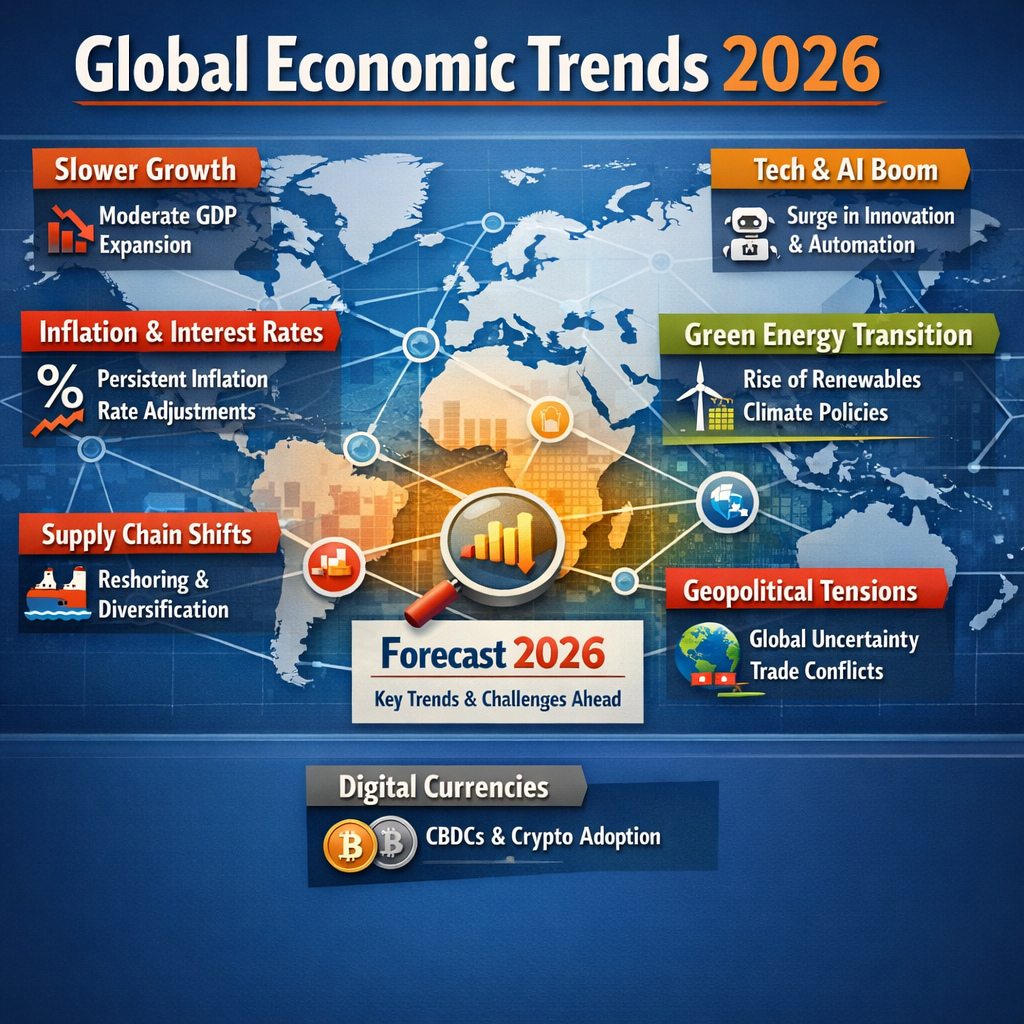
The global economy has demonstrated remarkable resilience in recent years, yet it continues to grapple with challenges stemming from trade tensions, fiscal strains, and persistent uncertainties. According to the United Nations Conference on Trade and Development (UNCTAD), global growth is projected to slow to 2.7% in 2026, down from 3.2% in the pre-pandemic period. This deceleration is attributed to subdued investment and structural headwinds, despite easing inflation and monetary policy adjustments.
Regional Perspectives
United States
The United States is expected to experience a slight slowdown in growth, with projections indicating a decrease from 2.1% in 2025 to 2.0% in 2026. This moderation is largely due to a decline in consumer spending, influenced by reduced purchasing power and a tightening labor market.
Eurozone
In the Eurozone, growth is anticipated to slow from 1.4% in 2025 to 0.8% in 2026. Rising energy prices and external factors, such as tariffs on exports to the U.S. and a structural loss in market share in China and other markets, are expected to impact industrial output, particularly in Germany and the U.K.
Asia
India stands out with a robust growth forecast of 6.4% in 2026, driven by strong domestic demand. Conversely, China’s growth is projected to slow to 4.5%, hindered by challenges in the property sector, despite gains in green technology and AI exports.
Developing Economies
Developing economies are forecasted to outperform larger emerging economies, aided by less exposure to U.S. tariffs. However, many developing countries continue to face high debt and climate-related challenges, which constrain their economic prospects.
Policy Implications
Economist Gita Gopinath warns that rising imbalances among major powers threaten global growth and fuel protectionism. She highlights the risks associated with an overheating stock market, particularly in AI-driven stocks, and high public debt, which limits governments’ ability to intervene during crises. Gopinath emphasizes the need for structural reforms and targeted AI applications to catalyze growth in emerging economies.
In conclusion, while the global economy exhibits resilience, it faces a complex landscape of challenges. Policymakers and stakeholders must navigate these uncertainties with strategic planning and international cooperation to foster sustainable growth.