

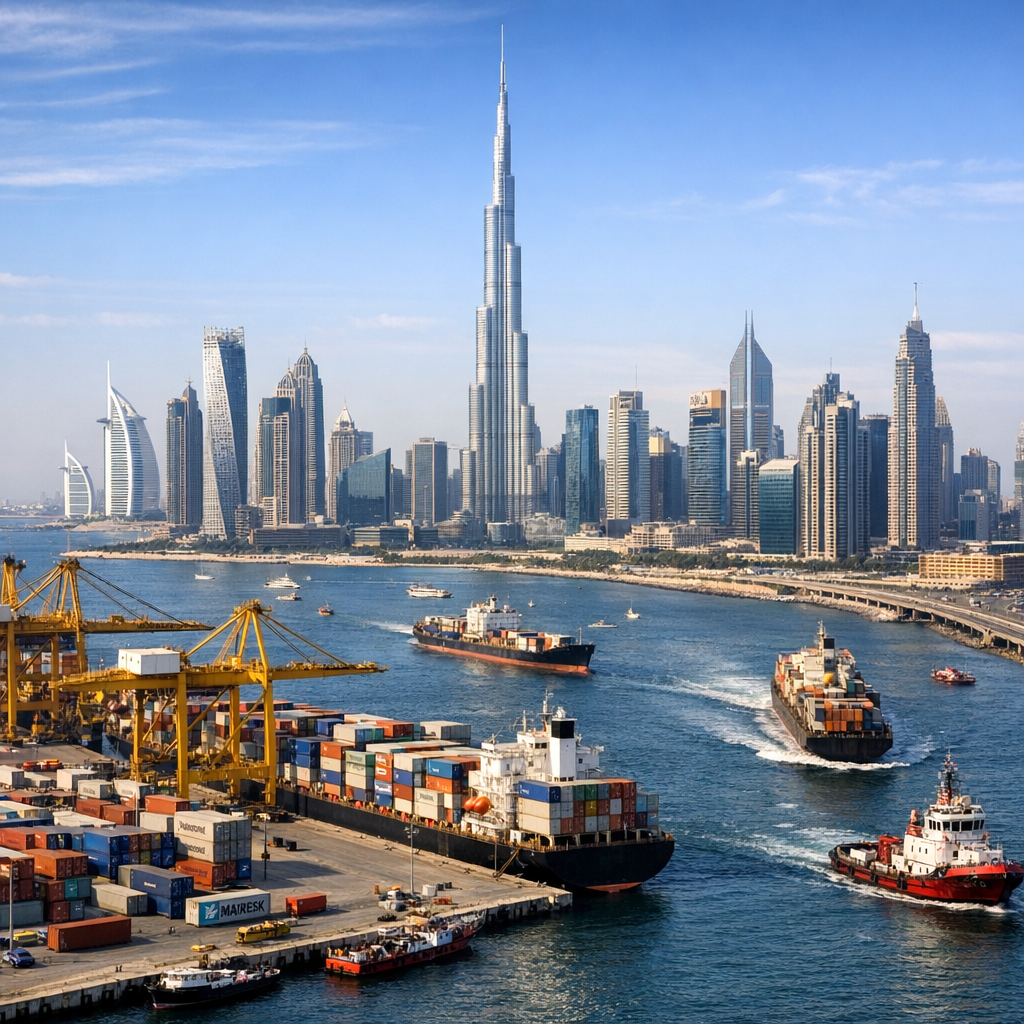
The global economy in 2026 is navigating a complex landscape marked by moderate growth, technological advancements, and geopolitical tensions. These factors collectively influence economic dynamics worldwide, including in Dubai.
Global Economic Overview
According to the World Bank, global growth is projected to remain steady over the next two years, easing to 2.6% in 2026 before rising to 2.7% in 2027. This resilience is attributed to better-than-expected growth in major economies, particularly the United States, which accounts for about two-thirds of the upward revision to the forecast in 2026. However, the 2020s are on track to be the weakest decade for global growth since the 1960s, with one in four developing economies remaining poorer than they were in 2019.
Technological Advancements
Investment in artificial intelligence (AI) and digital infrastructure continues to be a significant driver of economic activity. In the United States, capital spending on AI, data centers, power generation, and digital infrastructure remains a key driver of economic activity. This trend underscores the importance of technological innovation in sustaining economic growth.
Geopolitical Tensions
Geopolitical events, such as the ongoing war in Iran, have introduced uncertainties that impact global markets. The Organization for Economic Cooperation and Development (OECD) has noted that the global economy, which had shown robustness, is now facing a test of its resilience due to intensified conflicts in the Middle East. These tensions have led to choppy commodity and financial markets, affecting global economic conditions.
Implications for Dubai
Dubai’s economy is intricately linked to global economic trends. The city’s strategic position as a global trade hub means that fluctuations in global growth, technological advancements, and geopolitical tensions directly impact its economic landscape. The emphasis on AI and digital infrastructure presents opportunities for Dubai to further its position as a leader in technological innovation. However, geopolitical tensions, particularly in the Middle East, may pose challenges to trade and investment flows.
In conclusion, while the global economy exhibits resilience amid various challenges, Dubai must navigate these dynamics carefully. By leveraging technological advancements and mitigating risks associated with geopolitical tensions, Dubai can continue to thrive in the evolving global economic environment.