

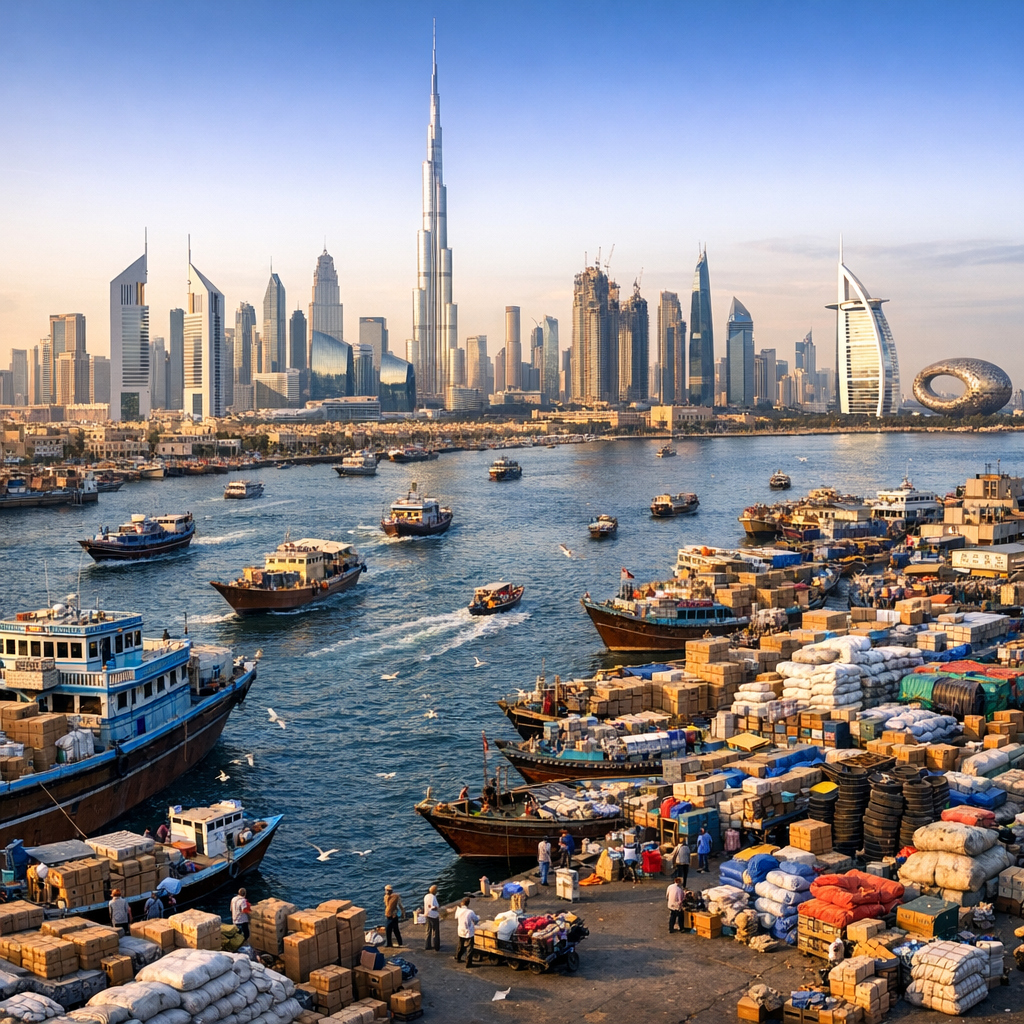
The global economy is currently navigating a complex landscape marked by geopolitical tensions, fluctuating energy prices, and evolving trade policies. These factors have significant implications for economies worldwide, including Dubai’s.
Global Economic Overview
Recent reports indicate a slowdown in global economic growth. The Organisation for Economic Co-operation and Development (OECD) projects global growth to decelerate to 2.7% in 2026, down from 3.4% in 2025. This slowdown is attributed to factors such as energy shocks and rising inflationary pressures.
In the United States, the economy is described as being in a “Goldilocks” phase—neither too hot nor too cold—with GDP growth projected at 2.2% for 2026. This steady growth aligns with long-term trends dictated by productivity and labor force expansion.
Impact on Dubai
Dubai’s economy is intricately linked to global economic trends due to its status as a global trade hub and its diversified economic base. The projected global slowdown could have several implications for Dubai:
Trade and Investment
As global growth moderates, international trade volumes may decline, potentially affecting Dubai’s trade sector. However, Dubai’s strategic location and robust infrastructure position it well to adapt to changing trade dynamics.
Energy Sector
Fluctuations in global energy prices can impact Dubai’s economy. While Dubai has diversified its economy, the broader UAE economy remains influenced by oil revenues. A global energy shock could affect fiscal revenues and investment patterns.
Tourism and Real Estate
Dubai’s tourism and real estate sectors are sensitive to global economic conditions. A slowdown in global growth could lead to reduced tourist arrivals and affect real estate demand. However, Dubai’s proactive policies and initiatives to attract tourists and investors may mitigate some of these effects.
Conclusion
While global economic trends present challenges, Dubai’s diversified economy, strategic initiatives, and resilience position it to navigate these complexities effectively. Continuous monitoring and adaptive strategies will be key to sustaining growth in the face of global economic shifts.