

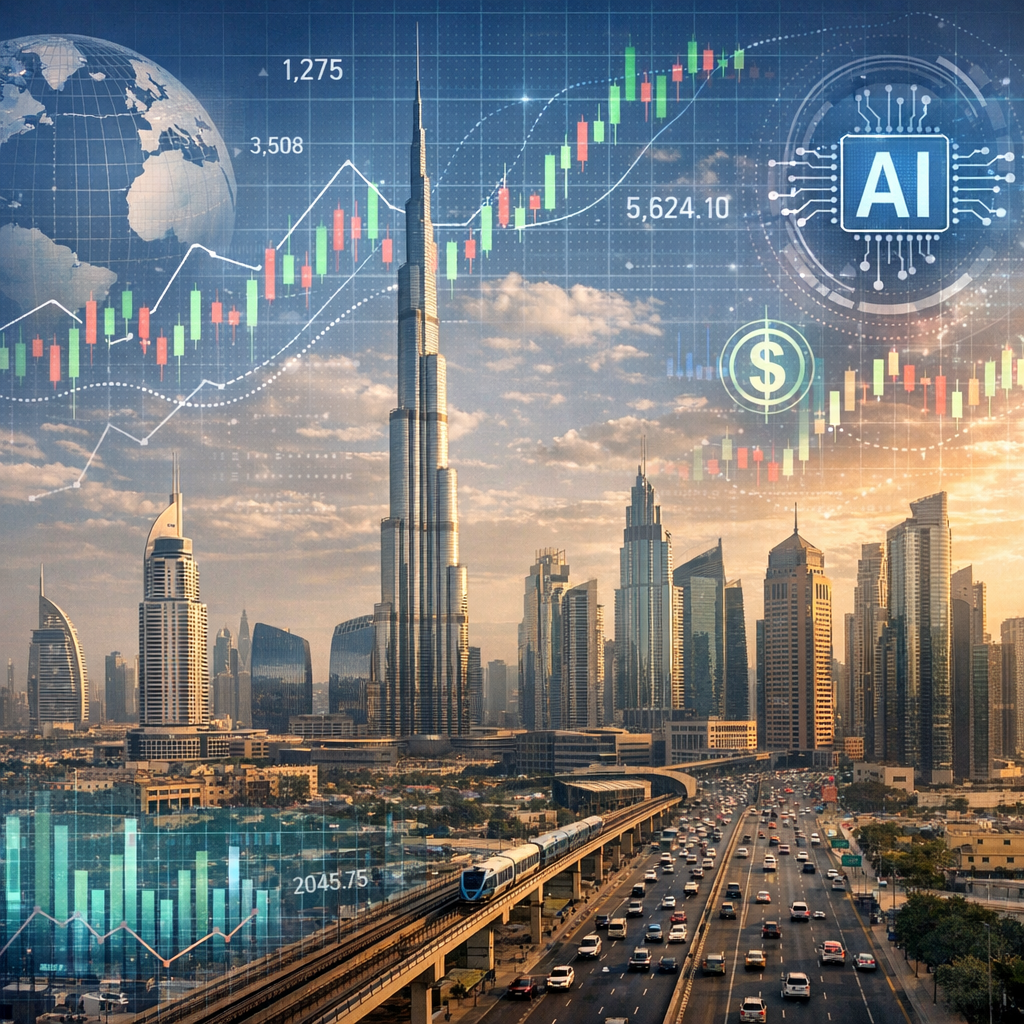
The global economy is currently navigating a complex landscape marked by technological advancements, geopolitical tensions, and fluctuating energy prices. These factors collectively influence economic growth patterns worldwide, with significant implications for regions like Dubai.
Global Economic Overview
Recent forecasts indicate a moderation in global economic growth. The International Monetary Fund projects a global growth rate of 3.0% for 2026, with a slight increase to 3.4% in 2027. This slowdown is attributed to factors such as geopolitical conflicts and technological disruptions. Notably, the war in the Middle East has introduced uncertainties, particularly affecting energy-importing nations and economies vulnerable to supply chain disruptions.
Technological Investments and AI
Despite these challenges, certain sectors are experiencing robust growth. Investments in artificial intelligence (AI) and related technologies are driving economic expansion, especially in countries integrated into the global tech value chain. The United States, for instance, has seen significant capital expenditures in AI, bolstering its economic resilience. This trend underscores the importance of technological innovation as a catalyst for economic growth.
Energy Market Dynamics
Energy markets remain volatile, influenced by geopolitical developments and supply chain constraints. The Middle East conflict has led to fluctuations in oil prices, impacting both energy-exporting and importing countries. For Dubai, a city with a diversified economy but still sensitive to global energy trends, these fluctuations necessitate strategic planning to mitigate potential economic disruptions.
Implications for Dubai
Dubai’s strategic position as a global trade hub means that it is directly affected by these global economic trends. The city’s emphasis on technological innovation aligns with the global shift towards AI and digital transformation. However, the volatility in energy markets and geopolitical tensions require Dubai to adopt adaptive economic policies to maintain its growth trajectory.
In conclusion, while the global economic outlook presents both challenges and opportunities, Dubai’s proactive approach to technological investment and economic diversification positions it well to navigate these complexities. Continuous monitoring of global trends and agile policy responses will be crucial in sustaining Dubai’s economic resilience in the face of evolving global dynamics.