

By Layla Al-Mansoori
Our interconnected world continues to experience jolts from climate stress, conflicts and economic disruptions—factors now pushing food insecurity and human displacement to levels that demand urgent global cooperation.
Food Crises: Progress and Persistent Gaps
The latest UN‐led report, The State of Food Security and Nutrition in the World 2026, shows modest strides: global hunger affected about 7.8% of people in 2025, slightly lower than earlier years, and over 2 billion faced moderate to severe food insecurity. But diet quality remains a global challenge, especially in Africa, where a healthy diet is still out of financial reach for many. The report emphasises that rising costs, structural inequities and supply chain fragility continue to undercut progress.
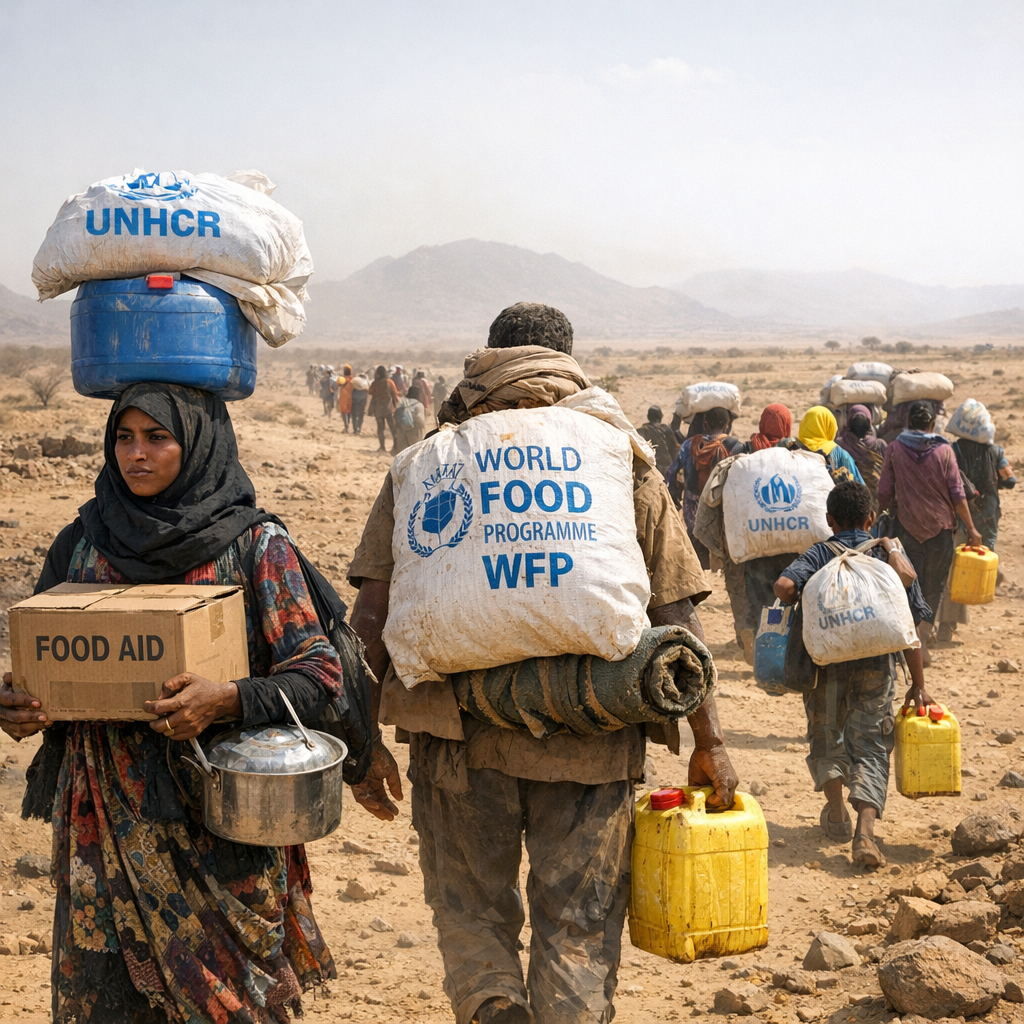
The Global Report on Food Crises 2026 highlights worsening trends: in 2025 alone, 266 million people in 47 countries or territories faced high levels of acute food insecurity—nearly double the share seen in 2016. For the first time in its history, the report confirmed two separate famines in the same year: one in parts of Sudan, and another in Gaza. Water scarcity, restricted humanitarian access, conflicts and climate‐driven shocks amplify suffering. At the same time, funding to address these crises has fallen to levels not seen in nearly a decade.
Migration, Displacement and Health: A World on the Move
By mid-2024, international migration reached an estimated 304 million people. While migration remains relatively rare compared to global population sizes, forced displacement has surged, with more than 83 million people internally displaced due to conflict or violence. Refugee numbers totalled about 41.6 million by the end of 2025—alongside 9 million awaiting asylum decisions. Most refugees and displaced persons are returning to their home countries, including Syria, Sudan and Afghanistan, though returns often occur under difficult conditions without adequate support.
Health risks among migrants and displaced populations remain elevated. According to a recent review by the UCL–Lancet Commission, progress on global migration and health since 2018 has been slow. The combined shocks of COVID-19, worsening climate change, geopolitical strife and financial uncertainty have exposed gaps in care—particularly for preventive services and access to routine healthcare.
What Comes Next: Actions for Resilience and Equity
Solutions demand integrated, long-term responses. On food security, this means better investment in resilient supply infrastructures, diversification of agricultural systems, and mechanisms to ensure nutritious diets are affordable. It also requires safeguarding agricultural inputs like fertilizers, while stabilising trade routes against conflict and geopolitical risk.
For displacement and migration, countries must build inclusive health systems that reach vulnerable migrants and returnees, expand legal pathways for protection, and strengthen governance mechanisms that manage large flows with dignity. Climate change features prominently across both crises—adaptation efforts, early warning systems, and climate-aware policy tools are more vital than ever.
Global progress in fighting hunger and protecting forced migrants is real—but perilously uneven. As Dubai looks outward, we share in both the burden and potential to lead. Our city, straddling global trade routes and employing thousands of migrant workers, has a role not just as witness, but as active participant in shaping fairer systems.