

Introduction
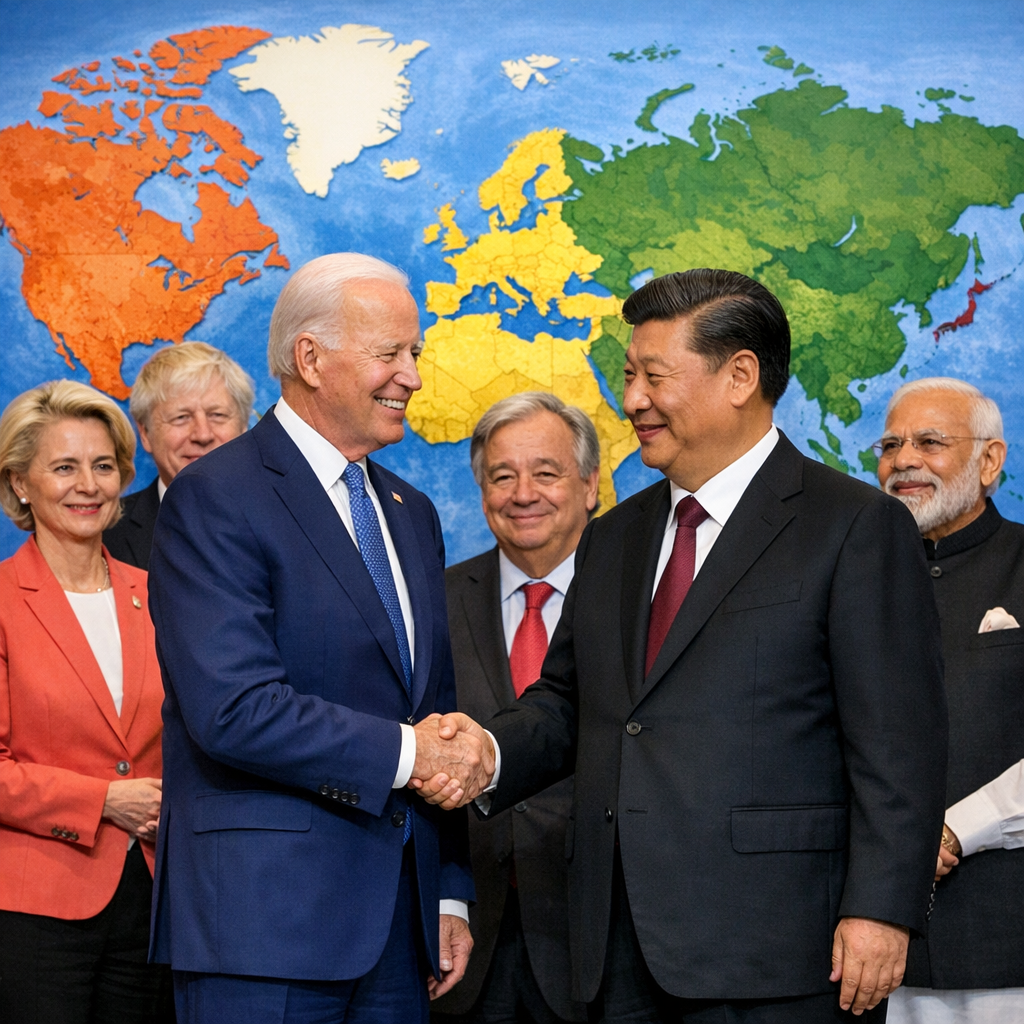
In this edition of Local Voices, we examine two of the most consequential global forces at play: economic inequality across the world and the shifting nature of US-China relations. Both have far-reaching impacts—from how wealth is divided to how nations work together (or compete) on pressing issues like trade, climate, and security.
Global Economic Inequality: Growth Without Fairness?
Over the last few decades, many emerging economies have made substantial gains in lifting millions out of poverty. However, that progress has not erased the vast gaps in income and wealth. While the bottom half of the world’s population earn only a small share of global income, the top 10 % take home more than half of it. The imbalance is even starker when looking at global wealth, with the richest few capturing large proportions of assets while billions hold almost none. These findings are documented in recent global inequality reports.
One surprising trend is that inequality between countries has declined relatively thanks to fast growth in populous nations such as China and India. But within-country inequality – the gap between the richest and poorest in a single nation – has risen in many places. This divergence has political, social, and environmental consequences. Democracy, social stability, and trust suffer when large parts of a population feel left behind.
Addressing inequality is not purely a moral challenge—it is increasingly seen as essential for resilient global development. Policies such as progressive taxation, investments in human capital, fair wages, and strong labor protections appear repeatedly among suggested solutions. Experts say international cooperation is also paramount, especially in an era where capital flows, climate impacts, and migration do not respect borders.
The Evolution of US-China Relations
The relationship between the United States and China remains central to world order. Once described most often as strategic competition, in recent months both countries have expressed a desire for stability—yet deep tensions persist over trade practices, emerging technologies like AI, China’s policies toward Taiwan, and influence in regional security arenas.
Recent agreements emphasize certain areas of mutual interest—energy, climate, or agricultural trade—but many gaps remain, especially around fairness, reciprocity, and transparency. Experts warn that without strong frameworks and trust, even stable coexistence may slip if either side perceives threats to its core interests.
Moreover, the US-China dynamic is not isolated—it interacts with global inequality. For example, trade policies, tariffs, and technological rivalry affect supply chains, labor markets, and investment flows in emerging economies. How the world’s two largest economies engage with poorer nations can either reinforce or reduce global disparities.
Why These Trends Matter for Dubai and the Region
Dubai sits at a crossroads—economically, culturally, and geopolitically. Inequality among global partners affects energy prices, investment, food security, and migration flows—issues not far removed from life here. For example, volatility in supply chains due to trade friction between major powers may impact cost of imports. Alternatively, rising climate migration may influence demographics and labor markets in GCC states. Understanding these global trends helps us better anticipate risks and opportunities.
Meanwhile, Dubai and the UAE are strategically positioned to engage with both the US and China. With strong trade links, investments, and diplomatic relations on both sides, the country has potential to serve as a bridge in global initiatives: for climate action, technological regulation, or equitable trade frameworks.
Looking Forward: Paths to a More Balanced World
- Inclusive economic policies: Encourage systems where gains from growth are shared more equitably.
- Global institutions with authority: From trade bodies to climate agreements, effective multilateral frameworks are needed.
- Responsible sovereign behavior: Major powers should manage their rivalry in ways that safeguard smaller states’ interests and avoid destabilizing spillovers.
- Prepared local policies: Cities and regions must plan for migration, environmental impacts, and supply disruptions.
Conclusion
Economic equality and great-power competition are more than academic themes—they shape daily life, policy, and prospects worldwide. As inequality persists and US-China relations evolve, the global order is being redefined. Dubai, like many places, faces both challenges and opportunities in this emerging landscape. Staying informed, principled, and proactive will matter more than ever.