

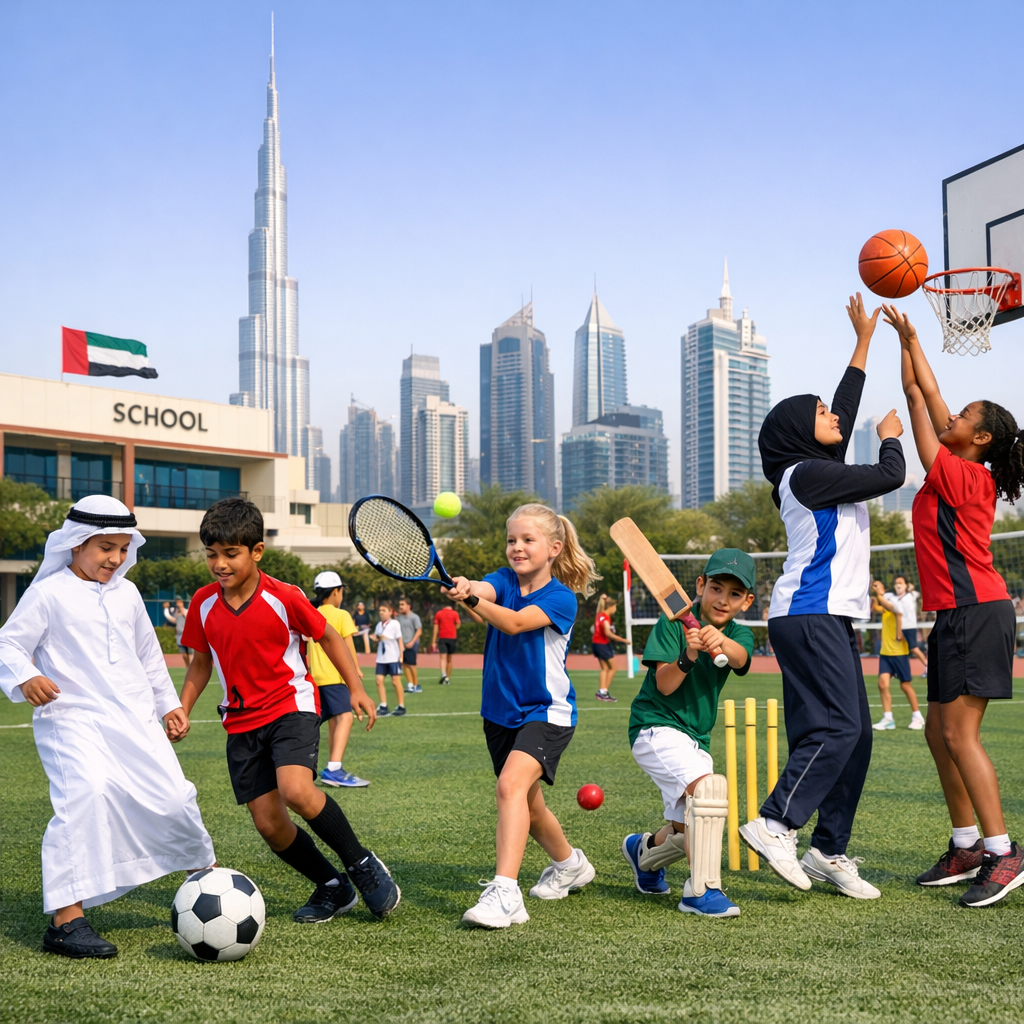
Dubai’s sports landscape is evolving fast — not just at the top national level, but in high schools, colleges and community fields. Young athletes are finding more opportunity than ever before to play, compete, and grow.
Strong Foundations in Schools and Local Leagues
International and local private schools in Dubai offer wide-ranging sports options, including football, basketball, athletics, swimming, netball, cricket, and more. For instance, Dubai International Academy (Emirates Hills) fields around 165 competitive school teams in over 23 sports for Primary and Secondary students. Their teams regularly compete in DASSA (Dubai’s school sports association) and represent UAE select teams. Athletic participation goes beyond competitive achievement: these programs emphasize inclusion, well-being, and personal growth. Roles for younger students often focus on foundational skills and teamwork, while older students train for performance in regional tournaments. (ASD and DIA schools are examples.)
The Role of DASSA and Extracurricular Structures
DASSA (Dubai Affiliated Schools Sport Association) plays a key role in coordinating competitions among many private schools across age groups and sports. Its leagues offer students of all skill levels a chance to show their talent and represent their schools. Many schools use these networks to develop strength in multiple sports, supporting both elite and mixed-ability teams. Schools like British School Emirates Hills, American School of Dubai, and British School Al Khubairat invest strongly in competitive and recreational sports through these frameworks.
National Talent Paths and Public School Initiatives
The UAE government has launched strategic programs to nurture talent in school-aged athletes. The National Schools for Sports Talents, a collaboration among the Ministry of Education, Ministry of Sports, national federations, and sports councils, spans dozens of public schools. It aims to identify promising students, provide training, improve competition readiness, and prepare youth for national and international championships. Public schools are being developed as sports hubs where students of all nationalities can engage. Certified coaches are central to this effort.
Challenges and Points of Access
While participation is growing, some barriers remain. Costs for equipment, uniforms, travel, or club membership can limit access for students whose families cannot afford them. Some schools offer scholarships or fee reductions, but more widespread support is needed. Facility access is also a concern—for example, not all schools have dedicated tracks, pools, or gyms, and public access outside school hours is sometimes limited.
The Community Sports Benefit
Beyond schools, community-run programs, clubs, and weekend leagues help bridge gaps. These opportunities provide space for those who aren’t part of formal school teams to play and stay active. For many students, community participation builds essential skills—sportsmanship, leadership, teamwork—that benefit them in studies and beyond.
Where Things Are Heading
- More public–private partnerships to build facilities and support sport programs.
- Greater integration of school sports into national youth strategies.
- Increasing attention to gender equity and inclusion, giving girls equal access to training and competitive play.
- More multi-sport activity for younger students to discover interests before specialization.
- Stronger support for families facing financial barriers to participation.
Dubai’s youth sports ecosystem is one of expanding promise. With support from schools, government programs, and community leagues, young people in Dubai today have more pathways than ever to play, improve, and even reach elite levels—no matter their background. And with sustained effort, those pathways will keep opening.