

By Noura Al-Dhaheri
Dubai’s strategic vision: sport for every resident
The Dubai Sports Sector Strategic Plan 2033 lays out a bold vision: growing active participation in sport from 1.6 million to 2.6 million residents, and raising sports’ annual GDP contribution substantially. Key pillars include Community, Events, Clubs and Talent. This strategy shows Dubai isn’t just building facilities—it’s building a lasting sports culture.
How schools are shaping the future
School sports in Dubai are no longer just extracurricular. The National Sports Strategy 2031 aims to discover athletes early, upgrade sports education, and has set targets for huge student engagement in school competitions. Programs like the newly launched School Games span many sports and bring together thousands of students across dozens of schools.
Inter-school leagues also provide consistent competition and personal growth. For example, the SABIS® network has structured regional leagues that lead to national finals. Schools are putting emphasis on fair play, fitness, and teamwork as much as on winning.
The club system & neighbourhood engagement
Clubs in Dubai—both government-owned and private—are being supported through programmes such as the “Club Accelerators Programme”. The goal is clear: boost their administrative strength, deepen community engagement, improve academy structures, and ensure financial sustainability.
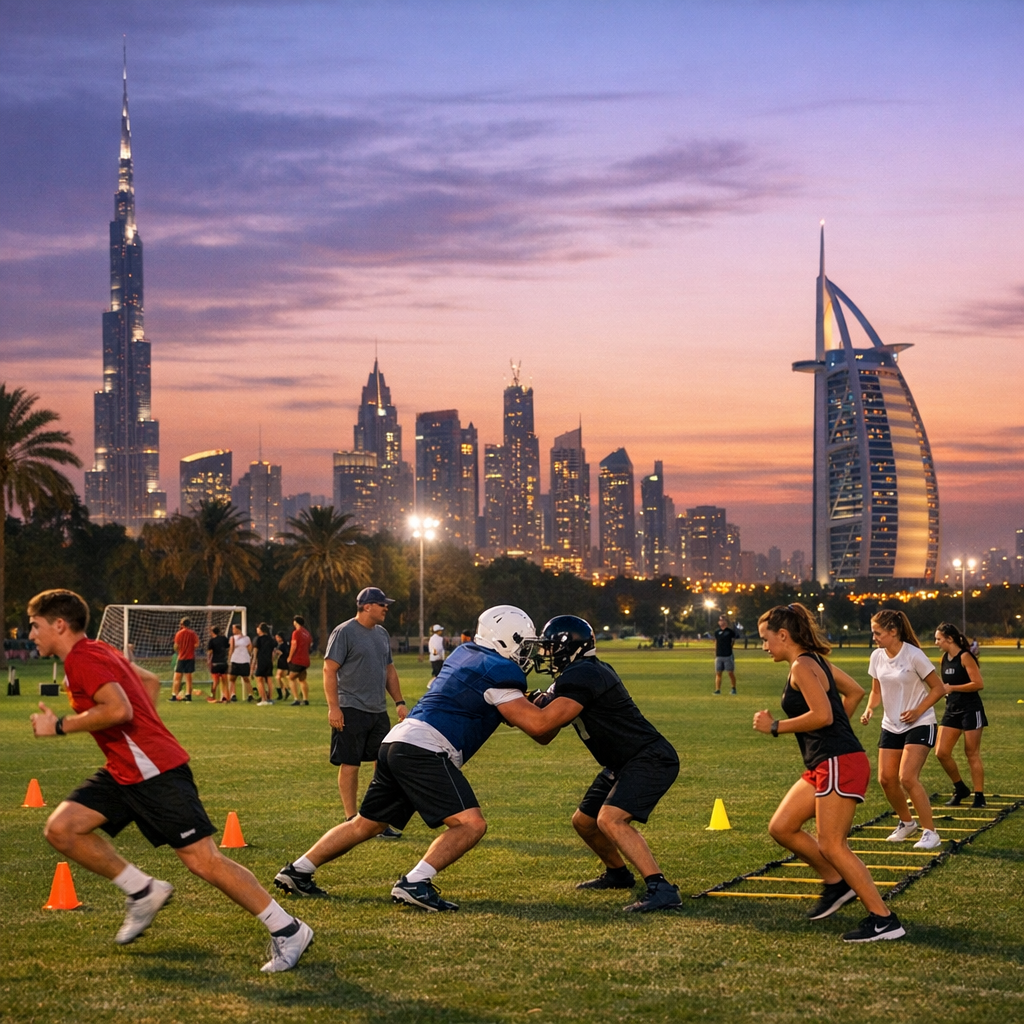
Initiatives like the Al Furjan Club project bring training into public parks, making them accessible to youth in residential areas. Such programmes operate across multiple age groups, providing regular coaching and a bridge between casual play and more structured competition.
What this means for young athletes
- More accessible pathways: young people can join school teams, clubs, or community groups with clearer routes to higher levels.
- Stronger infrastructure: upgraded facilities, well-trained coaches, and better governance in clubs help ensure long-term growth.
- Greater inclusivity: women’s programmes, People of Determination, and year-round participation ensure broader demographics are engaged. School, club, and community events are opening up like never before.
Challenges & what to watch
While momentum is strong, there are areas that need continued attention. Ensuring that less affluent neighbourhoods have equitably good facilities, avoiding over-competition pressure in youth, and making sure that all sports—not just high-profile ones—get support are important.
Of note, effective coordination among sports councils, educational authorities and neighbourhood initiatives will influence outcomes. The quality of coaching and athlete support systems will determine whether talented young athletes make it not just to regional tournaments, but beyond.
Final thoughts
Dubai is steadily moving from a collection of individual sporting successes toward a more connected ecosystem. Schools, clubs, and community efforts are aligning under strategic goals, giving youth clearer paths to participate, improve, and thrive. What students, families and coaches do now—from school meets to neighbourhood parks—will fuel the next generation of Dubai’s sporting champions.