

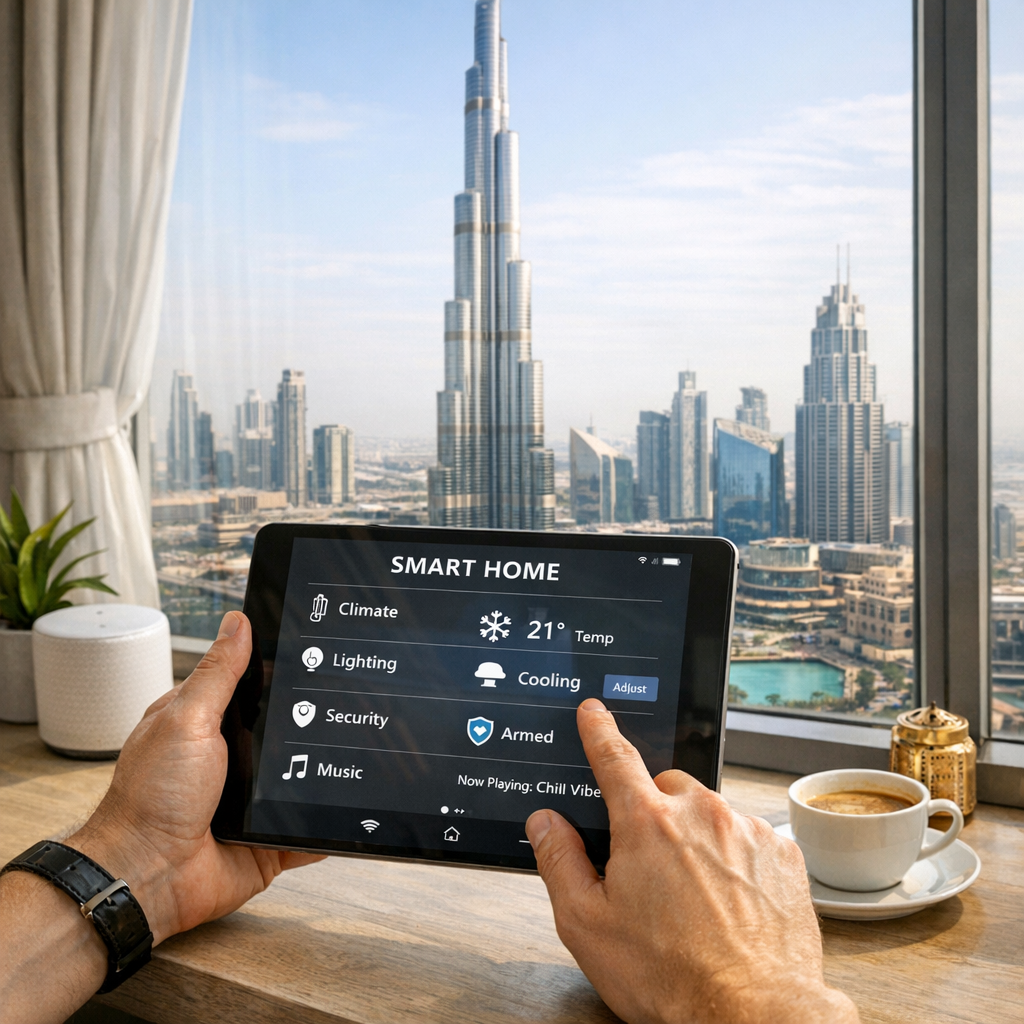
Dubai’s skyline may catch the eye, but it’s the hum of smart devices and unseen AI tools that are transforming how residents live from dawn to dusk. These changes are often subtle—an app that arranges your paperwork, a voice command that dims the lights—yet taken together, they show a city reimagining daily life through technology.
Agentive AI in Public Spaces and Services
Earlier this year, the UAE Cabinet set a state‐wide target: half of all federal services should be operated by “agentic AI” by 2028. That means systems capable of understanding needs and acting—not just responding to commands. Biometric airport corridors, robot deliveries on residential sidewalks, and automated residency renewals are already in play. The shift isn’t about flashy novelty; it’s about reducing friction in routines like commuting, licensing, travel, and wellness check‐ups.
Smart Homes Rising in Everyday Routines
Homes in Dubai and the wider GCC aren’t just getting connected—they’re becoming adaptive to the rhythms of family life. Voice assistants no longer just play music or answer queries; they manage lighting, climate, ambient sound, and more via single phrases tied to routines for prayer, children’s homework, or rest. The most popular voice device commands are those that manage atmospheres—dimming lights, cooling rooms—as they align with comfort, culture, lifestyle.
Gadgets That Save Time—And Heat
For many, the most appreciated gadgets are ones that tackle Dubai’s demands: intense summer heat, long commutes, high energy bills. Smart thermostats that pre-cool homes, robot vacuums that clean without fuss, noise-cancelling earbuds for commute or work in co-living spaces: practical, not indulgent. The marketplace reflects this: demand is strong for devices that make life easier in concrete ways.
Startups and Ecosystem: Building Behind the Scenes
Dubai’s tech startup ecosystem is thriving, especially in AI and SaaS. Many firms are focused not on consumer buzz, but on enterprise use cases—voice synthesis, video creation, automation tools. Generative AI platforms, research labs and accelerator programs are increasingly supported by federal bodies pushing regulation, data frameworks, and funding to ensure responsible innovation. The FinTech sandbox is one example where smaller companies can test products under regulatory supervision.
Balancing Convenience and Concerns
With so many processes becoming automated, that inevitable question arises: where to draw the line. Residents appreciate emails that tell them why an AI decision was made, or notification when biometric or personal data is used. Privacy, transparency, and choice are becoming everyday tech features people expect—not afterthoughts.
Takeaway
AI and gadgets in Dubai are no longer reflections of future possibility—they are part of the present landscape. What’s notable isn’t just how much is changing, but how naturally many technologies are integrating into daily routines. And while innovation races ahead, it’s shaped by culture, climate, and daily needs—meaning the most lasting tech will always be the kind that feels like it belongs in your home, your commute, your life.