

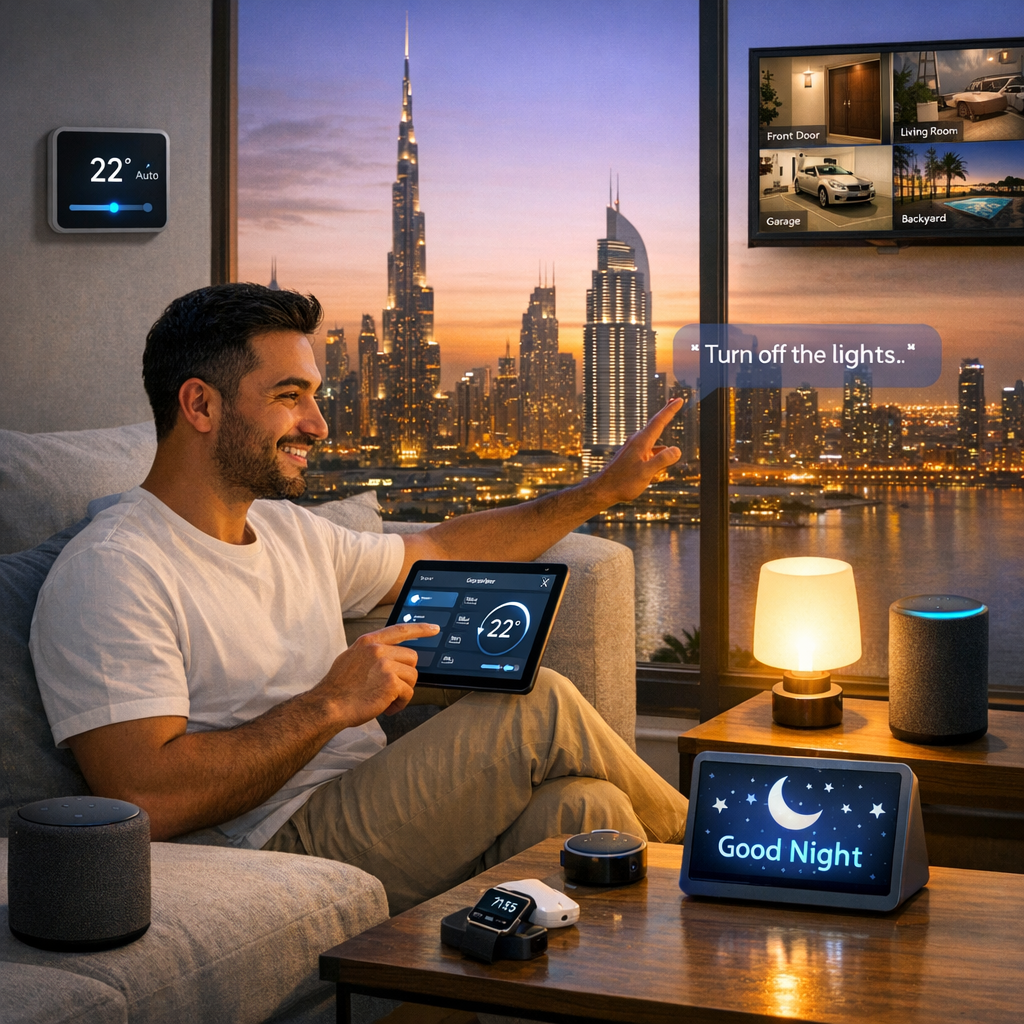
Dubai’s skyline may be futuristic, but it’s the tech quietly operating behind closed doors and in apps that’s reshaping everyday life for its residents. From chatting with bots to letting AI streamline government services, the city is becoming more connected—and more AI-driven—than many realise.
AI in Shopping, Finance, and Trust
When you’re comparing prices online, reading product reviews, or getting gift ideas, chances are AI tools have already been active. A recent study found that about 85% of people in the UAE use artificial intelligence in their shopping process. Common uses include checking ratings, comparing costs, and gathering recommendations to guide decisions.
Speed and convenience matter—93% of those surveyed said AI made their shopping faster and easier. Meanwhile, the move away from traditional credit cards continues: digital wallets are increasingly common. Concerns about fraud and trust remain central, which has pushed payment providers to integrate AI-powered fraud detection and verification methods.
Smart Homes, Gadgets, and Lifestyle Tech
Gadgets now address both desire and necessity. Smart rings, advanced earbuds, foldable smartphones, and AI-enabled home appliances have gone from luxury novelty to popular wishlist items. But when choosing what to buy, usability with local services and proper regional support often outweigh flashy spec sheets.
Connected living solutions like smart lighting, thermostats, security cameras, and smart speakers are growing in popularity. Still, adoption in households is more cautious in some areas, especially where climate, cultural norms, or infrastructure affect utility.
Public Services, Mobility & Wellness
AI isn’t confined to private tech—it’s increasingly part of public life. At airports, biometric systems speed up corridors and automate immigration. City services, including residency, parking payments, and wellness programs, are now supported by intelligent platforms that help reduce delays and frustration.
On the mobility front, autonomous delivery and last-mile robot services are being trialled in some residential areas. Meanwhile, traffic optimisation tools aim to ease congestion using AI models that adapt in real time to road conditions and commuter patterns.
Adoption Patterns & Barriers
Most UAE organisations take a “fast-follower” approach: they wait until emerging technologies are proven before scaling them widely. This tends to produce steadier returns but can slow the pace of innovation compared to being first in line.
Privacy, tool compatibility, and local support are recurring concerns among both businesses and consumers. Many still worry about data safety and whether tech platforms respect regional legal and cultural sensitivities.
What to Watch Going Forward
- Stronger integration of AI with healthcare—diagnostics, wellness tracking, and telemedicine are likely to expand.
- Growth in voice, vision and gesture-based interfaces, especially where hands-free or touch-free interaction matters.
- More regulation and transparency in AI systems—expect clearer rules around how automated decisions are made and how personal data is used.
- Emergence of community-focused tech: neighbourhood hubs, local smart mobility projects, and apps tailored to life in Dubai’s mixed, multilingual populace.
In short, everyday life in Dubai is becoming increasingly underpinned by technology—especially AI. It’s not about flashy launches or headline inventions. It’s about small helpings of innovation in everyday tasks—shopping, moving, paying, staying healthy—that quietly add up to a different rhythm of life.