

In Dubai, technology isn’t just for big announcements—it’s built into our day. From when we leave our homes in the morning to when we travel, shop, or visit a doctor, artificial intelligence and smart gadgets are quietly transforming how we live.
Startups powering the change
Founded in recent years, several AI startups in Dubai are solving real problems residents face.
- BankBuddy.ai builds conversational banking tools and personalized service features for banks and telcos. It’s not just about chat—you get payments, finance tools and identity checks under one platform.
- Cercli AI offers unified HR and payroll services—what used to take weeks or months is now automated in days.
- Daleel AI uses data from thousands of property transactions to help with real estate decisions for buyers and brokers alike.
Gadgets people are actually using
Not just high-concept startups—smart devices are everywhere. Here’s what’s trending:
- Wearables: Smartwatches and rings are no longer just for sport. The latest models track things like blood glucose trends, sleep apnea indicators, and irregular heart rhythms. Dubai’s luxury market especially values devices with sleek design and top-tier sensors.
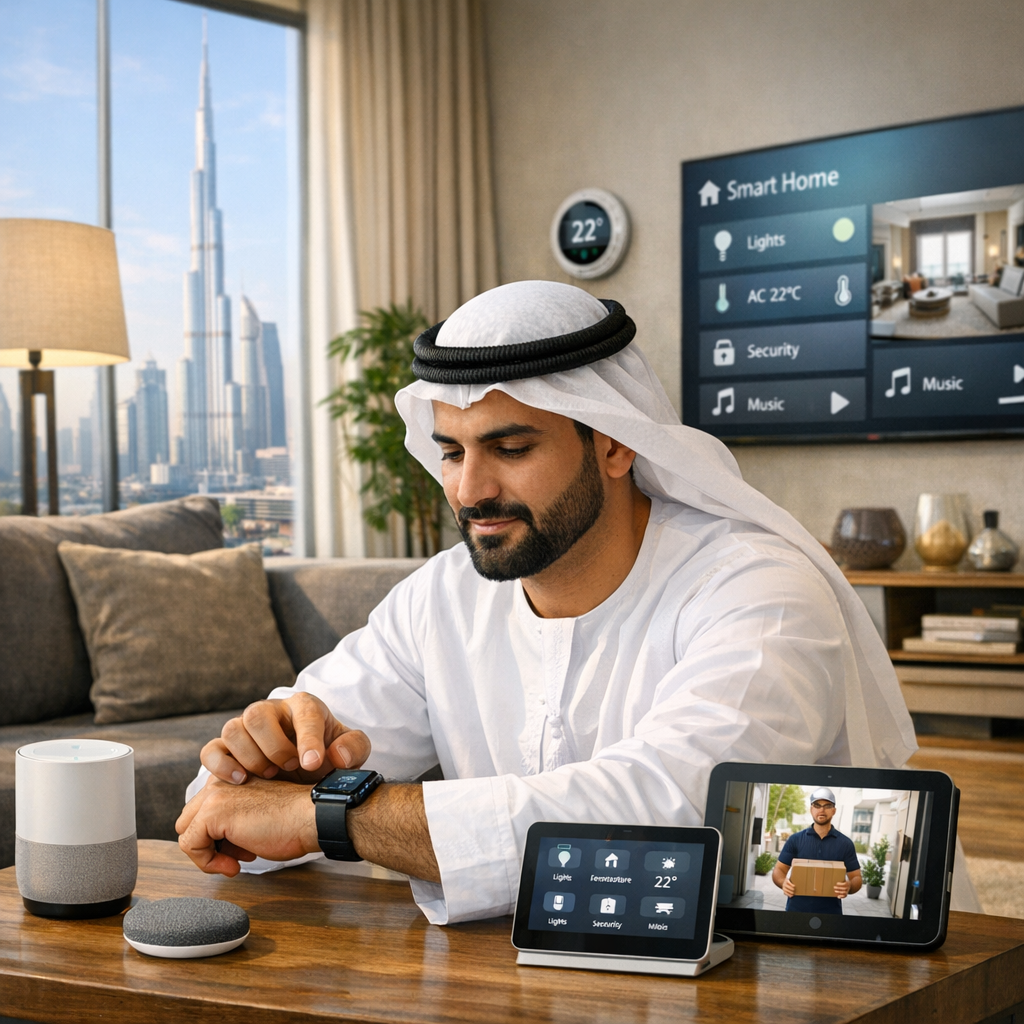
- Smart home tech: From thermostats tuned to DEWA’s tariff schedules to solar panel integration and voice-controlled assistants, home gadgets are moving from novelty to everyday. Integrated systems are now being installed during construction.
- On-device AI phones: New phones don’t just talk to the cloud—they think locally. Translation, photo improvements and voice assistants are happening on your device so you get speed, offline use and better privacy.
Behind the scenes: services and infrastructure
Many of the AI changes we notice are thanks to government policies and major infrastructure efforts.
- The UAE’s national strategy aims to make AI central to sectors like healthcare, education, transport and public administration—in some cases automating half of federal services by a target date.
- In Dubai, government entities have been directed to integrate services—both personal and business—into a unified digital platform within a set timeframe. This means less friction when applying for permits, renewing visas or interacting with authorities.
- Public mobility and transport are also being optimized: traffic systems adapt in real time, and delivery robots are already operating on pavements in some districts.
What this means for life here
For cities used to being ahead of the curve, these tech trends bring real change:
- Speed and convenience: From biometric airport corridors to AI-powered inquiry resolution tools, services that once took hours or days now take minutes.
- Better health tools: Monitoring health is no longer confined to clinics. Smart devices help you know your body better, spot issues earlier, and share data more smoothly with doctors. Privacy remains a concern, but regulation is catching up.
- Greater inclusion: Whether you’re speaking a less-common language, managing finances, renting property, or buying groceries—these technologies are being built for many lives, not just some. That said, support, warranty, and local service remain key picks when choosing what to adopt.
Cautions to keep in mind
No transformation is without drawbacks. Users should think about:
- Privacy: The more connected everything is, the more attention needed on how personal data is collected and used.
- Digital divide: High-end gadgets cost more; not everyone can upgrade every year. Ensuring access across income levels is still a challenge.
- Support: Buying the newest foldable phone or smart ring only matters if there’s reliable repair, customer support, and software updates locally. Imported tech doesn’t always get that.
Looking ahead
Dubai is increasingly becoming a city where tech isn’t something extra—it’s part of the backdrop. As AI tools become more capable and local startup ecosystems grow, expect more seamless experiences: service delivery you barely notice (but appreciate), homes that adjust to your habits, and devices that work even when you’re offline. For readers, staying informed isn’t just useful—it’s how to get the most out of what’s already here.