

By Fatima Abdullah
AI on Autopilot: Helpers for Everyday Tasks
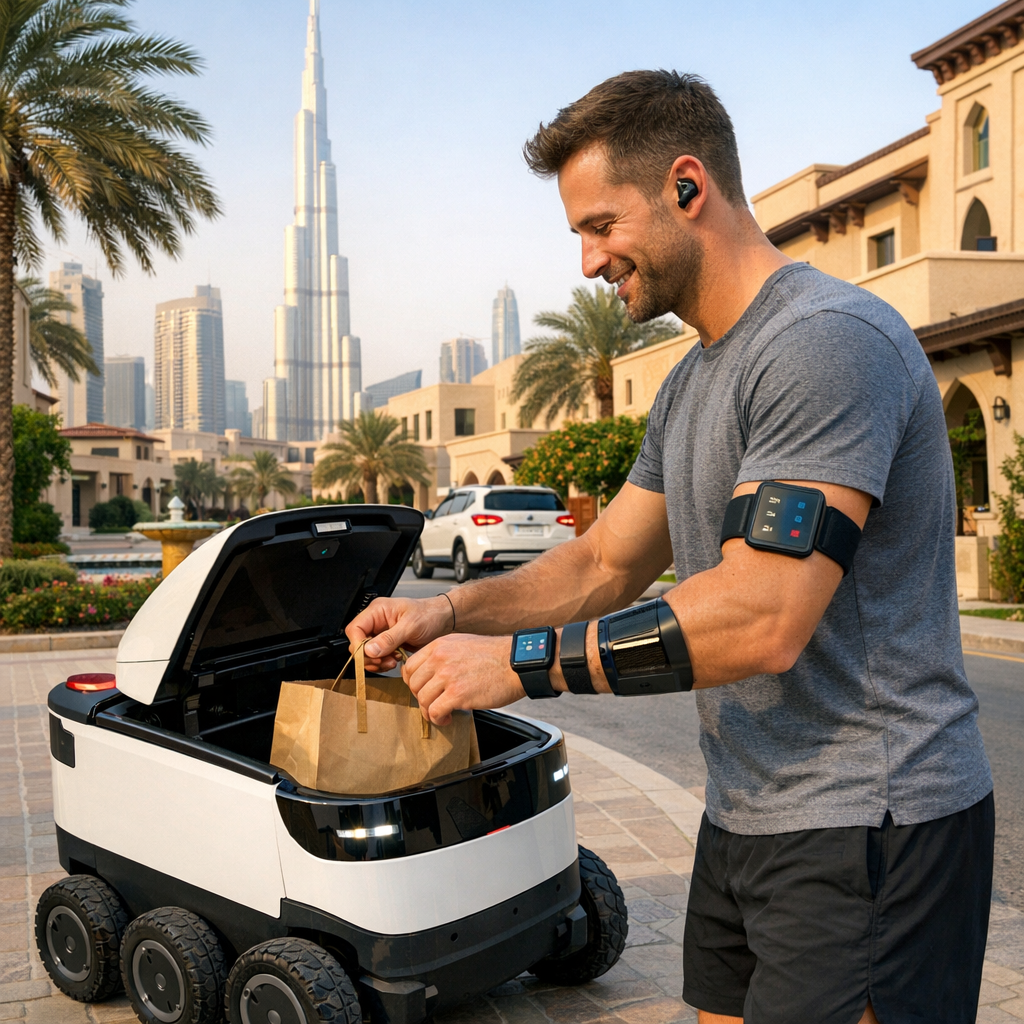
Smart assistants that understand Arabic dialects are becoming part of family life in Dubai, helping with everything from translation to recipe suggestions. Meanwhile, autonomous delivery robots are already operating in communities like Sobha Hartland and Expo City Dubai—dropping off groceries or meals in under 15 minutes. These technologies reduce friction in routines and give people time back in their day.
Gadgets That Do More Than Just Tell Time
Wearables have evolved fast. Smartwatches now track health metrics once only seen in clinics, while smart rings offer lighter alternatives for those who want data without bulk. Earbuds with adaptive noise cancellation and pocket-AI helpers are reshaping how people work and relax. In homes, Matter-compatible smart devices allow even older apartments to work seamlessly with popular ecosystems like Google, Apple, or Amazon.
Startups, Funding & the Engines Behind Innovation
Dubai’s startup scene is vibrant. Over twenty AI-focused companies are in active development locally, including AVELIN AI (sovereign AI for regulated sectors) and 1001, a research lab between Dubai and London. Collectively, AI-sector firms in 2026 tapped over $4.6 billion in funding across more than 20 deals.
Changing Habits: What We Use, Where We Shop, How We Pay
Almost everyone here carries a smartphone daily. Many have smartwatches and earbuds, too. Interest in connected living—smart homes, energy-efficient appliances—is growing, though adoption is still behind other regions. Shopping is increasingly tied to social media, while AI tools are used before almost every purchase. Privacy remains a concern for some, especially as subscriptions and digital costs rise.
Looking Forward: What to Expect
With the UAE’s AI Strategy and big infrastructure investments in the pipeline, Dubai is aiming to become a global hub for AI by 2031. That means more local talent, smarter public services, and more opportunities for tech to touch every aspect of life—from mobility to health. The trick will be balancing innovation with trust, inclusivity, and responsible data use.