

By Fatima Abdullah
In Dubai, artificial intelligence isn’t just for labs or tech headlines—it’s becoming the unseen force behind much of what we do. Here’s a look at how AI is reshaping familiar aspects of everyday life, and what that means for everyone from commuters to tech-curious parents.
The AI You Don’t Always Notice
If you’ve travelled recently through Dubai International Airport, you may have experienced its biometric “Red Carpet” corridors—where facial recognition systems help speed up arrivals and departures. Meanwhile, the General Directorate of Residency and Foreigners Affairs (GDRFA) has rolled out digital platforms like “Salama” that help with visa renewals and residency services, often in minutes. These tools are examples of agentic AI systems quietly working in the background. Their goal is to streamline routine tasks and reduce waiting times in government services. Such changes reflect national policy aims to scale up service automation and train scores of civil service employees in AI competence.
Smart Gadgets and City Tech at Home
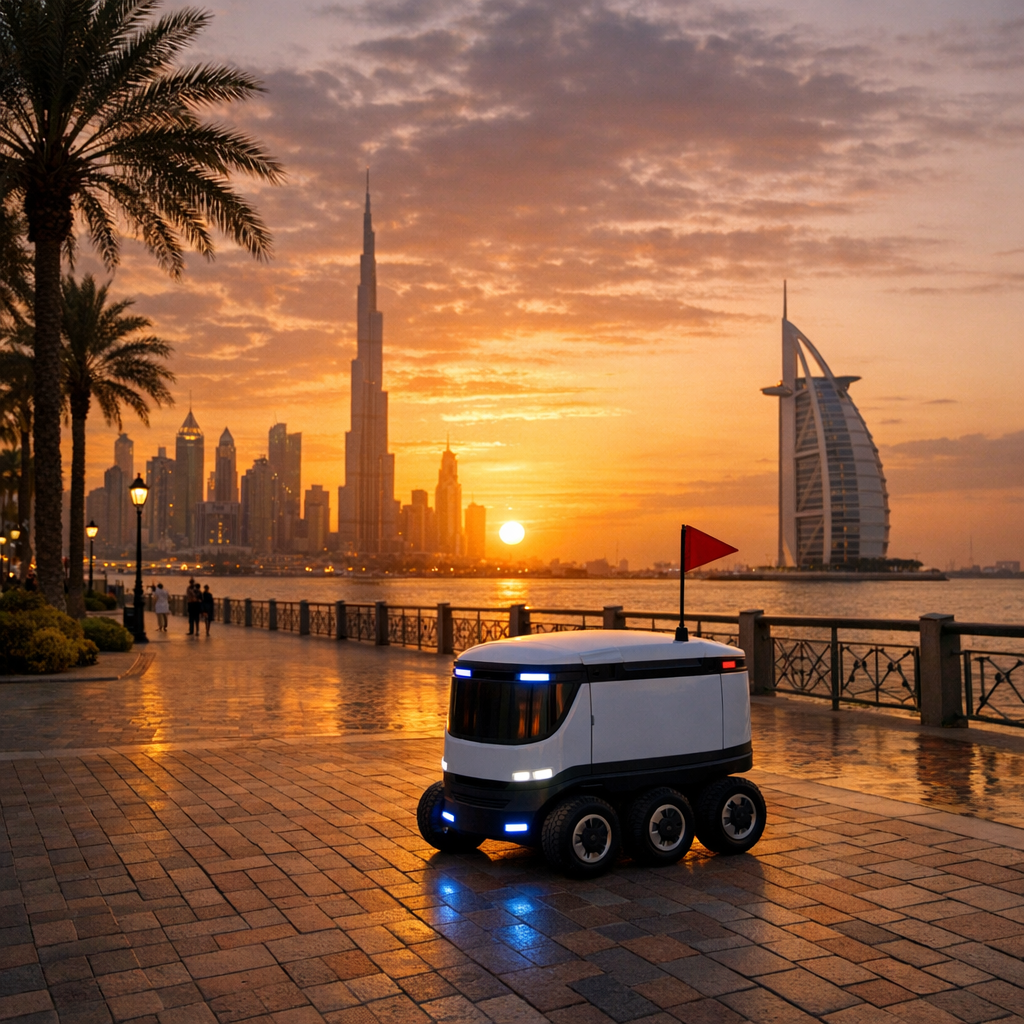
Outside government systems, AI is also changing how people manage daily life. Autonomous delivery robots are becoming more visible on pavements in new suburbs like Sobha Hartland, delivering groceries or takeaway items. Smart wearables help monitor health—for example hydration bands alert users when they need water, an especially useful feature under the UAE’s intense summer sun. From automated voice assistants tuned to both Arabic and English to AI-enhanced wellness dashboards in large companies, technology is moving out of research labs and into your wrist, your home, your workplace.
Startups Leading the Way
Dubai’s startup ecosystem is thriving, especially in AI. As of August 2026, more than a dozen AI startups (including names like XPANCEO, CNTXT AI, Algebra AI, 1001, AVELIN AI and more) have raised hundreds of millions in funding across stages from pre-seed to Series A. These firms are working on projects ranging from generative AI models and enterprise tools to sovereign AI platforms. They represent a shift toward building homegrown products with real-world impact.
Scaling AI with Responsibility
As AI becomes more pervasive, concerns around privacy, ethics, and local language support are growing. Startups developing voice-first toys for children, for example, are taking extra care to ensure transparency in data use and that their products work without constant reliance on cloud servers. At the same time, large organisations like Dubai Holding are partnering with companies like Microsoft to integrate AI into core business operations—with a focus on governance and approval frameworks to prevent misuse.
What This Means for You
For residents, businesses and everyday users, this convergence of AI and services means things are getting smoother—and sometimes faster—without always being clearly visible. Want better government service? Fewer queues, more apps. Need wellness insights? Tech-enabled platforms that track your health trends. Thinking of buying from a startup? Many are incorporating bilingual or offline-capable features by design. As the ecosystem grows, the best innovations will be those that fit seamlessly into local life while respecting culture, privacy, and usability.