

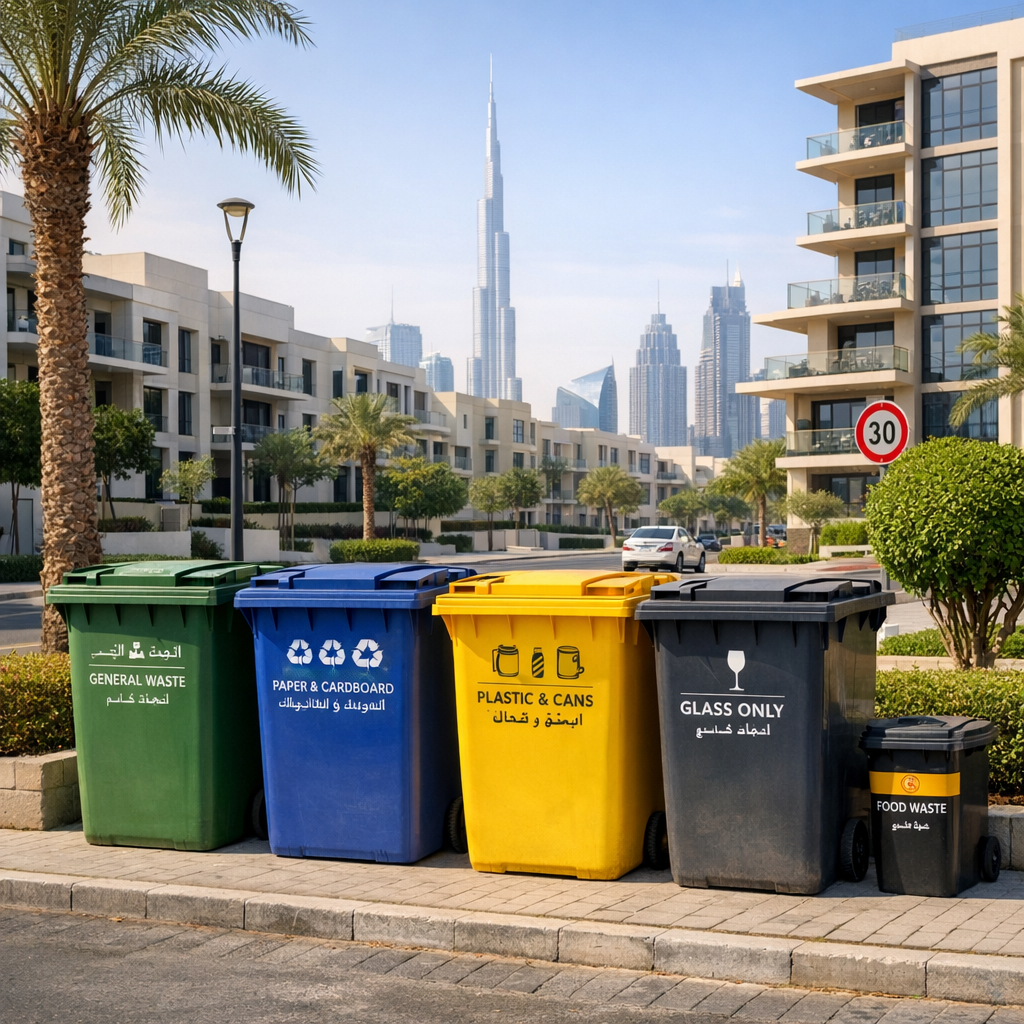
Dubai’s Law No. 18 of 2024, regulating waste management in the emirate, introduced sweeping changes that touch everything from how builders dispose of demolition debris to what happens outside your apartment bin. Below is a breakdown of what residents and neighbourhoods need to know.
What the law covers
The law applies to all areas in Dubai — every community, free zone and special development zone. It makes clear that handling waste includes everything from creating it to treating it, transporting it, recycling it — even the storage of hazardous waste. This ensures that everyone who interacts with how waste is generated or moved must follow standards and guidelines.
It introduces stricter rules aimed at ensuring Dubai progresses toward circular economy targets: reducing non-recyclable waste, increasing recycling and treating waste before it ends up in landfills.
Key steps for residents and building owners
Owners of residential buildings must provide waste containers that meet size and access requirements set by the Municipality. That includes separate collection for recyclable materials, with clearly designated storage areas within the property.
If your building handles hazardous waste—for example, from medical sources or electronics—this must now be transported and stored using authorised bins and carriers, and in compliance with specific safety criteria.
Outdoor public areas around car parks or shared roads also come under responsibility: blocking or misusing public bins and failing to maintain cleanliness can draw fines.
What this looks like in everyday life
You may already have noticed changes: divided recycling bins in shared residential halls or tighter schedules for waste collection. Some buildings are redesigning bin rooms to meet compliance.
Commercial and construction sites are under pressure to manage their waste streams properly—building contractors must contain debris to prevent litter and pollution.
Communities will see more enforcement activity—monitoring waste transport vehicles, penalties for improper dumping, and inspections of storage arrangements in complexes.
Where challenges remain—and what to watch
Many older buildings and affordable housing clusters were built without the infrastructure to provide separate recyclables collection or sufficient bin room space. Adapting these can be hard and costly.
Some residents worry collection schedules won’t match actual waste volumes, especially in households with larger families or in districts where population density has increased.
Enforcement is strengthening, but awareness remains uneven. Everyone from commercial waste generators to households needs clear information and access to the right containers. Community participation will be key.
How you can be part of the solution
- Check with your building manager to see if waste storage and bins meet the guidelines. Suggest or help plan improvements.
- Separate recyclables at home and avoid mixing hazardous materials (like batteries or paints) with regular trash.
- Speak up in community forums about collection frequency, public bins and cleanliness — local councils and the Municipality do take feedback into account.
- Support or join volunteer efforts or local clean-ups to keep neighbourhoods tidy while awareness builds.
Law No. 18 may sound like government regulation, but its impact is very local. When streets are cleaner, bins are orderly, and waste is handled properly, your daily walk, your child’s playground, and your street corner all benefit. It’s a law that turns policy into practice — and it invites all of us, residents and owners, to take part.