

By Aisha Khalifa
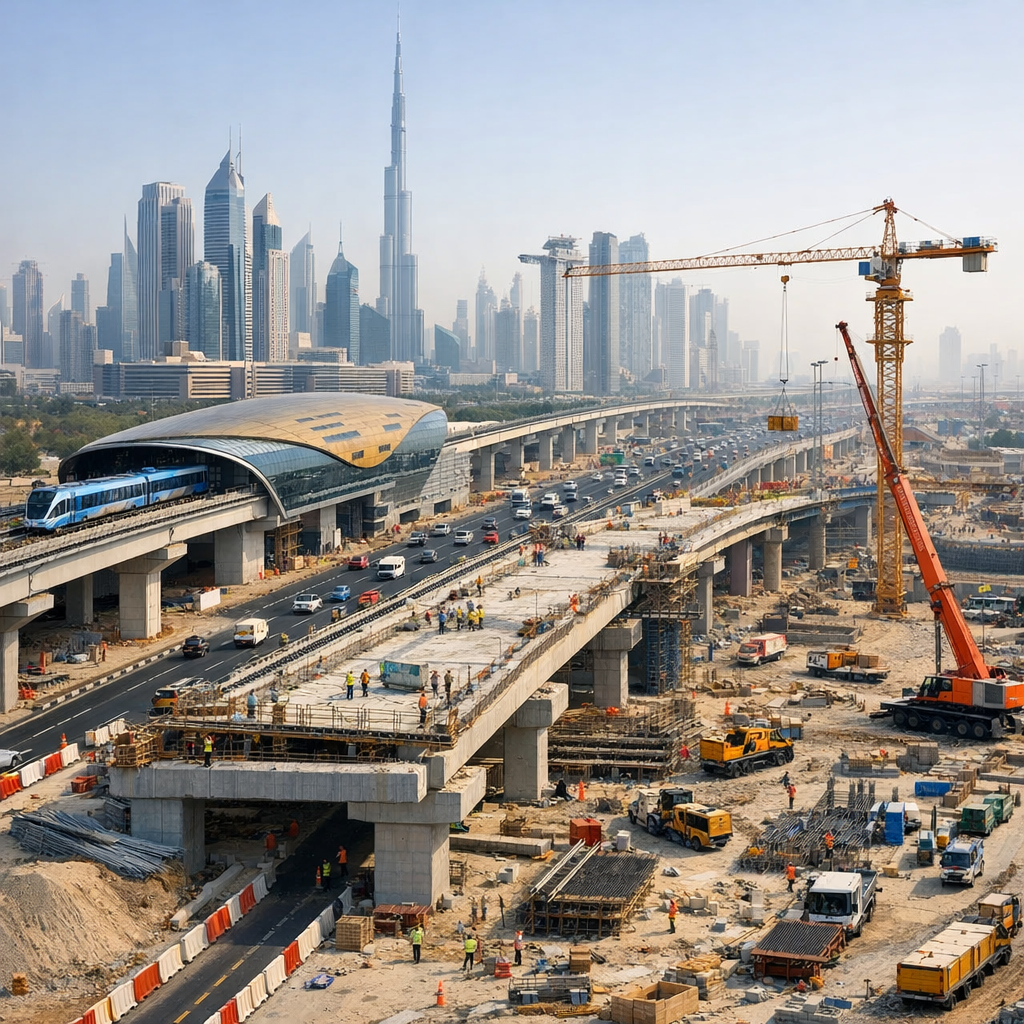
Dubai is in the midst of a transportation transformation—with new road corridors, metro lines, anti-noise initiatives and policies designed to ease congestion. These changes aren’t just about speed; they’re reshaping how communities experience daily life. Here’s how recent projects and traffic-sensitive policies are affecting local residents—alongside challenges still ahead.
Key projects pushing change on Dubai’s streets
Latifa bint Hamdan Corridor: cutting travel time nearly in half
One of the most ambitious road works underway is the Latifa bint Hamdan Corridor Development Project—12 km of new strategic roadway that will link major routes including Sheikh Zayed Road, Al Khail Road, Sheikh Mohammed bin Zayed Road, and Emirates Road. When complete, it’s expected to handle around 16,000 vehicles per hour in both directions and serve more than 130,000 trips daily. A major quality-of-life win: the travel time between Umm Al Sheif Street and Emirates Road will drop by about 54%. Completion is set for the end of 2028.
Expanding rail and metro to meet rising demand
Rail investment is accelerating. The Dubai Metro Blue Line, now 10% complete, will stretch 30 km with 14 stations. It’s designed to integrate with existing network lines, serving communities like Creek, International City, Dubai Silicon Oasis, and Airport areas. Daily ridership is projected to reach 200,000 by 2030.
Stormwater drainage upgrades under “Tasreef”
One often overlooked piece of transport infrastructure is stormwater drainage. The Tasreef project recently saw contracts worth AED 1.439 billion awarded to rehabilitate and expand Dubai’s drainage network—adding more than 36 km of new lines. These upgrades help protect neighbourhoods from flooding during heavy rainfall.
Policy tools making a difference locally
“Quiet Roads” initiative curbs disturbance in residential areas
Residents in several neighbourhoods have welcomed the “Quiet Roads” campaign. Enforcement has led to seizures of over 1,200 vehicles and more than 33,000 fines, targeting issues like illegal engine modifications, reckless driving, and noisy motorcycles or bikes. The goal: not just safer roads, but calmer streets where people feel secure.
Congestion remains an everyday struggle
A recent survey found that 86-90% of commuters across Dubai and Sharjah still report being stuck in traffic regularly. Peak-hour congestion, overlapping school and work start times, private car dependence, and limited public transport access in outlying areas are all part of the picture.
Where gaps remain—and what residents care about
First- and last-mile connectivity
Even as metro and corridor projects advance, many communities still suffer from poor links to public transport—weak feeder services, limited walking paths, and lack of safe cycling infrastructure. For people living in newer suburbs, this makes owning a car feel unavoidable.
Balancing development with liveability
High-density development and mixed-use projects offer housing and amenities—but also put pressure on roads, green space, and noise levels. Residents occasionally report that roads are too narrow, junctions too complex, and pedestrian safety insufficient. Policy plans like the 20-minute city model aim to bring daily services within walking or cycling distance.
What you can expect as these changes take root
- Improved travel times: As major corridors complete, commuting between central, suburban, and peripheral areas should become smoother.
- Quieter neighbourhoods: With targeted enforcement and better road design, local streets could become less noisy and more peaceful.
- Shifts in mobility habits: More people may shift toward public transport, walking, and cycling if infrastructure fills in remaining gaps.
- New strains: As roads improve and public transit expands, urban growth may accelerate—bringing new traffic and infrastructure demands.
Dubai is building forward—with bold visions and large-scale construction. But the true success of its transport revolution will be judged in the everyday: the walk to school, the peace of a quiet street, the ride on public transit, and whether getting from A to B feels possible without a car. Residents have reason to be hopeful—and vigilant—as planning catches up with growth.