

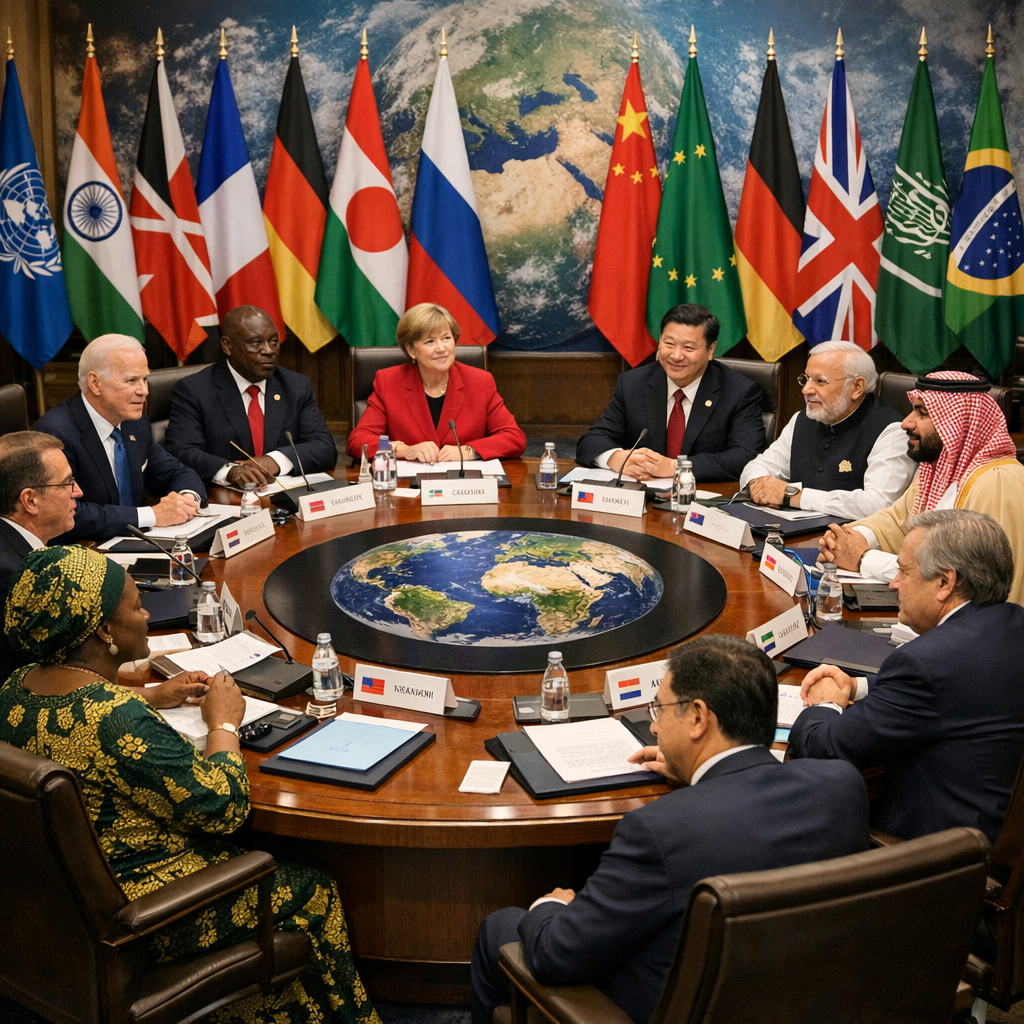
Diplomacy has long been shaped by grand statecraft: summits, treaties, and declarations. But today, global events are transforming how and why countries interact—shifting gears in response to pressing risks like nuclear proliferation, climate crisis, and economic instability. As someone in Dubai who watches both regional changes and international currents, I see four key global vectors reshaping diplomacy far beyond national capitals.
1. Renewed Nuclear Tensions
Recent assessments point to an uptick in nuclear armament efforts. According to the latest data from experts at the Stockholm International Peace Research Institute, multiple nuclear-armed states are modernizing their arsenals—and in some cases expanding them. Meanwhile, the non-proliferation regime appears increasingly fragile: major Review Conferences have failed to agree on joint outcomes. This weakens the global trust framework that historically guided nuclear restraint.
2. Climate Diplomacy Enters the Delivery Phase
Global climate talks have long been about setting targets; now, the pressure is on to show concrete action. Diplomacy is evolving to focus more tightly on results—like enhanced renewable energy deployment, resilience-building in vulnerable regions, climate-friendly industrial policies, and supply-chain transformations. This has been especially visible in Gulf countries, which have hosted major climate summits and are pushing to translate commitments into projects and infrastructure.
3. Trade Deals as Shield Against Global Uncertainty
As geopolitical instability—trade wars, supply chain disruption—has become more common, countries are turning to broader economic agreements to hedge their risks. The UAE, for example, has concluded dozens of comprehensive economic partnership agreements (CEPAs) with countries across several continents, including some now in force and others being actively negotiated. These partnerships offer more stable markets, stronger logistics linkages, and diversified trade exposure in uncertain times.
4. Diplomacy’s Multipolar Turn
Power is no longer exercised only through the traditional hallmarks of statecraft. Cities, private companies, regional bodies, NGOs, and even non-state coalitions are increasingly central actors—particularly on issues like climate, tech regulation, and trade standards. We’ve entered a more diffuse world of diplomacy, one where smaller coalitions are often faster to test and scale practical solutions than cumbersome multilateral negotiations.
Why It Matters to the UAE and the Gulf
These global shifts resonate strongly in this region. Our strategic location, ambition to be a global logistics hub, and growing economic diversification make CEPAs more than just agreements—they are lifelines. Meanwhile, climate action both presses us to invest in renewable infrastructure and offers economic opportunities in green tech and sustainability services. And as nuclear risks rise globally, regional and international collaboration on disarmament, safety, and non-proliferation will continue to be essential.
Ultimately, diplomacy today is survival—not just of nations, but of systems. Nations that adapt best to the intertwining of security, climate, trade, and economic statecraft are likely to lead the next chapter of global engagement.