

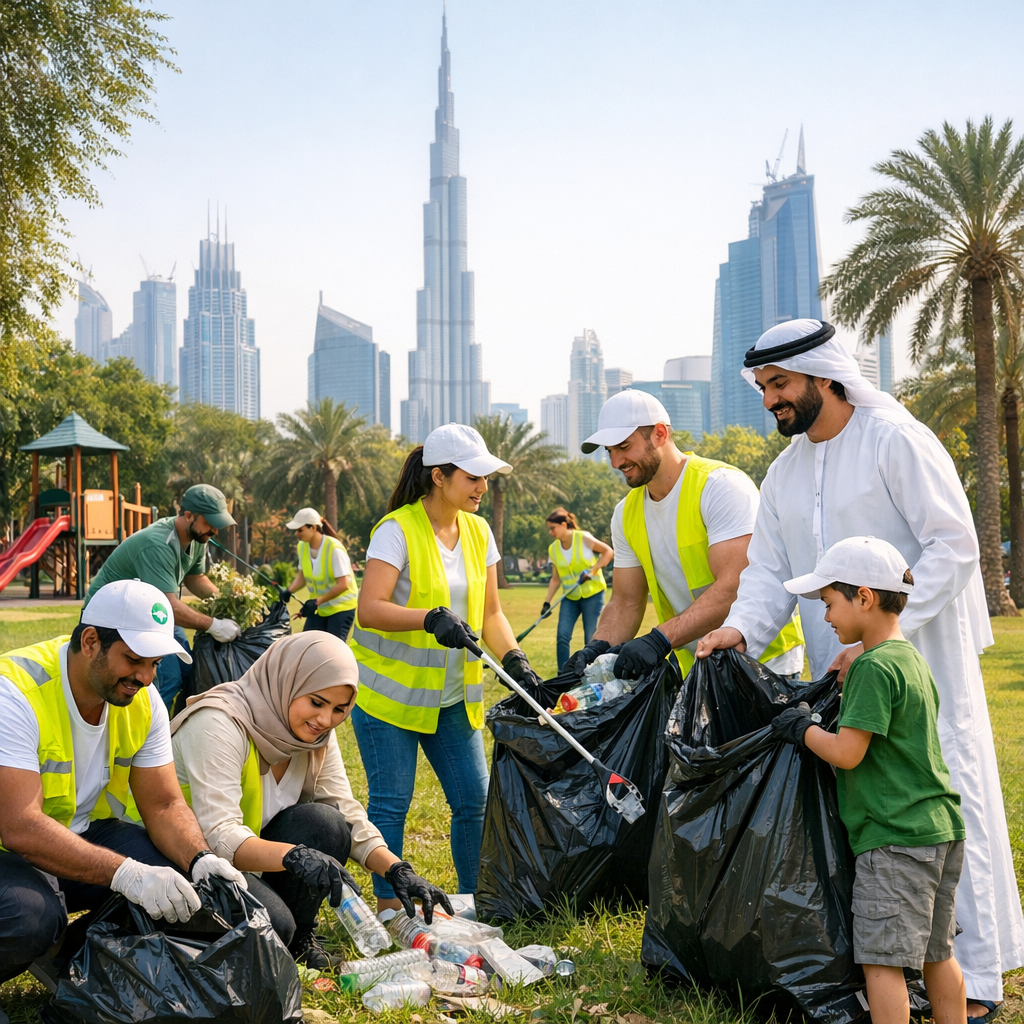
Growing up in a mixed neighbourhood in Dubai, I’ve seen firsthand how small, everyday community actions often carry more power than large-scale plans. I may not be a policymaker, but I’ve learned a lot from neighbours pruning a shared garden, people gathering for weekend clean-ups, and the way TV-screens on lampposts announce tree-planting or beach cleanup events. These are the threads that stitch our city’s fabric together.
The sustainable shifts I’ve noticed
First, there’s the rising wave of environmental awareness. I’ve lived near The Sustainable City, where eco-friendly design, rooftop solar panels, clean irrigation, and shared green terraces are not exotic but daily norms. Residents there organise compost groups and support urban farms. Or take Palm Jumeirah, where a new initiative called “Sea to Soil” turns algae collected from the sea into compost to nourish local landscaping. It’s a simple cycle: what we discard returns as nurture for what we grow. That kind of circular thinking trickles beyond private boundaries into how we view our collective waste stream.
Volunteer clean-ups are another solid foundation for community spirit. Under the “An Hour with the Cleaner” programme, thousands of volunteers across residential areas, beaches and parks come together to pick up litter, sort recyclables, and restore spaces that we all share. It’s less about publicity than pride—seeing neighbours, often from very different backgrounds, working side by side for cleaner sidewalks or greener playgrounds.
Shared spaces, shared lives
What really spreads connection is the public space. Parks where joggers and families overlap, plazas where kids run off school-buses and older people find shade, beachfronts where fishermen pull nets beside tourists snapping photos—these are public theatres of belonging. When design respects mixed age, culture, income—benches, accessible paths, water fountains—they invite more interactions. Dubai’s Blue and Green Spaces Roadmap aims for just that: creating parks, landscapes, recreation centres that feel open and rooted in place rather than polished showroom-placeness.
Obstacles—and what helps
This kind of growth isn’t automatic. Language gaps, shifting housing, inconsistent maintenance, or just too much reliance on private car roads make it hard for neighbours to feel invested in what isn’t easy to reach. I’ve seen a playground fall into disuse because its path was torn up; a small garden overrun because irrigation broke; a clean-up event planned without shade or water for volunteers, people drop-out.
What helps: civic notices in multiple languages; local associations that include renters, long-term residents and newer arrivals; small funding for tools or shade; and easily accessible community hubs—coffee shops, small plazas, shared meeting rooms—where people gather not because they must, but because they want to.
Why it matters beyond trees and benches
These efforts—no matter how modest—shape identity. They tell us whether we believe Dubai is “mine.” They teach children responsibility, trust, pride. They help our mental health. And they protect us: shade-trees reduce heat, parks improve air, composting reduces waste streams. Most importantly, they prepare us for bigger efforts—cleaner energy, better transit, sustainable building—because a community that cares locally can demand sustainability at every level.
I don’t expect every street in Dubai to look like The Sustainable City, and I don’t want that. What I hope is that every person who calls Dubai home, even for a season, finds a patch of ground they can tend—literally or figuratively—and that together, we continue growing places and connections we can be proud to share.