

By Layla Al-Mansoori
In recent months, global headlines have been dominated by conflicts, energy price volatility, and geopolitical realignments. For the UAE, a nexus of trade, tourism and global finance, these shifts present both challenges and opportunities. Here’s how the country is navigating a rapidly changing world.
Trade Growth as a Pillar of Resilience
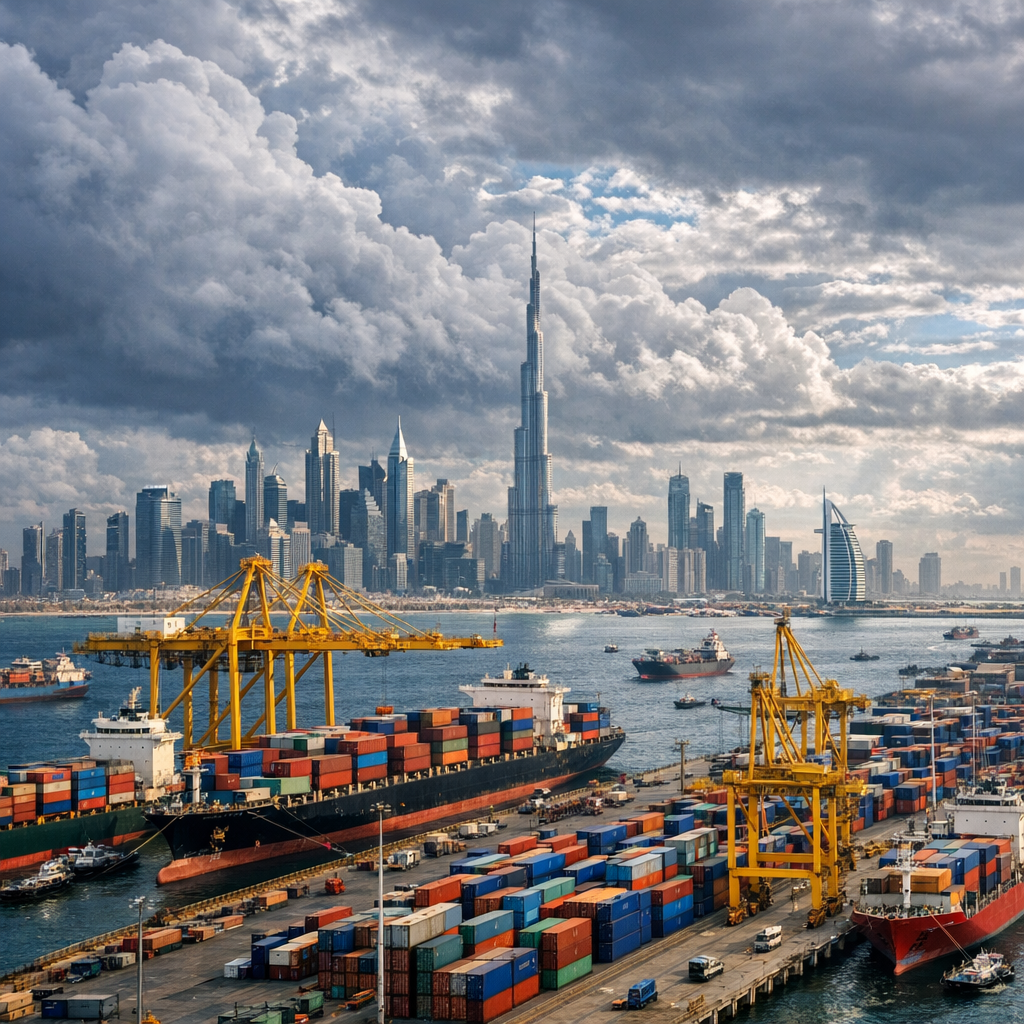
The UAE’s non-oil trade surged in the first half of 2026, reaching nearly AED 1.94 trillion—up 13.1% from the same period in 2025. Non-oil exports alone hit a record AED 452.8 billion, making up an increasing share of total non-oil trade. These numbers reflect a deliberate push to broaden the economy beyond hydrocarbons, leveraging value-added production and diversified global partnerships. Key commodities include gold, automobiles, telecom equipment and jewellery. Trade with countries having Comprehensive Economic Partnership Agreements (CEPAs) also grew strongly, underlining UAE’s strategy of using trade deals to open new avenues.
The Geopolitical Ripple Effect
The conflict in the Middle East has introduced fresh challenges for the UAE. Disruptions to trade routes, concerns about supply chains, and periodic threats to maritime infrastructure have increased the costs and complexity of logistics, travel and energy exports. Investors are keeping a close eye on events across the region as they assess risk. Although the UAE has long sought a neutral, diplomatic role, recent developments—such as suspensions in trade with Iran—show how quickly regional tensions can have real economic effects.
Staying Upright in a Storm: Economic Fundamentals
Despite the shocks, UAE institutions report that the economy remains stable. According to IMF findings, strong fiscal buffers, well-capitalised banks and prudent public investment have helped absorb external pressures. Inflation is elevated compared to past lows but remains below many international peers, with forecasts suggesting it will moderate gradually. For 2026, the Central Bank projects a modest slowdown in growth—about 1.7%—but posits a solid rebound in 2027, driven by stronger oil output and recovery in non-oil sectors.
Looking Ahead: Opportunities in Transition
The UAE’s strategy is increasingly future-oriented: advancing innovation, energy transition, and supply-chain resilience. Investment in sectors like renewable energy, AI, technology, and satellite manufacturing is accelerating. As the world shifts toward cleaner energy, the UAE is accelerating diversification to ensure sustainable long-term growth. At the same time, ensuring stability—diplomatic, economic and infrastructural—will be critical, especially if regional tensions continue.
In a world defined by uncertainty, the UAE’s path forward hinges on balancing responsiveness to immediate shocks with steady investment in long-term transformation. It may not be easy—but so far, the strategy appears to be working.