

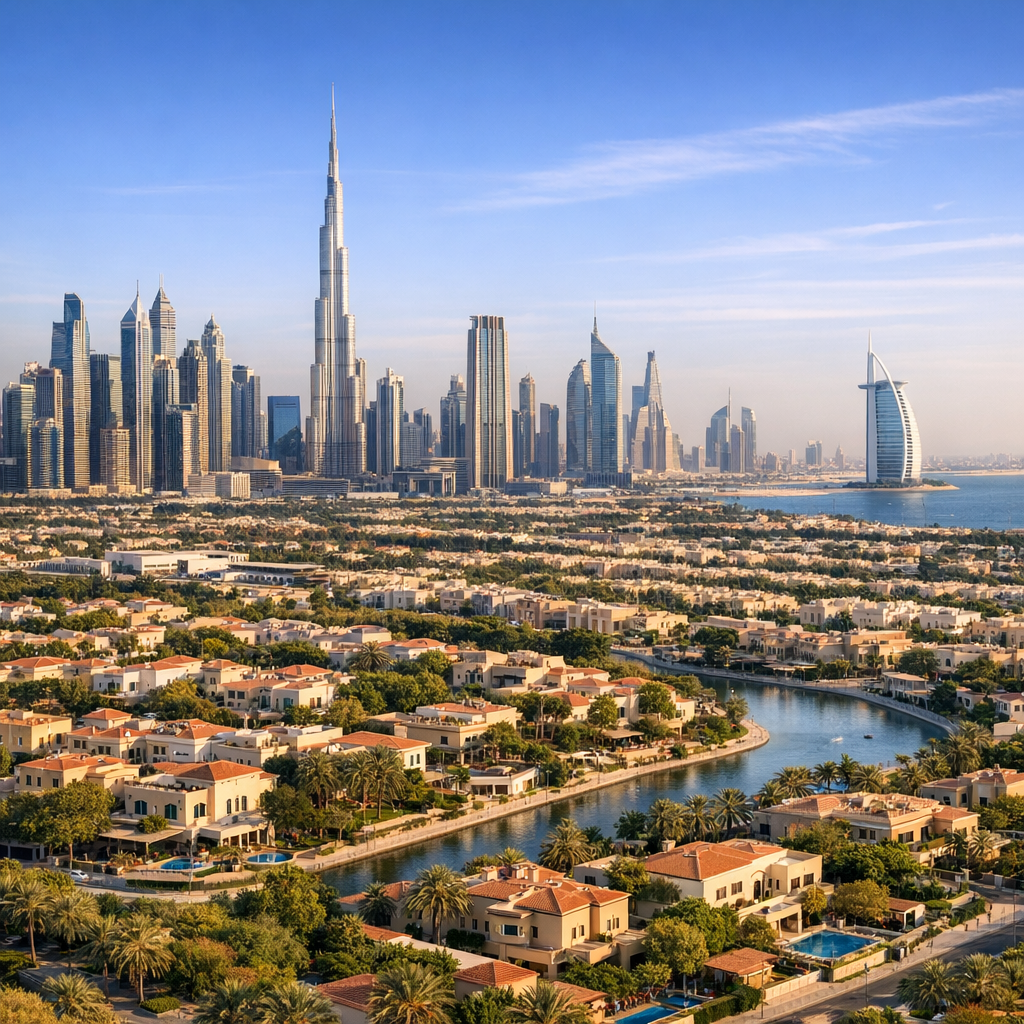
Dubai’s real estate market continues to evolve, reflecting shifts in buyer preferences, rental dynamics, and development patterns. Understanding these trends is essential for residents and investors alike.
Rising Homeownership
Recent data indicates a significant shift from renting to buying among residents. The share of sale-listing impressions increased from 47% in 2024 to 49% in 2025, while rental impressions declined from 53% to 51%. This trend is driven by favorable long-term residency policies, such as the UAE Golden Visa, and initiatives like Dubai’s First-Time Home Buyer Programme, which has facilitated over 2,000 residents in purchasing their first homes, contributing more than AED 3.25 billion in residential property sales.
Suburban Appeal
Suburban communities are gaining popularity, offering affordable housing options and family-friendly environments. Areas like Jumeirah Village Circle (JVC), Arjan, and Al Furjan have seen considerable off-plan activity, attracting investors due to price accessibility and stable rental demand. Master-planned areas such as Dubai Hills, Dubai Creek Harbour, and The Oasis continue to effectively absorb new supply, thanks to their integrated amenities and long-term master plans.
Rental Market Dynamics
Dubai’s rental market remains robust, with high occupancy rates across various segments. Short-term rentals average 65–72% occupancy citywide, while long-term leases under AED 120,000 per year show 88–90% occupancy. However, premium rentals over AED 300,000 face longer vacancy cycles and slower absorption. Gross yield calculations now require a realistic assessment of vacancy risk and cost structures, particularly in high-end segments.
Off-Plan Market Surge
The off-plan market is experiencing unprecedented activity, with 62% of all Q1 2026 transactions being off-plan. Developers have responded with a significant volume of new launches, including over 28,000 new residential units in Q1 2026 alone. Payment plans have become increasingly aggressive and buyer-friendly, with structures like 1% per month during construction and post-handover plans extending up to five years.
Infrastructure and Connectivity
Connectivity is emerging as a key driver of property value. Communities linked to major infrastructure projects, such as the upcoming Dubai Metro Blue Line, are expected to outperform. Areas like Dubai Creek Harbour, Festival City, and parts of Dubai Silicon Oasis and International City are already seeing renewed interest as buyers factor in commute times, walkability, and access to employment hubs.
As Dubai’s real estate market continues to mature, staying informed about these evolving trends will help residents and investors make strategic decisions aligned with the city’s dynamic landscape.