

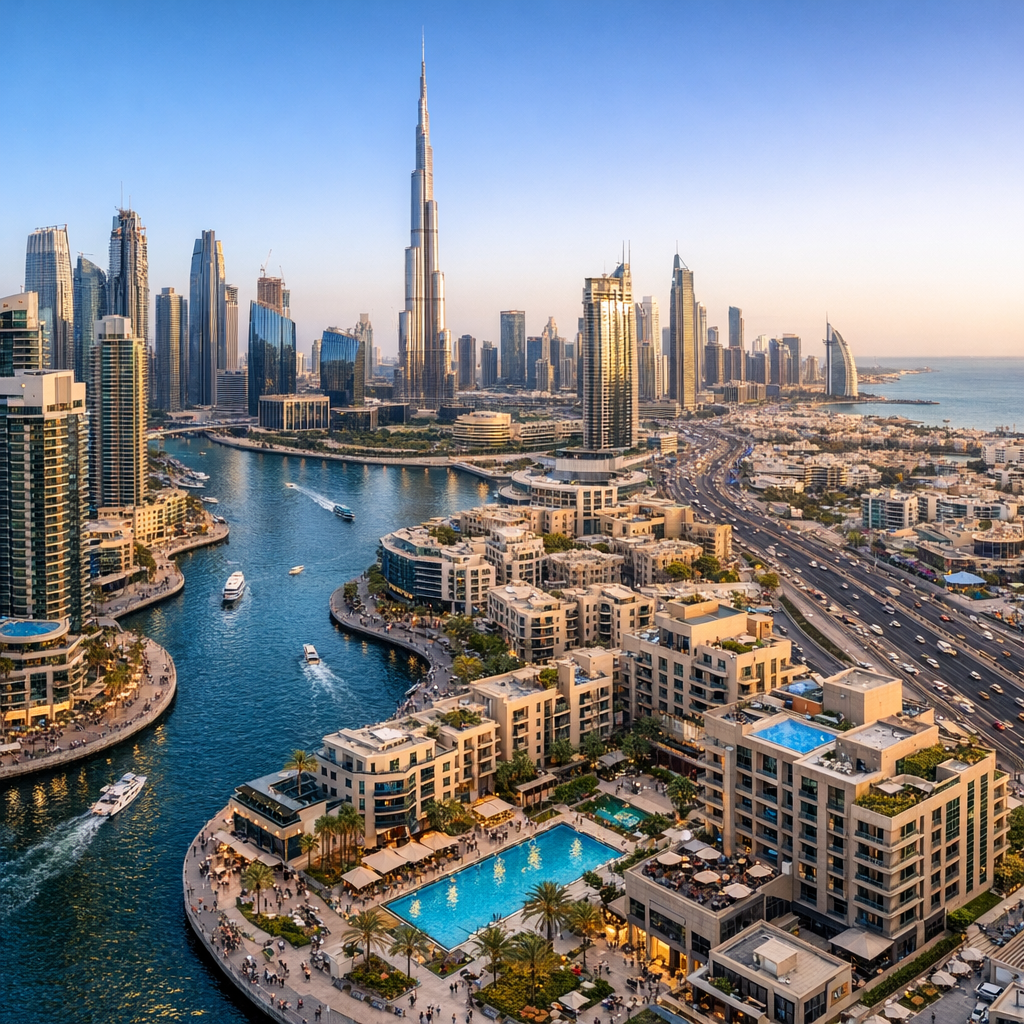
Dubai’s real estate market continues to demonstrate resilience and dynamism, reflecting the emirate’s strategic initiatives and sustained investor confidence. Understanding the current trends is essential for prospective buyers, renters, and investors aiming to make informed decisions.
Market Trends: Steady Growth Amidst New Supply
The residential sector has experienced notable growth, with average sales prices reaching AED 1,871 per square foot in Q3 2025, marking a 13% year-on-year increase. This upward trajectory is supported by a robust supply pipeline, with over 44,000 units delivered in 2025 and an anticipated 69,000 units slated for completion in 2026. While this influx of new properties may temper price acceleration, demand remains strong, particularly in established communities.
Rental Market: Balancing Demand and Supply
Rental dynamics have evolved, with average asking rents increasing by 7–11% year-over-year across the emirate. Family-oriented communities and waterfront locations have seen the most significant growth. However, as property prices rise, gross rental yields have experienced slight compression, especially in premium areas. Emerging neighborhoods like Dubai South and Al Furjan continue to offer attractive yields above 7.5%, appealing to income-focused investors.
Home Buying: Shift Towards Ownership
There’s a discernible shift from renting to homeownership, driven by favorable long-term residency policies such as the UAE Golden Visa and initiatives like Dubai’s First-Time Home Buyer Programme. This trend is particularly evident in the luxury segment, with high-net-worth individuals contributing to a 46% year-on-year rise in inflows, reinforcing Dubai’s position as a global leader in wealth migration.
Local Development: Emerging Hotspots
Suburban communities are gaining traction, with areas like Jumeirah Village Circle (JVC), Arjan, and Al Furjan witnessing considerable off-plan activity. These neighborhoods attract investors due to their affordability and stable rental demand, offering viable alternatives to traditional luxury corridors. Master-planned areas such as Dubai Hills, Dubai Creek Harbour, and The Oasis continue to effectively absorb new supply, thanks to their integrated amenities and long-term development plans.
In conclusion, Dubai’s real estate market presents a landscape of opportunities shaped by strategic developments and evolving buyer preferences. Staying informed about these trends is crucial for navigating the market effectively.