

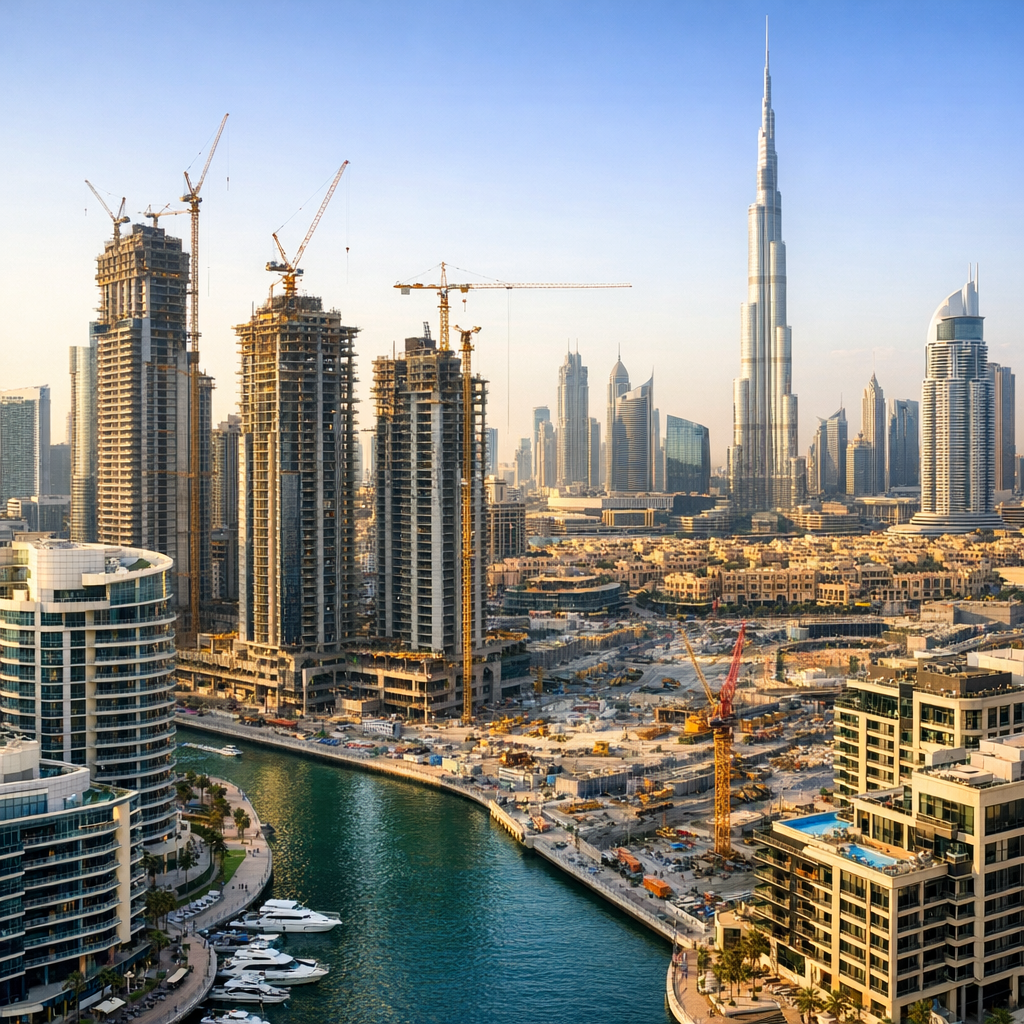
Dubai’s real estate market continues to evolve, offering a dynamic environment for investors, homeowners, and tenants alike. Understanding the current trends is essential for making informed decisions in this vibrant city.
Market Trends
In recent years, Dubai has witnessed a significant surge in real estate activity. The first quarter of 2026 alone saw real estate transactions totaling AED 252 billion, marking a 31% year-on-year increase with 60,303 transactions recorded during the quarter. This growth is underpinned by factors such as population growth, infrastructure expansion, and long-term residency initiatives.
Rental Dynamics
The rental market in Dubai remains robust, with average asking rents increasing by 7–11% year-over-year across the emirate. Family-oriented communities and waterfront locations have experienced the strongest growth. Despite a slight compression in gross rental yields due to rising property prices, areas like Dubai South, Al Furjan, and Town Square continue to offer yields above 7.5%, appealing to income-focused investors.
Emerging Developments
Developers are responding to the high demand with an unprecedented volume of new launches. In the first quarter of 2026, over 28,000 new residential units were introduced, compared to approximately 22,000 in the same period of 2025. Notable master-community launches include new phases in Dubai South (Expo Living), MBR City (District 11), and Dubailand. Additionally, the introduction of flexible rental payment options, such as the Flexi Rent Initiative, allows for monthly, quarterly, and semi-annual installments, enhancing affordability and accessibility for tenants.
As Dubai’s real estate market continues to mature, staying informed about these trends is crucial for anyone looking to invest, buy, or rent in the city. The combination of strategic developments, population growth, and innovative initiatives ensures that Dubai remains a key player in the global real estate arena.