

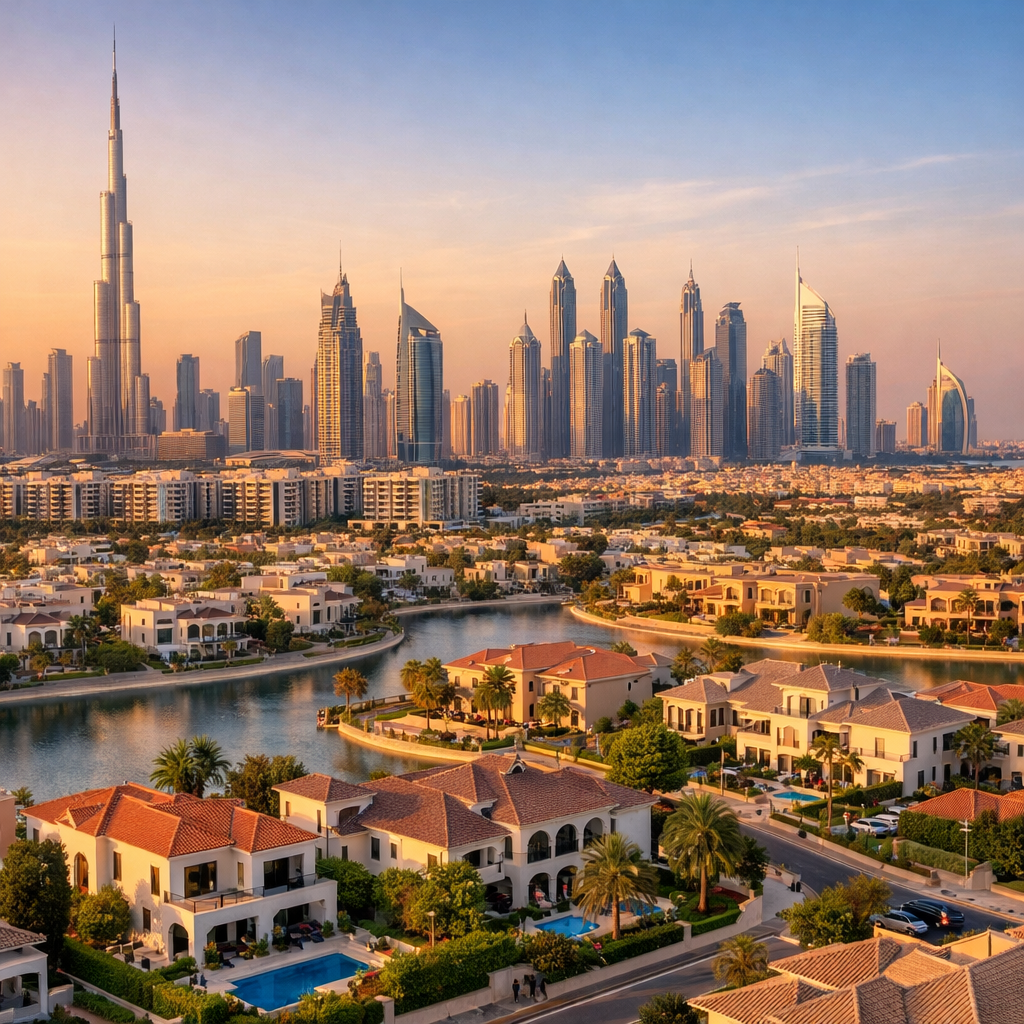
Dubai’s real estate market has experienced notable shifts, reflecting the city’s dynamic growth and evolving housing preferences.
Rental Market Dynamics
Recent data indicates a softening in apartment rents, with the Dubai-wide average falling to approximately AED 90,940 in April 2026, a 4.6% decrease from the first quarter’s average. Prime areas like Downtown Dubai, Palm Jumeirah, and Jumeirah Lake Towers have seen declines averaging around 15% from their peaks. In contrast, villa rents have continued to rise, with average rents climbing about 3.3% over the quarter to roughly AED 229,000, marking a 9.1% year-on-year increase. This divergence underscores a two-speed rental market, where apartments are cooling while villas remain in demand.
Shift Towards Homeownership
There’s a growing inclination among residents to transition from renting to owning homes. This trend is bolstered by favorable long-term residency policies, such as the UAE Golden Visa and Dubai’s First-Time Home Buyer Programme. The latter has facilitated over 2,000 residents in purchasing their first homes, contributing more than AED 3.25 billion in residential property sales. Additionally, there’s an increased interest in luxury and super-luxury homes, supported by a 46% year-on-year rise in high-net-worth individual inflows, reinforcing Dubai’s position as a global leader in wealth migration.
Market Outlook
While the market has seen robust growth, there’s an anticipated moderation in the pace of price appreciation. Annual price growth has eased from 22% in 2023 to 13% in 2025, signaling a transition from rapid acceleration to normalization. This deceleration suggests a market that is stabilizing, offering opportunities for both buyers and investors to make informed decisions.
Local Developments
Dubai continues to expand its residential offerings, with over 20,000 new units delivered in the first half of 2025 and an additional 70,000 expected in the latter half. This influx of new properties indicates strong developer confidence and aims to meet the diverse needs of the city’s growing population.
In summary, Dubai’s real estate landscape is characterized by a cooling apartment rental market, a sustained demand for villas, a shift towards homeownership, and a steady pipeline of new developments. These trends reflect the city’s adaptability and its commitment to providing a dynamic and resilient housing market.