

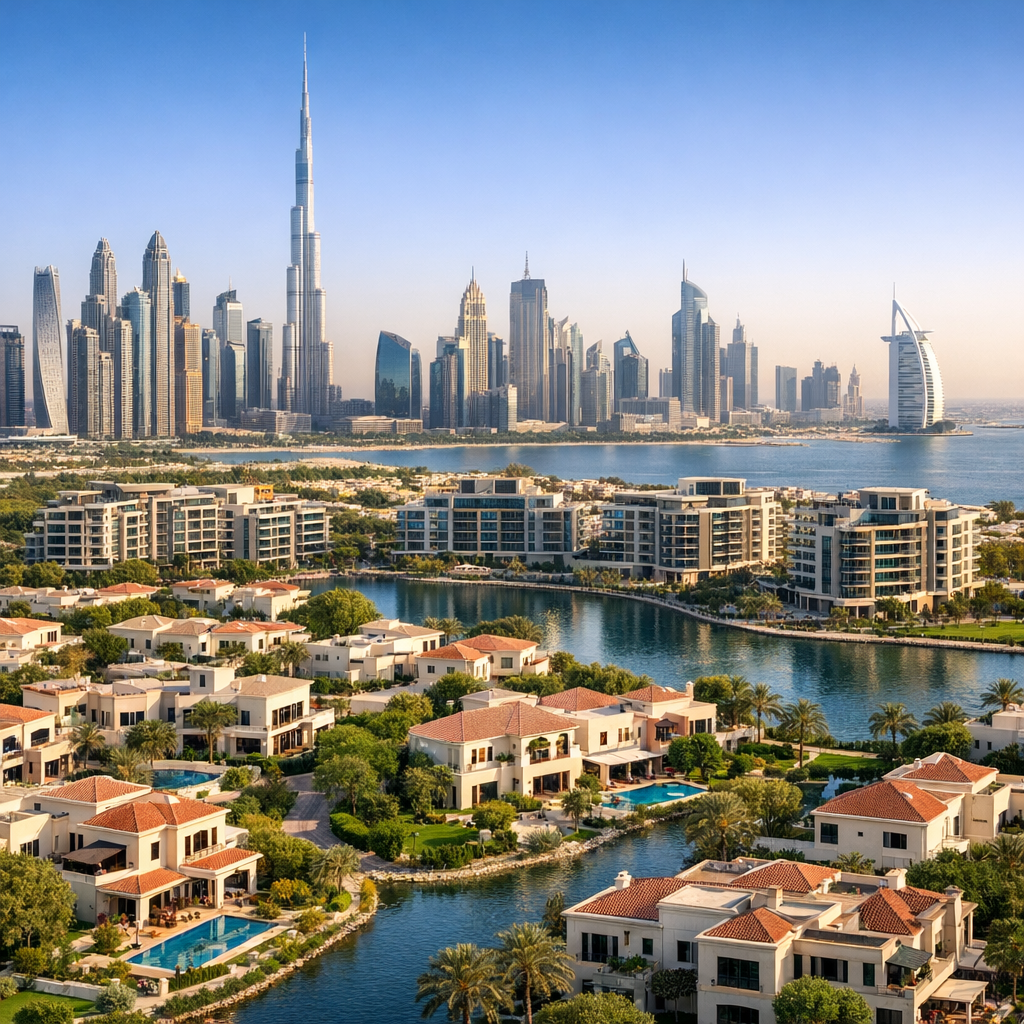
Dubai’s rental market is undergoing significant changes, presenting both challenges and opportunities for tenants and landlords. Understanding these shifts is crucial for making informed decisions.
Current Market Trends
Recent data indicates a divergence in rental trends between apartments and villas. As of mid-2026, average apartment rents have decreased by approximately 6.7% from their winter peak, settling around AED 90,940. This decline is more pronounced in prime areas like Downtown Dubai, Palm Jumeirah, and Jumeirah Lake Towers, where rents have dropped by about 15% from their peaks. In contrast, villa rents have continued to rise, with an average increase of 3.3% over the quarter, reaching approximately AED 229,000, marking a 9.1% year-on-year growth. This trend underscores a two-speed rental market, with apartments softening and villas appreciating in value.
Factors Influencing the Market
Several factors contribute to these trends:
- Supply Dynamics: A substantial influx of new apartment units, particularly in areas like Jumeirah Village Circle and Business Bay, has increased competition among landlords, leading to softer apartment rents. Conversely, the villa segment remains undersupplied, sustaining upward pressure on rents.
- Regulatory Measures: The implementation of the Smart Rental Index by the Real Estate Regulatory Agency (RERA) has introduced caps on rent increases, benefiting tenants in a softening market by limiting how much rents can rise.
- Tenant Preferences: There’s a noticeable shift in tenant preferences towards more spacious accommodations, especially among families. This trend has bolstered demand for villas and townhouses, contributing to their sustained rent increases.
Implications for Tenants
For tenants, the current market offers opportunities, particularly in the apartment segment. The softening rents in prime areas provide a chance to negotiate better terms or consider upgrading to more desirable locations. However, those seeking villas may face higher rents due to limited supply and sustained demand.
Implications for Landlords
Landlords, especially those with apartment properties, may need to adopt more competitive pricing strategies and enhance property offerings to attract and retain tenants. In contrast, villa landlords can leverage the strong demand but should remain mindful of maintaining property standards to justify higher rents.
Looking Ahead
The rental market is expected to stabilize in the coming months. While apartment rents may continue to experience slight declines, villa rents are likely to moderate as affordability becomes a concern for tenants. Both tenants and landlords should stay informed about market developments and consider professional advice to navigate this evolving landscape effectively.
Understanding these dynamics is essential for making strategic decisions in Dubai’s real estate market, ensuring that both tenants and landlords can adapt to the changing environment.