

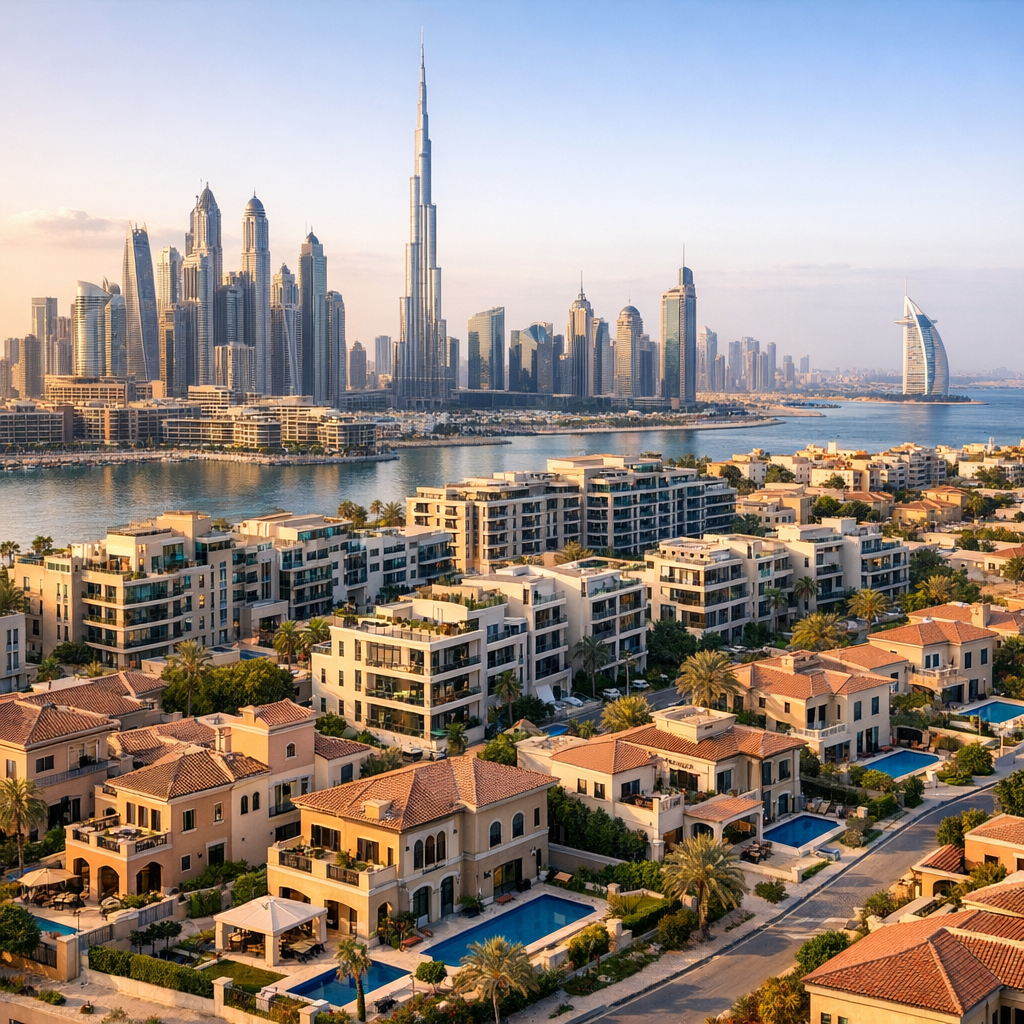
Dubai’s rental market is undergoing significant changes, presenting both challenges and opportunities for tenants and landlords. Understanding these shifts is crucial for making informed decisions in the current real estate environment.
Apartment Rentals: A Cooling Trend
After several years of consistent rent increases, the apartment sector is experiencing a notable softening. As of mid-2026, the average apartment rent in Dubai decreased to approximately AED 90,940, marking a 4.6% decline from the first quarter’s average of AED 95,293. This trend is particularly evident in prime areas such as Downtown Dubai, Palm Jumeirah, and Jumeirah Lake Towers, where rents have dropped by around 15% from their peaks. The primary driver behind this shift is the substantial influx of new apartment units, especially in communities like Jumeirah Village Circle and Business Bay, which together account for about 20% of the upcoming four years’ completions. This increased supply has provided tenants with more options, leading to greater bargaining power and a more selective leasing market.
Villa Rentals: Continued Demand and Rising Rents
In contrast to the apartment sector, villa rentals continue to see upward momentum. Average villa rents have risen by approximately 3.3% over the quarter, reaching around AED 229,000, and reflecting a 9.1% year-on-year increase. This sustained growth is largely due to a structural undersupply of villas, coupled with strong demand from families seeking more spacious living environments. Established villa communities such as Palm Jumeirah, Jumeirah Golf Estates, and Dubai Hills have maintained their appeal, with limited new supply contributing to the steady rise in rents.
Implications for Tenants and Landlords
For tenants, the current market dynamics offer opportunities to negotiate better terms, particularly in the apartment segment. The increased availability of units means that tenants can be more selective, seeking properties that offer the best value for their budget. It’s advisable for tenants to research and compare options across different communities to find the most suitable deals.
Landlords, on the other hand, may need to adjust their strategies to attract and retain tenants. In the apartment sector, realistic pricing, property presentation, and flexibility in lease terms are becoming increasingly important. For villa landlords, the continued demand presents an opportunity to secure favorable rental agreements, but it’s essential to remain attentive to market trends and tenant expectations to maintain occupancy rates.
Looking Ahead
As Dubai’s real estate market continues to evolve, staying informed about the latest trends is vital for both tenants and landlords. Monitoring supply pipelines, understanding community-specific dynamics, and being adaptable to market changes will be key to navigating the shifting landscape of Dubai’s rental market.